Waders
avatar
Photo by Admin
Not available

Galapagos Rail

Laterallus spilonota

Last update: 05 May 2026

Galapagos Rail Basic Information

Scientific NameLaterallus spilonota
Status VU Vulnerable
Size14-16 cm (6-6 inch)
Colors
Brown
White
Type
Waders
type
FamilyRails, Gallinules, Coots

Introduction

The Galapagos Rail (Laterallus spilonota) is one of the most enigmatic and fascinating avian species found within the Galapagos archipelago. As an endemic species, this small wader has adapted remarkably well to the unique volcanic environment of these isolated islands. Often elusive and difficult to spot, the Galapagos Rail represents a critical component of the archipelago's biodiversity. Unlike many of its relatives found on the mainland, this bird has evolved in the absence of significant mammalian predators, leading to behavioral traits that are distinct to its environment. Ornithologists have long studied this rail to understand the mechanisms of island evolution and the specific pressures that shape life in such a remote corner of the world. With its brownish plumage and shy demeanor, the Galapagos Rail is a testament to the resilience of nature. Protecting this species is not just about preserving a single bird; it is about maintaining the delicate ecological balance that defines the Galapagos Islands as a living laboratory for evolutionary biology.

Physical Appearance

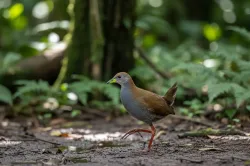
Standing at a modest size of 14 to 16 centimeters, the Galapagos Rail is a compact and unassuming bird that is perfectly adapted for life in dense vegetation. Its primary coloration is a deep, rich brown, which provides excellent camouflage against the dark lava rocks and leaf litter common in its habitat. This brown base is accented by delicate white spotting, particularly on its wings and flanks, which gives the bird a speckled appearance that breaks up its silhouette when moving through shadows. The rail possesses a relatively short, stout bill that is well-suited for probing the ground for insects. Its legs are strong and muscular, allowing it to navigate uneven terrain with surprising agility, even though it is largely terrestrial. The eyes of the Galapagos Rail are typically a reddish-brown, conveying a sense of alertness. While it is technically classified as a wader, its physical build is more aligned with thicket-dwelling species, reflecting its evolutionary shift from marshy environments to the scrublands of the Galapagos islands.

Habitat

The Galapagos Rail is primarily found on several of the larger islands in the archipelago, including Santa Cruz, Santiago, and Isabela. Its preferred habitat consists of moist, highland regions characterized by dense vegetation, tall grasses, and ferns. Unlike many other rail species that require permanent wetlands, the Galapagos Rail thrives in the humid zones found at higher elevations where the vegetation remains lush year-round. These areas provide the necessary cover from the equatorial sun and potential avian predators. The bird is rarely seen in the arid lowlands, preferring the protective canopy provided by the Scalesia forests and dense sedge meadows that define the island's unique highland ecosystems.

Diet

As a versatile feeder, the Galapagos Rail relies on a diverse diet to survive in the rugged terrain of the Galapagos. It is primarily an insectivore, foraging through the leaf litter for a variety of small invertebrates. Its diet includes beetles, ants, spiders, small snails, and occasionally earthworms. The bird uses its specialized bill to probe beneath decaying vegetation and moss, uncovering hidden prey that is inaccessible to larger birds. During the wetter seasons, when insect populations explode, the rail is particularly active. Occasionally, it may supplement its protein-rich diet with small seeds or plant material, showcasing its adaptability to the changing resources of its volcanic home.

Breeding and Nesting

The breeding season of the Galapagos Rail is closely linked to the arrival of the wet season, which ensures an abundance of food for the chicks. These birds are generally monogamous and establish small territories within the dense highland vegetation. The nest is a simple, cup-shaped structure built from woven grasses and fine twigs, typically hidden deep within a thick clump of ferns or sedge to protect it from predators. The female typically lays a clutch of three to five eggs. Both parents are involved in the incubation process, which lasts approximately three weeks. Once hatched, the precocial chicks are capable of leaving the nest almost immediately, following their parents through the undergrowth to learn foraging techniques. This high level of parental investment is crucial for the survival of the offspring in the challenging island environment.

Behavior

The Galapagos Rail is an exceptionally shy and secretive bird, which makes it notoriously difficult to study in the wild. It spends the vast majority of its time on the ground, moving with a series of quick, jerky steps as it patrols its territory. While it is technically capable of flight, it is a weak flier and prefers to run or hide when threatened rather than taking to the air. Its vocalizations are a series of sharp, piping calls, often heard at dawn or dusk, which serve to maintain contact with mates or declare territory. When approached by humans or potential threats, it often freezes, relying on its cryptic coloration to blend seamlessly into the forest floor.

Conservation Status - VU Vulnerable

The Galapagos Rail is currently listed as a vulnerable species. Its primary threats include habitat degradation caused by invasive plant species and predation by introduced animals such as rats, cats, and dogs. Additionally, the limited geographic range of the species makes it highly susceptible to environmental fluctuations and climate change. Conservation efforts are focused on habitat restoration, specifically the removal of invasive flora in the highland regions, and intensive predator control programs. Protecting the remaining populations is essential to prevent the extinction of this unique bird, which holds significant value for global biodiversity.

Interesting Facts

  1. The Galapagos Rail is one of the smallest members of the rail family.
  2. Despite having wings, they rarely fly and prefer running through thick vegetation.
  3. They are endemic to the Galapagos, meaning they are found nowhere else on Earth.
  4. Their speckled brown plumage acts as perfect camouflage against volcanic soil.
  5. They often rely on the 'alarm calls' of other birds to detect nearby predators.
  6. Their nests are expertly hidden in dense ferns to keep their eggs safe from invasive rats.

Tips for Birdwatchers

For birdwatchers hoping to catch a glimpse of the elusive Galapagos Rail, patience and silence are your greatest tools. Because these birds are highly secretive, they are rarely seen by casual tourists. Your best chance is to visit the highland regions of Santa Cruz or Santiago during the early morning or late afternoon when the birds are most active. Move slowly through the trails and keep your ears tuned for their distinct, high-pitched piping calls. Avoid wearing bright colors and try to remain stationary near dense patches of ferns or tall grass. Using a high-quality pair of binoculars will help you spot them as they scurry through the undergrowth. Remember to respect their space and never use flash photography, as this can disturb their natural behavior or cause them to flee into deeper cover.

Pro-Tip: To spot this bird in dense forest canopy, a 8x42 binoculars or telescope is highly recommended.
- [Check out our top recommended gear here]
Pro-Tip: To capture the stunning beauty of this bird, a high-quality wildlife camera and lens are highly recommended.
- [Check out best wildlife cameras here]

Conclusion

In conclusion, the Galapagos Rail is a remarkable example of adaptation and survival in one of the world's most isolated ecosystems. Its quiet presence in the highland forests of the Galapagos serves as a reminder of the fragility of island species. From its unique physical characteristics, such as its speckled brown feathers, to its complex breeding behaviors and secretive nature, every aspect of this bird is perfectly tuned to its environment. However, the threats posed by invasive species and habitat alteration are real, and the future of the Galapagos Rail depends on our continued commitment to conservation and ecological research. By protecting the highland habitats and maintaining strict control over introduced predators, we can ensure that future generations will have the opportunity to witness this shy and beautiful creature in its natural state. Birdwatchers and scientists alike play a vital role in documenting and advocating for the protection of this species. Ultimately, the Galapagos Rail is more than just a bird; it is an irreplaceable piece of the evolutionary puzzle that makes the Galapagos Islands a place of wonder, study, and profound biological importance for the entire world.

Galapagos Rail Distribution Map & Range

The distribution map for this species will be available soon.

We are working with our official data partners to update this information.

Share:

Previous
Next

Explore More Species in the Rails, Gallinules, Coots Family

African Crake
20-23 cm
African Crake
Crex egregia
23-28 cm
African Rail
Rallus caerulescens
22-25 cm
Allen's Gallinule
Porphyrio alleni
34-43 cm
American Coot
Fulica americana
Andaman Crake
25-28 cm
Andaman Crake
Rallina canningi
40-48 cm
Andean Coot
Fulica ardesiaca
Ascension Crake
17-20 cm
Ascension Crake
Mundia elpenor
Ash-throated Crake
13-15 cm
Ash-throated Crake
Porzana albicollis
Auckland Island Rail
17-19 cm
Auckland Island Rail
Lewinia muelleri
25-30 cm
Austral Rail
Rallus antarcticus
Australian Crake
17-20 cm
Australian Crake
Porzana fluminea
25-30 cm
Azure Gallinule
Porphyrio flavirostris
17-19 cm
Baillons Crake
Zapornia pusilla
Band-bellied Crake
17-20 cm
Band-bellied Crake
Zapornia paykullii
Bar-winged Rail
20-25 cm
Bar-winged Rail
Hypotaenidia poeciloptera
Bare-eyed Rail
25-30 cm
Bare-eyed Rail
Gymnocrex plumbeiventris
Barred Rail
25-30 cm
Barred Rail
Hypotaenidia torquata
19-23 cm
Black Crake
Zapornia flavirostra
12-15 cm
Black Rail
Laterallus jamaicensis
black tailed crake
20-23 cm
black tailed crake
Zapornia bicolor
Black-banded Crake
17-19 cm
Black-banded Crake
Porzana fasciata
Black-tailed Native-hen
25-30 cm
Black-tailed Native-hen
Tribonyx ventralis
20-23 cm
Blackish Rail
Pardirallus nigricans
Blue-faced Rail
25-28 cm
Blue-faced Rail
Gymnocrex rosenbergii
20-25 cm
Bogota Rail
Rallus semiplumbeus
Bougainville Rail
20-23 cm
Bougainville Rail
Hypotaenidia tertia
brown crake
20-23 cm
brown crake
Zapornia akool
35-45 cm
Brown Wood-rail
Aramides wolfi
Brown-banded Rail
25-30 cm
Brown-banded Rail
Lewinia mirifica
Buff-banded Rail
30-34 cm
Buff-banded Rail
Hypotaenidia philippensis
14-16 cm
Buff-spotted Flufftail
Sarothrura elegans
Calayan Rail
29-30 cm
Calayan Rail
Aptenorallus calayanensis
Chatham Islands Rail
17-19 cm
Chatham Islands Rail
Cabalus modestus
Chestnut Forest Rail
23-26 cm
Chestnut Forest Rail
Rallicula rubra
Chestnut Rail
30-35 cm
Chestnut Rail
Eulabeornis castaneoventris
Chestnut-headed Crake
20-23 cm
Chestnut-headed Crake
Rufirallus castaneiceps
Chestnut-headed Flufftail
13-15 cm
Chestnut-headed Flufftail
Sarothrura lugens
32-41 cm
Clapper Rail
Rallus crepitans
Colombian Crake
15-18 cm
Colombian Crake
Neocrex colombiana
30-38 cm
Common Gallinule
Gallinula galeata
common moorhen
32-35 cm
common moorhen
Gallinula chloropus
22-25 cm
Corncrake
Crex crex
Dieffenbach's Rail
30-35 cm
Dieffenbach's Rail
Hypotaenidia dieffenbachii
Dot-winged Crake
13-15 cm
Dot-winged Crake
Laterallus spilopterus
Dusky Moorhen
35-40 cm
Dusky Moorhen
Gallinula tenebrosa
20-26 cm
Eastern Water Rail
Rallus indicus
eurasian coot
36-42 cm
eurasian coot
Fulica atra
Forbes's Forest Rail
20-23 cm
Forbes's Forest Rail
Rallicula forbesi
48-64 cm
Giant Coot
Fulica gigantea
46-50 cm
Giant Wood-rail
Aramides ypecaha
Gough Island Moorhen
28-33 cm
Gough Island Moorhen
Gallinula comeri
14-16 cm
Grey-breasted Crake
Laterallus exilis
38-46 cm
Grey-cowled Wood-rail
Aramides cajaneus
20-25 cm
Grey-throated Rail
Canirallus oculeus
Guadalcanal Rail
22-25 cm
Guadalcanal Rail
Hypotaenidia woodfordi
Guam Rail
28-30 cm
Guam Rail
Hypotaenidia owstoni
33-40 cm
Hawaiian Coot
Fulica alai
Hawaiian Rail
14-15 cm
Hawaiian Rail
Zapornia sandwichensis
Hawkins's Rail
25-30 cm
Hawkins's Rail
Diaphorapteryx hawkinsi
Henderson Island Crake
18-20 cm
Henderson Island Crake
Zapornia atra
Hodgen's Waterhen
40-45 cm
Hodgen's Waterhen
Tribonyx hodgenorum
45-55 cm
Horned Coot
Fulica cornuta
Inaccessible Island Rail
13-15 cm
Inaccessible Island Rail
Laterallus rogersi
Invisible Rail
22-25 cm
Invisible Rail
Habroptila wallacii
Isabelline Bush-hen
25-30 cm
Isabelline Bush-hen
Amaurornis isabellina
15-18 cm
Junin Rail
Laterallus tuerosi
38-48 cm
King Rail
Rallus elegans
Kosrae Crake
15-18 cm
Kosrae Crake
Zapornia monasa
Laysan Rail
13-15 cm
Laysan Rail
Zapornia palmeri
22-25 cm
Lesser Moorhen
Paragallinula angulata
Lewin's Rail
20-23 cm
Lewin's Rail
Lewinia pectoralis
17-20 cm
Little Crake
Zapornia parva
20-25 cm
Little Wood-rail
Aramides mangle
Lord Howe Woodhen
35-40 cm
Lord Howe Woodhen
Hypotaenidia sylvestris
13-15 cm
Madagascar Flufftail
Sarothrura insularis
23-25 cm
Madagascar Forest Rail
Mentocrex kioloides
23-25 cm
Madagascar Rail
Rallus madagascariensis
Makira Moorhen
25-30 cm
Makira Moorhen
Pareudiastes silvestris
25-35 cm
Mangrove Rail
Rallus longirostris
Marquesan Swamphen
40-50 cm
Marquesan Swamphen
Porphyrio paepae
Mascarene Coot
35-45 cm
Mascarene Coot
Fulica newtonii
Mayr's Forest Rail
20-23 cm
Mayr's Forest Rail
Rallicula mayri
Mexican Rail
25-30 cm
Mexican Rail
Rallus tenuirostris
Miller's Rail
15-17 cm
Miller's Rail
Zapornia nigra
New Britain Rail
20-24 cm
New Britain Rail
Hypotaenidia insignis
New Caledonia Gallinule
45-50 cm
New Caledonia Gallinule
Porphyrio kukwiedei
New Caledonian Rail
25-28 cm
New Caledonian Rail
Gallirallus lafresnayanus
New Guinea Flightless Rail
25-30 cm
New Guinea Flightless Rail
Megacrex inepta
30-35 cm
Nkulengu Rail
Himantornis haematopus
North Island Takahe
50-65 cm
North Island Takahe
Porphyrio mantelli
Ocellated Crake
14-16 cm
Ocellated Crake
Micropygia schomburgkii
Okinawa Rail
30-35 cm
Okinawa Rail
Hypotaenidia okinawae
Paint-billed Crake
20-25 cm
Paint-billed Crake
Neocrex erythrops
Pale-vented Bush-hen
22-28 cm
Pale-vented Bush-hen
Amaurornis moluccana
Philippine Bush-hen
25-30 cm
Philippine Bush-hen
Amaurornis olivacea
20-23 cm
Plain-flanked Rail
Rallus wetmorei
23-25 cm
Plumbeous Rail
Pardirallus sanguinolentus
26-37 cm
Purple Gallinule
Porphyrio martinicus
purple swamphen
45-50 cm
purple swamphen
Porphyrio porphyrio
Red Rail
30-35 cm
Red Rail
Aphanapteryx bonasia
14-16 cm
Red-and-white Crake
Laterallus leucopyrrhus
15-17 cm
Red-chested Flufftail
Sarothrura rufa
35-40 cm
Red-fronted Coot
Fulica rufifrons
35-42 cm
Red-gartered Coot
Fulica armillata
35-45 cm
Red-knobbed Coot
Fulica cristata
Red-legged Crake
25-30 cm
Red-legged Crake
Rallina fasciata
Red-necked Crake
20-25 cm
Red-necked Crake
Rallina tricolor
35-40 cm
Red-winged Wood-rail
Aramides calopterus
Reunion Gallinule
50-60 cm
Reunion Gallinule
Porphyrio caerulescens
Reunion Rail
25-30 cm
Reunion Rail
Dryolimnas augusti
32-40 cm
Ridgway's Rail
Rallus obsoletus
Rodrigues Rail
25-30 cm
Rodrigues Rail
Erythromachus leguati
27-30 cm
Rouget's Rail
Rougetius rougetii
Roviana Rail
20-25 cm
Roviana Rail
Hypotaenidia rovianae
20-23 cm
ruddy breasted crake
Zapornia fusca
16-18 cm
Ruddy Crake
Laterallus ruber
Rufous-faced Crake
13-15 cm
Rufous-faced Crake
Laterallus xenopterus
33-40 cm
Rufous-necked Wood-rail
Aramides axillaris
14-16 cm
Rufous-sided Crake
Laterallus melanophaius
15-17 cm
Russet-crowned Crake
Rufirallus viridis
35-42 cm
Russet-naped Wood-rail
Aramides albiventris
15-17 cm
Rusty-flanked Crake
Laterallus levraudi
Saint Helena Crake
15-18 cm
Saint Helena Crake
Zapornia astrictocarpus
Saint Helena Rail
15-18 cm
Saint Helena Rail
Laterallus podarces
25-28 cm
Sakalava Rail
Zapornia olivieri
Samoan Moorhen
25-28 cm
Samoan Moorhen
Pareudiastes pacificus
Santa Isabel Rail
22-25 cm
Santa Isabel Rail
Hypotaenidia immaculata
25-30 cm
Slaty-breasted Rail
Lewinia striata
30-35 cm
Slaty-breasted Wood-rail
Aramides saracura
21-25 cm
Slaty-legged Crake
Rallina eurizonoides
12-14 cm
Slender-billed Flufftail
Sarothrura watersi
Snoring Rail
25-30 cm
Snoring Rail
Aramidopsis plateni
20-25 cm
Sora
Porzana carolina
South Island Takahe
50-60 cm
South Island Takahe
Porphyrio hochstetteri
Speckled Rail
13-15 cm
Speckled Rail
Coturnicops notatus
32-35 cm
Spot-flanked Gallinule
Porphyriops melanops
Spotless Crake
18-20 cm
Spotless Crake
Zapornia tabuensis
19-24 cm
Spotted Crake
Porzana porzana
20-25 cm
Spotted Rail
Pardirallus maculatus
Streaky-breasted Flufftail
12-14 cm
Streaky-breasted Flufftail
Sarothrura boehmi
Striped Crake
18-20 cm
Striped Crake
Amaurornis marginalis
12-15 cm
Striped Flufftail
Sarothrura affinis
Swinhoe's Rail
17-20 cm
Swinhoe's Rail
Coturnicops exquisitus
Tahiti Rail
15-18 cm
Tahiti Rail
Hypotaenidia pacifica
Talaud Bush-hen
28-33 cm
Talaud Bush-hen
Amaurornis magnirostris
Talaud Rail
25-30 cm
Talaud Rail
Gymnocrex talaudensis
Tasmanian Native-hen
43-48 cm
Tasmanian Native-hen
Tribonyx mortierii
Tristan Moorhen
30-35 cm
Tristan Moorhen
Gallinula nesiotis
20-22 cm
Tsingy Forest Rail
Mentocrex beankaensis
20-25 cm
Uniform Crake
Amaurolimnas concolor
20-27 cm
Virginia Rail
Rallus limicola
Wake Island Rail
20-23 cm
Wake Island Rail
Hypotaenidia wakensis
35-43 cm
Watercock
Gallicrex cinerea
Weka
50-60 cm
Weka
Gallirallus australis
Western Water Rail
23-28 cm
Western Water Rail
Rallus aquaticus
white breasted waterhen
32-32 cm
white breasted waterhen
Amaurornis phoenicurus
White Swamphen
40-50 cm
White Swamphen
Porphyrio albus
White-browed Crake
18-20 cm
White-browed Crake
Amaurornis cinerea
12-14 cm
White-spotted Flufftail
Sarothrura pulchra
White-striped Forest Rail
20-23 cm
White-striped Forest Rail
Rallicula leucospila
17-20 cm
White-throated Crake
Laterallus albigularis
25-30 cm
White-throated Rail
Dryolimnas cuvieri
45-60 cm
White-winged Coot
Fulica leucoptera
14-16 cm
White-winged Flufftail
Sarothrura ayresi
15-19 cm
Yellow Rail
Coturnicops noveboracensis
13-15 cm
Yellow-breasted Crake
Laterallus flaviventer
Zapata Rail
28-32 cm
Zapata Rail
Cyanolimnas cerverai