Upland Ground Birds
avatar
Photo by Admin
Not available
Laysan Rail

Laysan Rail

Zapornia palmeri

Last update: 18 Mar 2026

Laysan Rail Basic Information

Scientific NameZapornia palmeri
Status EX Extinct
Size13-15 cm (5-6 inch)
Colors
Brown
White
Type
Upland Ground Birds
type
FamilyRails, Gallinules, Coots

Introduction

The Laysan Rail (Zapornia palmeri) remains one of the most poignant symbols of the fragility of island ecosystems. Historically endemic to the remote Laysan Island in the Northwestern Hawaiian Islands, this small, flightless bird occupied a unique niche as one of the few land-bound avian species in the region. Measuring only 13 to 15 centimeters, the Laysan Rail was a testament to the evolutionary processes that occur in isolated environments, where flightless birds often thrive in the absence of terrestrial predators. Unfortunately, the species is now extinct, serving as a stark reminder of the devastating impact of invasive species and habitat destruction. Throughout its existence, the rail was a resilient and energetic creature, darting through the low-lying vegetation of its sandy home. Understanding the life history of the Laysan Rail is essential for ornithologists and conservationists alike, as the lessons learned from its rapid decline continue to inform modern wildlife management and the protection of vulnerable island species across the globe.

Physical Appearance

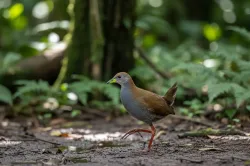
The Laysan Rail was a diminutive, ground-dwelling bird characterized by its compact, sturdy physique. Typically reaching a length of approximately 13 to 15 centimeters, the bird possessed a distinctively rounded shape. Its primary coloration was a mottled, earthy brown, which provided excellent camouflage against the sparse grasses and sandy soil of its native habitat. This primary brown plumage was often complemented by patches of white, particularly around the throat and underparts, creating a subtle contrast that made the bird appear well-integrated into its environment. The rail featured a relatively short, stout bill adapted for foraging in loose substrate, and its wings were significantly reduced, rendering the species flightless. Its legs were strong and well-developed, designed for constant movement and rapid locomotion across the dunes. The eyes were dark and alert, reflecting the bird’s constant need to monitor its surroundings for potential threats. While it lacked the vibrant colors of many tropical species, the Laysan Rail’s plumage was perfectly evolved for utility, concealment, and survival in a harsh, wind-swept maritime environment.

Habitat

The habitat of the Laysan Rail was exclusively tied to the low-lying, sandy environment of Laysan Island. As an upland ground bird, it did not venture into the open ocean or high-altitude forests. Instead, it preferred the dense stands of bunchgrass, specifically Eragrostis variabilis, which provided both shelter and a vast supply of insects. The island’s unique geography, defined by its central saline lagoon and surrounding dunes, created a specialized microclimate. The rail required these thick patches of vegetation to nest, hide from the intense Pacific sun, and forage for food. Because the species was flightless, its entire life cycle was confined to the terrestrial landscape of the island, making it highly susceptible to any changes in the island's botanical composition or the introduction of non-native species.

Diet

As an opportunistic feeder, the Laysan Rail maintained a varied diet that helped it survive in the nutrient-scarce environment of a remote coral island. Its primary food sources consisted of small invertebrates, including flies, moths, beetles, and various larvae that thrived within the island's grassy vegetation. The rail was also known to consume the eggs of other seabirds, demonstrating a resourceful approach to nutrition. During periods of drought or food scarcity, the bird would scavenge for organic debris or small plant materials. Its short, sturdy bill was perfectly adapted for pecking at the ground and turning over leaf litter to uncover hidden prey, allowing it to efficiently exploit the small, scattered food sources available in its ecosystem.

Breeding and Nesting

The breeding season of the Laysan Rail was a critical time, usually occurring during the warmer months when food resources were most abundant. These birds were known for their dedication to nesting, often constructing simple but effective structures hidden deep within the thick tufts of bunchgrass. A typical nest consisted of a shallow depression lined with dried grasses and feathers to provide insulation and protection for the eggs. A clutch usually contained two to three eggs, which were incubated by both parents, highlighting a strong pair bond. The chicks were precocial, meaning they were relatively mobile shortly after hatching, allowing them to follow their parents through the dense vegetation. The survival of the offspring depended heavily on the presence of sufficient insect life and the absence of mammalian predators, which eventually became the primary cause of the species' reproductive failure.

Behavior

The behavior of the Laysan Rail was characterized by extreme agility and curiosity. Despite being flightless, these birds were remarkably fast on their feet, often seen darting between patches of grass with quick, jerky movements. They were highly territorial, frequently engaging in vocal displays and minor squabbles to defend their chosen foraging patches. Their curiosity was legendary among early naturalists, who noted that the birds would often approach humans without fear, pecking at boots or equipment. This lack of an innate fear response, evolved in the absence of land predators, ultimately contributed to their vulnerability when rats and other invasive animals were introduced to their island home.

Conservation Status - EX Extinct

The Laysan Rail is officially classified as extinct. Its decline began in the early 20th century following the introduction of rabbits to Laysan Island. The rabbits decimated the native vegetation, stripping the island of the essential cover and food the rails needed to survive. This habitat destruction, combined with predation by introduced house mice and the catastrophic impact of World War II, led to the species' final disappearance. The last known individuals were seen in the mid-1940s, marking the end of a unique evolutionary lineage that had existed for thousands of years.

Interesting Facts

  1. The Laysan Rail was completely flightless, having evolved on an island with no natural predators.
  2. They were incredibly bold and would often investigate human visitors, showing no natural fear.
  3. The species was endemic to Laysan Island, meaning it existed nowhere else on Earth.
  4. The introduction of rabbits to their habitat was the primary catalyst for their extinction.
  5. These birds were known to feed on the eggs of seabirds, a behavior that helped them survive periods of low insect populations.
  6. Efforts were made to translocate populations to other islands, but these ultimately failed to save the species.

Tips for Birdwatchers

While it is no longer possible to see the Laysan Rail in the wild, studying this bird offers valuable lessons for modern birdwatchers. The most important takeaway is the importance of biosecurity. When visiting sensitive island habitats, birdwatchers must ensure they do not accidentally introduce invasive species like seeds, insects, or rodents. By practicing 'Leave No Trace' principles and respecting protected areas, observers can help prevent the habitat destruction that led to the Laysan Rail's demise. Additionally, studying the history of the rail encourages birdwatchers to advocate for the restoration of native vegetation, which is the cornerstone of avian survival. Even though the rail is gone, its story continues to inspire a more responsible approach to observing and protecting our world's most vulnerable bird species.

Conclusion

The story of the Laysan Rail (Zapornia palmeri) is a somber chapter in the history of ornithology. As a flightless bird that thrived on the isolated Laysan Island, it represented the unique evolutionary ingenuity of island life. Its small, brown-and-white frame was perfectly adapted to the island's grassy dunes, and its bold, curious behavior made it a favorite among early explorers. However, the rapid extinction of the Laysan Rail serves as a permanent warning regarding the delicate balance of island ecosystems. When non-native species were introduced, the rail had no evolutionary defense mechanisms to cope with the sudden change in its environment. Today, the Laysan Rail exists only in museum collections and historical records, serving as a reminder of the irreversible loss that occurs when human activities disrupt fragile habitats. By studying the life and loss of this bird, we gain a deeper appreciation for the importance of conservation and the urgent need to protect the remaining endemic species that define the natural beauty of our world. We must ensure that the mistakes of the past are not repeated, honoring the legacy of the Laysan Rail through proactive and informed stewardship of our planet's biodiversity.

Laysan Rail Distribution Map & Range

The distribution map for this species will be available soon.

We are working with our official data partners to update this information.

Share:

Previous
Next

Explore More Species in the Rails, Gallinules, Coots Family

African Crake
20-23 cm
African Crake
Crex egregia
23-28 cm
African Rail
Rallus caerulescens
22-25 cm
Allen's Gallinule
Porphyrio alleni
34-43 cm
American Coot
Fulica americana
Andaman Crake
25-28 cm
Andaman Crake
Rallina canningi
40-48 cm
Andean Coot
Fulica ardesiaca
Ascension Crake
17-20 cm
Ascension Crake
Mundia elpenor
Ash-throated Crake
13-15 cm
Ash-throated Crake
Porzana albicollis
Auckland Island Rail
17-19 cm
Auckland Island Rail
Lewinia muelleri
25-30 cm
Austral Rail
Rallus antarcticus
Australian Crake
17-20 cm
Australian Crake
Porzana fluminea
25-30 cm
Azure Gallinule
Porphyrio flavirostris
17-19 cm
Baillons Crake
Zapornia pusilla
Band-bellied Crake
17-20 cm
Band-bellied Crake
Zapornia paykullii
Bar-winged Rail
20-25 cm
Bar-winged Rail
Hypotaenidia poeciloptera
Bare-eyed Rail
25-30 cm
Bare-eyed Rail
Gymnocrex plumbeiventris
Barred Rail
25-30 cm
Barred Rail
Hypotaenidia torquata
19-23 cm
Black Crake
Zapornia flavirostra
12-15 cm
Black Rail
Laterallus jamaicensis
black tailed crake
20-23 cm
black tailed crake
Zapornia bicolor
Black-banded Crake
17-19 cm
Black-banded Crake
Porzana fasciata
Black-tailed Native-hen
25-30 cm
Black-tailed Native-hen
Tribonyx ventralis
20-23 cm
Blackish Rail
Pardirallus nigricans
Blue-faced Rail
25-28 cm
Blue-faced Rail
Gymnocrex rosenbergii
20-25 cm
Bogota Rail
Rallus semiplumbeus
Bougainville Rail
20-23 cm
Bougainville Rail
Hypotaenidia tertia
brown crake
20-23 cm
brown crake
Zapornia akool
35-45 cm
Brown Wood-rail
Aramides wolfi
Brown-banded Rail
25-30 cm
Brown-banded Rail
Lewinia mirifica
Buff-banded Rail
30-34 cm
Buff-banded Rail
Hypotaenidia philippensis
14-16 cm
Buff-spotted Flufftail
Sarothrura elegans
Calayan Rail
29-30 cm
Calayan Rail
Aptenorallus calayanensis
Chatham Islands Rail
17-19 cm
Chatham Islands Rail
Cabalus modestus
Chestnut Forest Rail
23-26 cm
Chestnut Forest Rail
Rallicula rubra
Chestnut Rail
30-35 cm
Chestnut Rail
Eulabeornis castaneoventris
Chestnut-headed Crake
20-23 cm
Chestnut-headed Crake
Rufirallus castaneiceps
Chestnut-headed Flufftail
13-15 cm
Chestnut-headed Flufftail
Sarothrura lugens
32-41 cm
Clapper Rail
Rallus crepitans
Colombian Crake
15-18 cm
Colombian Crake
Neocrex colombiana
30-38 cm
Common Gallinule
Gallinula galeata
common moorhen
32-35 cm
common moorhen
Gallinula chloropus
22-25 cm
Corncrake
Crex crex
Dieffenbach's Rail
30-35 cm
Dieffenbach's Rail
Hypotaenidia dieffenbachii
Dot-winged Crake
13-15 cm
Dot-winged Crake
Laterallus spilopterus
Dusky Moorhen
35-40 cm
Dusky Moorhen
Gallinula tenebrosa
20-26 cm
Eastern Water Rail
Rallus indicus
eurasian coot
36-42 cm
eurasian coot
Fulica atra
Forbes's Forest Rail
20-23 cm
Forbes's Forest Rail
Rallicula forbesi
14-16 cm
Galapagos Rail
Laterallus spilonota
48-64 cm
Giant Coot
Fulica gigantea
46-50 cm
Giant Wood-rail
Aramides ypecaha
Gough Island Moorhen
28-33 cm
Gough Island Moorhen
Gallinula comeri
14-16 cm
Grey-breasted Crake
Laterallus exilis
38-46 cm
Grey-cowled Wood-rail
Aramides cajaneus
20-25 cm
Grey-throated Rail
Canirallus oculeus
Guadalcanal Rail
22-25 cm
Guadalcanal Rail
Hypotaenidia woodfordi
Guam Rail
28-30 cm
Guam Rail
Hypotaenidia owstoni
33-40 cm
Hawaiian Coot
Fulica alai
Hawaiian Rail
14-15 cm
Hawaiian Rail
Zapornia sandwichensis
Hawkins's Rail
25-30 cm
Hawkins's Rail
Diaphorapteryx hawkinsi
Henderson Island Crake
18-20 cm
Henderson Island Crake
Zapornia atra
Hodgen's Waterhen
40-45 cm
Hodgen's Waterhen
Tribonyx hodgenorum
45-55 cm
Horned Coot
Fulica cornuta
Inaccessible Island Rail
13-15 cm
Inaccessible Island Rail
Laterallus rogersi
Invisible Rail
22-25 cm
Invisible Rail
Habroptila wallacii
Isabelline Bush-hen
25-30 cm
Isabelline Bush-hen
Amaurornis isabellina
15-18 cm
Junin Rail
Laterallus tuerosi
38-48 cm
King Rail
Rallus elegans
Kosrae Crake
15-18 cm
Kosrae Crake
Zapornia monasa
22-25 cm
Lesser Moorhen
Paragallinula angulata
Lewin's Rail
20-23 cm
Lewin's Rail
Lewinia pectoralis
17-20 cm
Little Crake
Zapornia parva
20-25 cm
Little Wood-rail
Aramides mangle
Lord Howe Woodhen
35-40 cm
Lord Howe Woodhen
Hypotaenidia sylvestris
13-15 cm
Madagascar Flufftail
Sarothrura insularis
23-25 cm
Madagascar Forest Rail
Mentocrex kioloides
23-25 cm
Madagascar Rail
Rallus madagascariensis
Makira Moorhen
25-30 cm
Makira Moorhen
Pareudiastes silvestris
25-35 cm
Mangrove Rail
Rallus longirostris
Marquesan Swamphen
40-50 cm
Marquesan Swamphen
Porphyrio paepae
Mascarene Coot
35-45 cm
Mascarene Coot
Fulica newtonii
Mayr's Forest Rail
20-23 cm
Mayr's Forest Rail
Rallicula mayri
Mexican Rail
25-30 cm
Mexican Rail
Rallus tenuirostris
Miller's Rail
15-17 cm
Miller's Rail
Zapornia nigra
New Britain Rail
20-24 cm
New Britain Rail
Hypotaenidia insignis
New Caledonia Gallinule
45-50 cm
New Caledonia Gallinule
Porphyrio kukwiedei
New Caledonian Rail
25-28 cm
New Caledonian Rail
Gallirallus lafresnayanus
New Guinea Flightless Rail
25-30 cm
New Guinea Flightless Rail
Megacrex inepta
30-35 cm
Nkulengu Rail
Himantornis haematopus
North Island Takahe
50-65 cm
North Island Takahe
Porphyrio mantelli
Ocellated Crake
14-16 cm
Ocellated Crake
Micropygia schomburgkii
Okinawa Rail
30-35 cm
Okinawa Rail
Hypotaenidia okinawae
Paint-billed Crake
20-25 cm
Paint-billed Crake
Neocrex erythrops
Pale-vented Bush-hen
22-28 cm
Pale-vented Bush-hen
Amaurornis moluccana
Philippine Bush-hen
25-30 cm
Philippine Bush-hen
Amaurornis olivacea
20-23 cm
Plain-flanked Rail
Rallus wetmorei
23-25 cm
Plumbeous Rail
Pardirallus sanguinolentus
26-37 cm
Purple Gallinule
Porphyrio martinicus
purple swamphen
45-50 cm
purple swamphen
Porphyrio porphyrio
Red Rail
30-35 cm
Red Rail
Aphanapteryx bonasia
14-16 cm
Red-and-white Crake
Laterallus leucopyrrhus
15-17 cm
Red-chested Flufftail
Sarothrura rufa
35-40 cm
Red-fronted Coot
Fulica rufifrons
35-42 cm
Red-gartered Coot
Fulica armillata
35-45 cm
Red-knobbed Coot
Fulica cristata
Red-legged Crake
25-30 cm
Red-legged Crake
Rallina fasciata
Red-necked Crake
20-25 cm
Red-necked Crake
Rallina tricolor
35-40 cm
Red-winged Wood-rail
Aramides calopterus
Reunion Gallinule
50-60 cm
Reunion Gallinule
Porphyrio caerulescens
Reunion Rail
25-30 cm
Reunion Rail
Dryolimnas augusti
32-40 cm
Ridgway's Rail
Rallus obsoletus
Rodrigues Rail
25-30 cm
Rodrigues Rail
Erythromachus leguati
27-30 cm
Rouget's Rail
Rougetius rougetii
Roviana Rail
20-25 cm
Roviana Rail
Hypotaenidia rovianae
20-23 cm
ruddy breasted crake
Zapornia fusca
16-18 cm
Ruddy Crake
Laterallus ruber
Rufous-faced Crake
13-15 cm
Rufous-faced Crake
Laterallus xenopterus
33-40 cm
Rufous-necked Wood-rail
Aramides axillaris
14-16 cm
Rufous-sided Crake
Laterallus melanophaius
15-17 cm
Russet-crowned Crake
Rufirallus viridis
35-42 cm
Russet-naped Wood-rail
Aramides albiventris
15-17 cm
Rusty-flanked Crake
Laterallus levraudi
Saint Helena Crake
15-18 cm
Saint Helena Crake
Zapornia astrictocarpus
Saint Helena Rail
15-18 cm
Saint Helena Rail
Laterallus podarces
25-28 cm
Sakalava Rail
Zapornia olivieri
Samoan Moorhen
25-28 cm
Samoan Moorhen
Pareudiastes pacificus
Santa Isabel Rail
22-25 cm
Santa Isabel Rail
Hypotaenidia immaculata
25-30 cm
Slaty-breasted Rail
Lewinia striata
30-35 cm
Slaty-breasted Wood-rail
Aramides saracura
21-25 cm
Slaty-legged Crake
Rallina eurizonoides
12-14 cm
Slender-billed Flufftail
Sarothrura watersi
Snoring Rail
25-30 cm
Snoring Rail
Aramidopsis plateni
20-25 cm
Sora
Porzana carolina
South Island Takahe
50-60 cm
South Island Takahe
Porphyrio hochstetteri
Speckled Rail
13-15 cm
Speckled Rail
Coturnicops notatus
32-35 cm
Spot-flanked Gallinule
Porphyriops melanops
Spotless Crake
18-20 cm
Spotless Crake
Zapornia tabuensis
19-24 cm
Spotted Crake
Porzana porzana
20-25 cm
Spotted Rail
Pardirallus maculatus
Streaky-breasted Flufftail
12-14 cm
Streaky-breasted Flufftail
Sarothrura boehmi
Striped Crake
18-20 cm
Striped Crake
Amaurornis marginalis
12-15 cm
Striped Flufftail
Sarothrura affinis
Swinhoe's Rail
17-20 cm
Swinhoe's Rail
Coturnicops exquisitus
Tahiti Rail
15-18 cm
Tahiti Rail
Hypotaenidia pacifica
Talaud Bush-hen
28-33 cm
Talaud Bush-hen
Amaurornis magnirostris
Talaud Rail
25-30 cm
Talaud Rail
Gymnocrex talaudensis
Tasmanian Native-hen
43-48 cm
Tasmanian Native-hen
Tribonyx mortierii
Tristan Moorhen
30-35 cm
Tristan Moorhen
Gallinula nesiotis
20-22 cm
Tsingy Forest Rail
Mentocrex beankaensis
20-25 cm
Uniform Crake
Amaurolimnas concolor
20-27 cm
Virginia Rail
Rallus limicola
Wake Island Rail
20-23 cm
Wake Island Rail
Hypotaenidia wakensis
35-43 cm
Watercock
Gallicrex cinerea
Weka
50-60 cm
Weka
Gallirallus australis
Western Water Rail
23-28 cm
Western Water Rail
Rallus aquaticus
white breasted waterhen
32-32 cm
white breasted waterhen
Amaurornis phoenicurus
White Swamphen
40-50 cm
White Swamphen
Porphyrio albus
White-browed Crake
18-20 cm
White-browed Crake
Amaurornis cinerea
12-14 cm
White-spotted Flufftail
Sarothrura pulchra
White-striped Forest Rail
20-23 cm
White-striped Forest Rail
Rallicula leucospila
17-20 cm
White-throated Crake
Laterallus albigularis
25-30 cm
White-throated Rail
Dryolimnas cuvieri
45-60 cm
White-winged Coot
Fulica leucoptera
14-16 cm
White-winged Flufftail
Sarothrura ayresi
15-19 cm
Yellow Rail
Coturnicops noveboracensis
13-15 cm
Yellow-breasted Crake
Laterallus flaviventer
Zapata Rail
28-32 cm
Zapata Rail
Cyanolimnas cerverai