Waders
avatar
Photo by Admin
Not available

Mangrove Rail

Rallus longirostris

Last update: 05 May 2026

Mangrove Rail Basic Information

Scientific NameRallus longirostris
Status LC Least Concern
Size25-35 cm (10-14 inch)
Colors
Brown
Grey
Type
Waders
type
FamilyRails, Gallinules, Coots

Introduction

The Mangrove Rail (Rallus longirostris) is a fascinating and elusive species of waterbird that primarily inhabits the dense, tangled ecosystems of coastal mangrove forests. As a member of the Rallidae family, these birds are quintessential waders, perfectly adapted to life in the intertidal zones where land meets sea. Often heard before they are seen, their presence is frequently signaled by a series of sharp, rhythmic calls echoing through the saltwater vegetation. Despite their wide distribution across various coastal regions, the Mangrove Rail remains a subject of intense interest for ornithologists and birdwatchers alike due to its cryptic nature and specialized environmental requirements. Understanding this bird provides crucial insights into the health of mangrove ecosystems, which serve as vital buffers against coastal erosion and nurseries for countless marine species. Throughout this guide, we will explore the intricate life cycle, physical traits, and behavioral patterns of this remarkable avian resident, shedding light on why it is a key indicator species for wetland integrity.

Physical Appearance

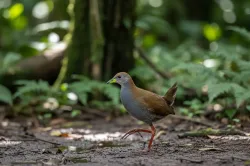
Standing between 25 and 35 centimeters in height, the Mangrove Rail is a medium-sized wader characterized by its sturdy, compact body and long, slightly down-curved bill, which is perfectly suited for probing soft mud. Its plumage is primarily a rich, earthy brown, providing excellent camouflage against the mudflats and shadowed mangrove roots. This base color is contrasted by elegant grey tones, particularly around the cheeks and neck area, which give the bird a sophisticated, muted appearance. The underside is often lighter, sometimes displaying subtle barring that breaks up its silhouette when hiding in low light. Their legs are long and muscular, colored in shades of dull orange or brown, allowing them to traverse uneven, muddy terrain with ease. The eyes are sharp and alert, reflecting their constant vigilance. Both males and females share similar colorations, though size variations may occur. This combination of protective coloration and anatomical specialization allows the Mangrove Rail to remain largely invisible to predators while navigating its complex, high-tide-prone habitat.

Habitat

The Mangrove Rail is inextricably linked to the intertidal mangrove forests and salt marshes of the tropical and subtropical coasts. These environments are characterized by fluctuating water levels and dense root systems, such as those of the Rhizophora and Avicennia species. They favor areas where the sediment is soft and rich in organic matter, providing a steady supply of food. The complexity of the mangrove structure provides essential cover from both aerial and terrestrial predators. Because they are highly territorial, they require specific patches of undisturbed vegetation to thrive. As sea levels rise and human development encroaches on coastal zones, the availability of these high-quality, undisturbed habitats has become a critical factor in their continued survival and distribution.

Diet

As opportunistic feeders, the Mangrove Rail relies on the abundance of life found within the mud and shallow waters of its habitat. Its diet consists primarily of small crustaceans, such as fiddler crabs and shrimp, which are abundant in the mangrove floor. They also consume various marine worms, mollusks, and occasionally small fish trapped in tidal pools. When foraging, they use their long, sensitive bills to probe deep into the sediment, feeling for movement. They are also known to supplement their diet with insects and small aquatic invertebrates. Their feeding activity is often governed by the tidal cycle, as they take advantage of the receding tides to access prime hunting grounds exposed by the retreating water.

Breeding and Nesting

Breeding for the Mangrove Rail is a highly seasonal affair, often tied to the availability of food and the lunar cycles that dictate tidal fluctuations. These birds build their nests in secluded, elevated areas within the mangrove thickets to protect their eggs from high tides and flooding. The nest is typically a crude but sturdy platform constructed from twigs, dried grasses, and mangrove leaves, hidden deep within the dense root tangles. A typical clutch consists of several cream-colored eggs with dark brown speckles, which provide excellent camouflage. Both parents share the responsibilities of incubation and protecting the nest. Once hatched, the chicks are precocial, meaning they are relatively mobile and capable of leaving the nest shortly after birth, following their parents through the dense vegetation to learn foraging techniques.

Behavior

The Mangrove Rail is notoriously shy and secretive, often preferring to run or swim away rather than fly when threatened. They are primarily crepuscular, meaning they are most active during the twilight hours of dawn and dusk. Their movement through the mangroves is agile and silent, as they navigate the intricate maze of prop roots. When they do take flight, it is usually for short distances and low to the ground. They are territorial birds and will frequently defend their chosen patch of mangroves from intruders through vocalizations and aggressive displays. Their ability to remain motionless for long periods is a testament to their evolutionary adaptation to a high-predation environment.

Conservation Status - LC Least Concern

The Mangrove Rail faces significant challenges, primarily due to the widespread destruction of mangrove forests for aquaculture, coastal development, and urban expansion. Pollution, particularly oil spills and chemical runoff, also degrades their sensitive feeding grounds. While they are not currently listed as critically endangered globally, many local populations are in decline. Conservation efforts focus on protecting existing mangrove tracts and restoring degraded coastlines. Because they act as a sentinel species for the health of intertidal ecosystems, their protection is vital for maintaining the biodiversity of the broader coastal environment.

Interesting Facts

  1. They are expert swimmers and can navigate through flooded mangrove roots with surprising speed.
  2. The Mangrove Rail's call can be heard from hundreds of meters away, despite the bird itself being difficult to spot.
  3. Their long, curved bill is perfectly adapted for extracting crabs from deep, narrow burrows.
  4. They are highly sensitive to tidal changes and have evolved internal clocks to match the movement of the tides.
  5. The bird's plumage is water-repellent, allowing them to remain dry even in wet, muddy conditions.

Tips for Birdwatchers

For birdwatchers hoping to catch a glimpse of the elusive Mangrove Rail, patience is your greatest asset. The best time to observe them is during the early morning or late afternoon when they are most active. Visit areas with undisturbed mangrove stands and look for movement along the mudflats during a low tide. Using a high-quality pair of binoculars is essential, as these birds are experts at hiding in the shadows. Remain as still and quiet as possible, as their acute hearing will alert them to your presence long before you see them. Listen carefully for their distinctive, raspy calls, which often provide the first clue to their location. Always respect the habitat by staying on designated paths and avoiding any disturbance to nesting sites.

Pro-Tip: To spot this bird in dense forest canopy, a 8x42 binoculars or telescope is highly recommended.
- [Check out our top recommended gear here]

Conclusion

In summary, the Mangrove Rail (Rallus longirostris) is a remarkable example of nature's ability to adapt to some of the most challenging environments on Earth. From its specialized bill for probing the mud to its cryptic, camouflaged plumage, every aspect of this bird is a testament to its evolution within the complex mangrove ecosystems. As we have explored, these birds are not only fascinating to observe but also play a critical role in the ecology of coastal regions. Their presence indicates a healthy, functioning wetland capable of supporting a vast array of life. However, the threats facing their habitat are real and growing. By supporting the conservation of mangrove forests and engaging in responsible birdwatching, we can help ensure that this elusive wader continues to thrive for generations to come. Whether you are a seasoned ornithologist or a curious nature lover, the Mangrove Rail offers a rewarding subject for study, reminding us of the hidden beauty that exists within the world's most inaccessible corners. May we continue to protect these vital coastal guardians and the complex ecosystems they call home.

Mangrove Rail Distribution Map & Range

The distribution map for this species will be available soon.

We are working with our official data partners to update this information.

Share:

Previous
Next

Explore More Species in the Rails, Gallinules, Coots Family

African Crake
20-23 cm
African Crake
Crex egregia
23-28 cm
African Rail
Rallus caerulescens
22-25 cm
Allen's Gallinule
Porphyrio alleni
34-43 cm
American Coot
Fulica americana
Andaman Crake
25-28 cm
Andaman Crake
Rallina canningi
40-48 cm
Andean Coot
Fulica ardesiaca
Ascension Crake
17-20 cm
Ascension Crake
Mundia elpenor
Ash-throated Crake
13-15 cm
Ash-throated Crake
Porzana albicollis
Auckland Island Rail
17-19 cm
Auckland Island Rail
Lewinia muelleri
25-30 cm
Austral Rail
Rallus antarcticus
Australian Crake
17-20 cm
Australian Crake
Porzana fluminea
25-30 cm
Azure Gallinule
Porphyrio flavirostris
17-19 cm
Baillons Crake
Zapornia pusilla
Band-bellied Crake
17-20 cm
Band-bellied Crake
Zapornia paykullii
Bar-winged Rail
20-25 cm
Bar-winged Rail
Hypotaenidia poeciloptera
Bare-eyed Rail
25-30 cm
Bare-eyed Rail
Gymnocrex plumbeiventris
Barred Rail
25-30 cm
Barred Rail
Hypotaenidia torquata
19-23 cm
Black Crake
Zapornia flavirostra
12-15 cm
Black Rail
Laterallus jamaicensis
black tailed crake
20-23 cm
black tailed crake
Zapornia bicolor
Black-banded Crake
17-19 cm
Black-banded Crake
Porzana fasciata
Black-tailed Native-hen
25-30 cm
Black-tailed Native-hen
Tribonyx ventralis
20-23 cm
Blackish Rail
Pardirallus nigricans
Blue-faced Rail
25-28 cm
Blue-faced Rail
Gymnocrex rosenbergii
20-25 cm
Bogota Rail
Rallus semiplumbeus
Bougainville Rail
20-23 cm
Bougainville Rail
Hypotaenidia tertia
brown crake
20-23 cm
brown crake
Zapornia akool
35-45 cm
Brown Wood-rail
Aramides wolfi
Brown-banded Rail
25-30 cm
Brown-banded Rail
Lewinia mirifica
Buff-banded Rail
30-34 cm
Buff-banded Rail
Hypotaenidia philippensis
14-16 cm
Buff-spotted Flufftail
Sarothrura elegans
Calayan Rail
29-30 cm
Calayan Rail
Aptenorallus calayanensis
Chatham Islands Rail
17-19 cm
Chatham Islands Rail
Cabalus modestus
Chestnut Forest Rail
23-26 cm
Chestnut Forest Rail
Rallicula rubra
Chestnut Rail
30-35 cm
Chestnut Rail
Eulabeornis castaneoventris
Chestnut-headed Crake
20-23 cm
Chestnut-headed Crake
Rufirallus castaneiceps
Chestnut-headed Flufftail
13-15 cm
Chestnut-headed Flufftail
Sarothrura lugens
32-41 cm
Clapper Rail
Rallus crepitans
Colombian Crake
15-18 cm
Colombian Crake
Neocrex colombiana
30-38 cm
Common Gallinule
Gallinula galeata
common moorhen
32-35 cm
common moorhen
Gallinula chloropus
22-25 cm
Corncrake
Crex crex
Dieffenbach's Rail
30-35 cm
Dieffenbach's Rail
Hypotaenidia dieffenbachii
Dot-winged Crake
13-15 cm
Dot-winged Crake
Laterallus spilopterus
Dusky Moorhen
35-40 cm
Dusky Moorhen
Gallinula tenebrosa
20-26 cm
Eastern Water Rail
Rallus indicus
eurasian coot
36-42 cm
eurasian coot
Fulica atra
Forbes's Forest Rail
20-23 cm
Forbes's Forest Rail
Rallicula forbesi
14-16 cm
Galapagos Rail
Laterallus spilonota
48-64 cm
Giant Coot
Fulica gigantea
46-50 cm
Giant Wood-rail
Aramides ypecaha
Gough Island Moorhen
28-33 cm
Gough Island Moorhen
Gallinula comeri
14-16 cm
Grey-breasted Crake
Laterallus exilis
38-46 cm
Grey-cowled Wood-rail
Aramides cajaneus
20-25 cm
Grey-throated Rail
Canirallus oculeus
Guadalcanal Rail
22-25 cm
Guadalcanal Rail
Hypotaenidia woodfordi
Guam Rail
28-30 cm
Guam Rail
Hypotaenidia owstoni
33-40 cm
Hawaiian Coot
Fulica alai
Hawaiian Rail
14-15 cm
Hawaiian Rail
Zapornia sandwichensis
Hawkins's Rail
25-30 cm
Hawkins's Rail
Diaphorapteryx hawkinsi
Henderson Island Crake
18-20 cm
Henderson Island Crake
Zapornia atra
Hodgen's Waterhen
40-45 cm
Hodgen's Waterhen
Tribonyx hodgenorum
45-55 cm
Horned Coot
Fulica cornuta
Inaccessible Island Rail
13-15 cm
Inaccessible Island Rail
Laterallus rogersi
Invisible Rail
22-25 cm
Invisible Rail
Habroptila wallacii
Isabelline Bush-hen
25-30 cm
Isabelline Bush-hen
Amaurornis isabellina
15-18 cm
Junin Rail
Laterallus tuerosi
38-48 cm
King Rail
Rallus elegans
Kosrae Crake
15-18 cm
Kosrae Crake
Zapornia monasa
Laysan Rail
13-15 cm
Laysan Rail
Zapornia palmeri
22-25 cm
Lesser Moorhen
Paragallinula angulata
Lewin's Rail
20-23 cm
Lewin's Rail
Lewinia pectoralis
17-20 cm
Little Crake
Zapornia parva
20-25 cm
Little Wood-rail
Aramides mangle
Lord Howe Woodhen
35-40 cm
Lord Howe Woodhen
Hypotaenidia sylvestris
13-15 cm
Madagascar Flufftail
Sarothrura insularis
23-25 cm
Madagascar Forest Rail
Mentocrex kioloides
23-25 cm
Madagascar Rail
Rallus madagascariensis
Makira Moorhen
25-30 cm
Makira Moorhen
Pareudiastes silvestris
Marquesan Swamphen
40-50 cm
Marquesan Swamphen
Porphyrio paepae
Mascarene Coot
35-45 cm
Mascarene Coot
Fulica newtonii
Mayr's Forest Rail
20-23 cm
Mayr's Forest Rail
Rallicula mayri
Mexican Rail
25-30 cm
Mexican Rail
Rallus tenuirostris
Miller's Rail
15-17 cm
Miller's Rail
Zapornia nigra
New Britain Rail
20-24 cm
New Britain Rail
Hypotaenidia insignis
New Caledonia Gallinule
45-50 cm
New Caledonia Gallinule
Porphyrio kukwiedei
New Caledonian Rail
25-28 cm
New Caledonian Rail
Gallirallus lafresnayanus
New Guinea Flightless Rail
25-30 cm
New Guinea Flightless Rail
Megacrex inepta
30-35 cm
Nkulengu Rail
Himantornis haematopus
North Island Takahe
50-65 cm
North Island Takahe
Porphyrio mantelli
Ocellated Crake
14-16 cm
Ocellated Crake
Micropygia schomburgkii
Okinawa Rail
30-35 cm
Okinawa Rail
Hypotaenidia okinawae
Paint-billed Crake
20-25 cm
Paint-billed Crake
Neocrex erythrops
Pale-vented Bush-hen
22-28 cm
Pale-vented Bush-hen
Amaurornis moluccana
Philippine Bush-hen
25-30 cm
Philippine Bush-hen
Amaurornis olivacea
20-23 cm
Plain-flanked Rail
Rallus wetmorei
23-25 cm
Plumbeous Rail
Pardirallus sanguinolentus
26-37 cm
Purple Gallinule
Porphyrio martinicus
purple swamphen
45-50 cm
purple swamphen
Porphyrio porphyrio
Red Rail
30-35 cm
Red Rail
Aphanapteryx bonasia
14-16 cm
Red-and-white Crake
Laterallus leucopyrrhus
15-17 cm
Red-chested Flufftail
Sarothrura rufa
35-40 cm
Red-fronted Coot
Fulica rufifrons
35-42 cm
Red-gartered Coot
Fulica armillata
35-45 cm
Red-knobbed Coot
Fulica cristata
Red-legged Crake
25-30 cm
Red-legged Crake
Rallina fasciata
Red-necked Crake
20-25 cm
Red-necked Crake
Rallina tricolor
35-40 cm
Red-winged Wood-rail
Aramides calopterus
Reunion Gallinule
50-60 cm
Reunion Gallinule
Porphyrio caerulescens
Reunion Rail
25-30 cm
Reunion Rail
Dryolimnas augusti
32-40 cm
Ridgway's Rail
Rallus obsoletus
Rodrigues Rail
25-30 cm
Rodrigues Rail
Erythromachus leguati
27-30 cm
Rouget's Rail
Rougetius rougetii
Roviana Rail
20-25 cm
Roviana Rail
Hypotaenidia rovianae
20-23 cm
ruddy breasted crake
Zapornia fusca
16-18 cm
Ruddy Crake
Laterallus ruber
Rufous-faced Crake
13-15 cm
Rufous-faced Crake
Laterallus xenopterus
33-40 cm
Rufous-necked Wood-rail
Aramides axillaris
14-16 cm
Rufous-sided Crake
Laterallus melanophaius
15-17 cm
Russet-crowned Crake
Rufirallus viridis
35-42 cm
Russet-naped Wood-rail
Aramides albiventris
15-17 cm
Rusty-flanked Crake
Laterallus levraudi
Saint Helena Crake
15-18 cm
Saint Helena Crake
Zapornia astrictocarpus
Saint Helena Rail
15-18 cm
Saint Helena Rail
Laterallus podarces
25-28 cm
Sakalava Rail
Zapornia olivieri
Samoan Moorhen
25-28 cm
Samoan Moorhen
Pareudiastes pacificus
Santa Isabel Rail
22-25 cm
Santa Isabel Rail
Hypotaenidia immaculata
25-30 cm
Slaty-breasted Rail
Lewinia striata
30-35 cm
Slaty-breasted Wood-rail
Aramides saracura
21-25 cm
Slaty-legged Crake
Rallina eurizonoides
12-14 cm
Slender-billed Flufftail
Sarothrura watersi
Snoring Rail
25-30 cm
Snoring Rail
Aramidopsis plateni
20-25 cm
Sora
Porzana carolina
South Island Takahe
50-60 cm
South Island Takahe
Porphyrio hochstetteri
Speckled Rail
13-15 cm
Speckled Rail
Coturnicops notatus
32-35 cm
Spot-flanked Gallinule
Porphyriops melanops
Spotless Crake
18-20 cm
Spotless Crake
Zapornia tabuensis
19-24 cm
Spotted Crake
Porzana porzana
20-25 cm
Spotted Rail
Pardirallus maculatus
Streaky-breasted Flufftail
12-14 cm
Streaky-breasted Flufftail
Sarothrura boehmi
Striped Crake
18-20 cm
Striped Crake
Amaurornis marginalis
12-15 cm
Striped Flufftail
Sarothrura affinis
Swinhoe's Rail
17-20 cm
Swinhoe's Rail
Coturnicops exquisitus
Tahiti Rail
15-18 cm
Tahiti Rail
Hypotaenidia pacifica
Talaud Bush-hen
28-33 cm
Talaud Bush-hen
Amaurornis magnirostris
Talaud Rail
25-30 cm
Talaud Rail
Gymnocrex talaudensis
Tasmanian Native-hen
43-48 cm
Tasmanian Native-hen
Tribonyx mortierii
Tristan Moorhen
30-35 cm
Tristan Moorhen
Gallinula nesiotis
20-22 cm
Tsingy Forest Rail
Mentocrex beankaensis
20-25 cm
Uniform Crake
Amaurolimnas concolor
20-27 cm
Virginia Rail
Rallus limicola
Wake Island Rail
20-23 cm
Wake Island Rail
Hypotaenidia wakensis
35-43 cm
Watercock
Gallicrex cinerea
Weka
50-60 cm
Weka
Gallirallus australis
Western Water Rail
23-28 cm
Western Water Rail
Rallus aquaticus
white breasted waterhen
32-32 cm
white breasted waterhen
Amaurornis phoenicurus
White Swamphen
40-50 cm
White Swamphen
Porphyrio albus
White-browed Crake
18-20 cm
White-browed Crake
Amaurornis cinerea
12-14 cm
White-spotted Flufftail
Sarothrura pulchra
White-striped Forest Rail
20-23 cm
White-striped Forest Rail
Rallicula leucospila
17-20 cm
White-throated Crake
Laterallus albigularis
25-30 cm
White-throated Rail
Dryolimnas cuvieri
45-60 cm
White-winged Coot
Fulica leucoptera
14-16 cm
White-winged Flufftail
Sarothrura ayresi
15-19 cm
Yellow Rail
Coturnicops noveboracensis
13-15 cm
Yellow-breasted Crake
Laterallus flaviventer
Zapata Rail
28-32 cm
Zapata Rail
Cyanolimnas cerverai