Paint-billed Crake Basic Information
| Scientific Name |
Neocrex erythrops
|
| Status |
LC
Least Concern
|
| Size |
20-25 cm (8-10 inch)
|
| Colors |
|
| Type |
|
| Family |
Rails, Gallinules, Coots |
Introduction
The Paint-billed Crake (Neocrex erythrops) is a fascinating and often elusive member of the Rallidae family, which includes rails, crakes, and coots. As a member of the wader group, this bird is primarily recognized for its secretive nature and preference for dense, marshy environments across parts of South America and the Caribbean. Despite its relatively wide distribution, it remains a challenging species to spot for many birdwatchers due to its camouflage and preference for thick vegetation. Ornithologists find the Paint-billed Crake particularly interesting due to its unique morphological features, most notably its distinctively colored bill, which serves as a primary diagnostic feature for identification. Understanding the ecological role of this bird is crucial for wetland conservation, as its presence often indicates a healthy, undisturbed ecosystem. By exploring the life history of the Paint-billed Crake, we gain valuable insights into the adaptations required for survival in some of the world's most complex and sensitive aquatic habitats.
Physical Appearance
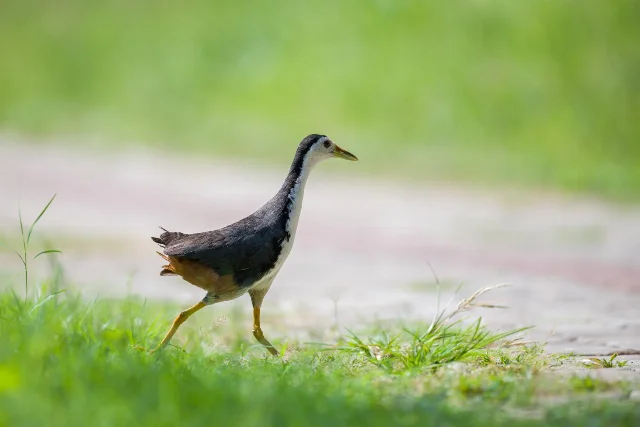
Measuring between 20 to 25 cm in length, the Paint-billed Crake is a compact and well-adapted bird. Its plumage is predominantly grey, covering much of its head, neck, and underparts, which provides excellent camouflage against the shadows of marsh grasses. The upperparts and wings feature a rich brown coloration, helping the bird blend into the mud and dead vegetation of its environment. The most striking feature, however, is its namesake: a vibrant, multi-colored bill that typically displays shades of red, yellow, and green, depending on the subspecies and individual maturity. This colorful bill stands in sharp contrast to the more muted tones of its body. The bird possesses sturdy legs, typical of waders, which allow it to navigate through shallow water and dense reeds with ease. Its eyes are often a piercing red or orange, adding to its distinct appearance. Overall, the physical design of the Paint-billed Crake is a perfect example of evolutionary adaptation, balancing the need for concealment with the specific requirements of a ground-dwelling, wetland-dependent species.
Habitat
The Paint-billed Crake is primarily found in wetland ecosystems, including marshes, swamps, and the edges of flooded grasslands. They favor areas with dense aquatic vegetation, such as reeds, sedges, and tall grasses, which provide essential cover from predators. Unlike some other waders that prefer open mudflats, the Paint-billed Crake thrives in thick, tangled growth where it can forage undisturbed. They are distributed throughout various regions of South America, including parts of Colombia, Ecuador, Brazil, and Argentina, as well as some islands in the Caribbean. Because they require specific moisture levels to survive, they are highly sensitive to habitat alteration. The loss of wetlands due to agriculture and urban development poses a significant threat to their specialized habitat requirements, making the protection of these sites essential for their long-term survival.
Diet
The diet of the Paint-billed Crake is primarily omnivorous, reflecting its opportunistic nature in the marsh environment. They forage by probing the soft mud and shallow water with their specialized bills, searching for a variety of small invertebrates. This includes insects, larvae, snails, small crustaceans, and earthworms. In addition to animal matter, they also consume a significant amount of plant material, such as seeds, aquatic vegetation, and small berries found near the water's edge. This varied diet allows them to maintain their energy levels even when specific food sources become scarce due to seasonal changes. During the breeding season, they may increase their consumption of protein-rich insects to support the development of their young, showcasing a flexible feeding strategy that is vital for their survival in dynamic wetland ecosystems.
Breeding and Nesting
Breeding habits of the Paint-billed Crake are highly seasonal, typically coinciding with the rainy season when food resources are at their peak. These birds are known for building their nests in secluded, well-hidden locations, usually placed on the ground or slightly elevated on a platform of woven reeds and grasses within dense marsh vegetation. The nest is carefully constructed to remain dry despite the surrounding water. Both parents are generally involved in the nesting process, sharing duties in incubating the eggs and protecting the nest from potential threats. A typical clutch consists of several eggs, which are incubated for about two to three weeks. Once hatched, the chicks are precocial, meaning they are relatively mobile shortly after birth. The parents continue to provide food and protection, guiding the young through the thick vegetation until they are capable of foraging on their own and finding their independence within the marsh.
Behavior
The behavior of the Paint-billed Crake is defined by extreme shyness and a tendency to remain hidden. They are largely crepuscular, meaning they are most active during the twilight hours of dawn and dusk, which helps them avoid diurnal predators. When threatened, they rarely fly, opting instead to freeze in place or run swiftly into the thickest vegetation. Their vocalizations, which are often harsh and repetitive, are more frequently heard than the birds themselves are seen. These calls play a vital role in territorial defense and communication between mates. They are solitary for the most part, though they may become more social during the breeding season. Their movement through the marsh is silent and deliberate, demonstrating an incredible ability to navigate complex, tangled environments without drawing attention to themselves.
Conservation Status
-
LC
Least Concern
The Paint-billed Crake is currently listed as a species of Least Concern by the IUCN, but this status masks the localized threats they face. The primary challenge for this species is the ongoing destruction and fragmentation of wetland habitats across their range. As marshes are drained for agricultural expansion or urban growth, the available territory for these birds shrinks significantly. Conservation efforts must focus on protecting existing wetland areas and restoring degraded sites to ensure that these secretive birds have the necessary space to forage, nest, and thrive. Continued monitoring of their populations is essential to identify areas where they may be in decline.
Interesting Facts
- The Paint-billed Crake is famously difficult to spot, often called a 'ghost' of the marshes by local birders.
- Their vibrant, multi-colored bill is thought to play a role in mate selection and species recognition.
- Despite being strong flyers, they prefer to run or hide when approached by humans or predators.
- They are highly sensitive to the water quality of their habitat and can act as bio-indicators for wetland health.
- Their nests are marvels of engineering, woven from living vegetation to stay above the water level.
- They have been observed foraging in areas that have recently been flooded, taking advantage of the influx of insects.
Tips for Birdwatchers
For birdwatchers hoping to catch a glimpse of the elusive Paint-billed Crake, patience is the ultimate virtue. Because they are shy, you should avoid sudden movements and loud noises. The best time to look for them is during the early morning or late afternoon when they are most active. Using a high-quality pair of binoculars and standing near the edge of a known marsh habitat, wait silently for movement in the reeds. Learning their specific vocalizations is highly recommended, as you are much more likely to hear them before seeing them. Recording their calls and playing them back (sparingly) can sometimes entice a curious individual closer, but this should be done ethically and sparingly to avoid causing stress to the birds. Always prioritize the bird's well-being over getting the perfect photograph, and never disturb their nesting areas.
Conclusion
In conclusion, the Paint-billed Crake (Neocrex erythrops) represents a remarkable, albeit elusive, component of our global wetland biodiversity. Its unique physical appearance, characterized by that signature multi-colored bill and subtle plumage, makes it a prized sighting for any serious ornithologist or dedicated birdwatcher. However, beyond its aesthetic appeal, the Paint-billed Crake serves as a critical indicator of the health of the marshy environments it calls home. As we have explored, their secretive behavior and specialized diet are fine-tuned to the rhythms of the wetlands, highlighting the delicate balance they maintain within these ecosystems. Protecting the Paint-billed Crake is not merely about preserving a single species; it is about safeguarding the complex, biodiverse habitats that sustain countless other organisms. By increasing our awareness, supporting habitat conservation initiatives, and practicing responsible birding, we can ensure that these fascinating birds continue to inhabit the marshes for generations to come. The study of the Paint-billed Crake serves as a poignant reminder of the importance of protecting the wild, hidden corners of our planet, where so many specialized species depend on our stewardship to survive against the encroaching tide of environmental change.
Paint-billed Crake Distribution Map & Range
The distribution map for this species will be available soon.
We are working with our official data partners to update this information.