Not available
Giant Babax
Pterorhinus waddelli
Last update: 11 Mar 2026
Read in:
English
Español
Português
हिन्दी
বাংলা
தமிழ்
മലയാളം
मराठी
ગુજરાતી
తెలుగు
French
Deutsch
Русский
日本語
简体中文
Italiano
Tiếng Việt
العربية
ಕನ್ನಡ
ਪੰਜਾਬੀ
Giant Babax Basic Information
| Scientific Name | Pterorhinus waddelli |
|---|---|
| Status | LC Least Concern |
| Size | 31-34 cm (12-13 inch) |
| Colors |
Grey
Brown
|
| Type |
Perching Birds

|
| Family | Laughingthrushes and allies |
Introduction
The Giant Babax, scientifically known as Pterorhinus waddelli, is a remarkable member of the Leiothrichidae family, often celebrated for its distinct presence within the high-altitude landscapes of the Himalayas. As a specialized perching bird, it has adapted perfectly to the challenging, rugged terrains of Tibet and surrounding regions. This species is often sought after by serious ornithologists and bird enthusiasts due to its elusive nature and relatively restricted geographical range. The Giant Babax is not merely a bird of interest for its rarity; it serves as a vital indicator of the health of alpine scrubland ecosystems. Characterized by its elongated body and distinct vocalizations, it plays an essential role in the local biodiversity. Understanding the life history of this bird requires a deep dive into its unique evolutionary trajectory, which has allowed it to thrive in environments where many other species would struggle. Throughout this guide, we will explore the intricate details of its life, from its physical architecture to its complex social behaviors, providing a comprehensive overview for researchers and nature lovers alike.
Physical Appearance
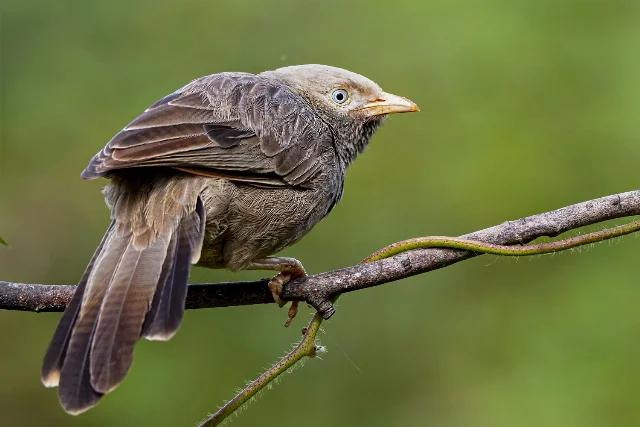
The Giant Babax is a robust and visually striking bird, measuring approximately 31 to 34 cm in length, making it one of the larger members of its genus. Its plumage is primarily a sophisticated blend of grey and brown tones, which serve as an excellent camouflage against the rocky, arid, and scrub-filled slopes of its native habitat. The feathers are characterized by fine, dark streaking, which creates a mottled effect that breaks up its outline against the backdrop of limestone cliffs and thorny bushes. One of its most defining features is its long, slightly decurved bill, which is perfectly adapted for probing into crevices. The eyes are often framed by a subtle mask-like pattern, adding to its intense, alert expression. The wings are relatively short and rounded, consistent with its lifestyle as a bird that prefers short, fluttering flights between bushes rather than long-distance soaring. Its tail is notably long and graduated, often held in a drooping position when the bird is perched, which further aids in balance during movement through dense vegetation. The legs are strong and greyish, designed for agility in navigating uneven, rocky ground where it spends a significant amount of its time foraging for food.
Habitat
The Giant Babax is primarily found in the high-altitude regions of the Tibetan Plateau and the southeastern Himalayas. It thrives in environments that are characterized by alpine scrubland, rocky slopes, and the edges of high-altitude forests. These birds are typically encountered at elevations ranging from 3,000 to 4,500 meters, where the climate is harsh and temperatures can fluctuate dramatically. They show a clear preference for areas with dense, thorny shrubs like Caragana or Hippophae, which provide both essential cover from predators and protection against the biting winds of the plateau. Their habitat is inherently rugged, often consisting of steep, boulder-strewn hillsides that are difficult for humans to access, thereby shielding the species from significant anthropogenic disturbance in many parts of its range.
Diet
The diet of the Giant Babax is largely omnivorous, reflecting its opportunistic nature in the resource-scarce environment of the high Himalayas. It spends much of its day foraging on the ground or within the lower levels of dense scrub vegetation. Its primary food sources include a variety of small invertebrates, such as beetles, spiders, and larvae, which it skillfully extracts from under rocks and within leaf litter using its long, specialized bill. Additionally, the Giant Babax consumes a significant amount of plant matter, including berries, seeds, and small buds, especially during the colder months when insect populations decline. This dietary flexibility is crucial for its survival, allowing it to maintain its energy levels throughout the challenging seasonal cycles of its high-altitude home.
Breeding and Nesting
Breeding for the Giant Babax typically occurs during the warmer months, starting in late spring and extending through mid-summer. These birds are known to be solitary nesters, establishing territories that they defend vigorously against intruders. The nest itself is a substantial, cup-shaped structure built from twigs, dried grasses, and rootlets, usually placed deep within the protection of a thorny bush or a dense thicket to deter predators. Both the male and female participate in the construction process, ensuring the nest is well-insulated against the unpredictable mountain weather. The female typically lays a clutch of three to four eggs, which are incubated primarily by her for about two weeks. Once hatched, both parents share the responsibility of feeding the chicks, bringing a steady supply of insects to support their rapid growth before they fledge and venture out into the surrounding landscape.
Behavior
The Giant Babax is a notably social yet cautious bird. While they can be seen in small family groups during the post-breeding season, they are generally elusive and tend to stay hidden within dense cover. They are not known for long-distance migration but may move to slightly lower elevations during the harshest winter months to seek better food availability. Their movement pattern is characterized by short, hopping flights and a distinctive habit of running rapidly across rocky ground. The vocalizations of the Giant Babax are diverse, consisting of a series of clear, melodic whistles and chattering calls that are often used to maintain contact with other group members while foraging in thick vegetation.
Conservation Status - LC Least Concern
Currently, the Giant Babax is classified as Least Concern by the IUCN, as it maintains a relatively stable population across its extensive, albeit remote, Himalayan range. While it does not face an immediate risk of extinction, the species is sensitive to climate-driven changes in alpine vegetation patterns. Habitat degradation due to overgrazing by livestock in certain parts of the Tibetan Plateau remains a potential long-term threat. Continued monitoring of population trends and the protection of its core scrubland habitats are essential to ensure the long-term survival of this unique mountain specialist.
Interesting Facts
- The Giant Babax is one of the largest species within the babbler family.
- It is endemic to the high-altitude regions of the Tibetan Plateau and surrounding ranges.
- Its long, decurved bill is a specialized tool for foraging among rocks and thorny shrubs.
- They are known for their distinct, melodic whistles that can echo across mountain valleys.
- Despite their size, they are masters of stealth, often disappearing into thickets when approached.
- They have adapted to survive in temperatures that drop well below freezing during winter nights.
Tips for Birdwatchers
For birdwatchers hoping to spot the elusive Giant Babax, patience and the right location are paramount. Focus your efforts on high-altitude shrublands in the Tibetan Plateau during the breeding season, when the birds are more active and vocal. Use high-quality binoculars and be prepared for strenuous hiking, as these birds prefer steep, rocky terrain. It is often best to arrive at your observation point early in the morning, as the birds are most active when they begin foraging. Move slowly and remain quiet; the Giant Babax is highly alert and will quickly retreat into dense cover if it senses danger. Blending into your surroundings with muted clothing will significantly improve your chances of a successful sighting.
Pro-Tip: To spot this bird in dense forest canopy, a 8x42 binoculars or telescope is highly recommended.
- [Check out our top recommended gear here]
Conclusion
In conclusion, the Giant Babax (Pterorhinus waddelli) stands as a fascinating testament to the adaptability of avian life in the world's most extreme environments. From its muted grey and brown plumage, which provides perfect camouflage against the stark Himalayan landscape, to its specialized foraging habits and resilient breeding strategies, this bird is a master of its ecological niche. While it currently enjoys a stable population status, the ongoing environmental shifts in the high-altitude regions of Tibet and the Himalayas serve as a reminder of the fragility of such specialized species. For the dedicated birdwatcher, encountering the Giant Babax in the wild is a rewarding experience that requires both persistence and a deep appreciation for the rugged beauty of its habitat. By continuing to study and protect the diverse ecosystems that support this species, we can ensure that the unique, melodic calls of the Giant Babax continue to echo through the mountain valleys for generations to come. Whether you are an ornithologist conducting field research or a nature enthusiast seeking the thrill of a rare sighting, the Giant Babax offers a profound look into the wonders of high-altitude evolution and biological resilience.
Tag:

200 Follower
is a writer who draws. He’s the Bestselling author of “Number of The Year”. Donec vitae tortor efficitur, convallis lelobortis elit.
Recent Posts



Subscribe For Daily Newsletter