Not available
Red-billed Leiothrix
Leiothrix lutea
Last update: 11 Mar 2026
Read in:
English
Español
Português
हिन्दी
বাংলা
தமிழ்
മലയാളം
मराठी
ગુજરાતી
తెలుగు
French
Deutsch
Русский
日本語
简体中文
Italiano
Tiếng Việt
العربية
ಕನ್ನಡ
ਪੰਜਾਬੀ
Red-billed Leiothrix Basic Information
| Scientific Name | Leiothrix lutea |
|---|---|
| Status | LC Least Concern |
| Size | 13-15 cm (5-6 inch) |
| Colors |
Olive
Red
|
| Type |
Perching Birds

|
| Family | Laughingthrushes and allies |
Introduction
The Red-billed Leiothrix (Leiothrix lutea), frequently referred to by bird enthusiasts as the Pekin Robin, is a captivating passerine bird that has garnered significant admiration worldwide for its striking appearance and melodious song. Belonging to the family Leiothrichidae, this species is native to the lush, mountainous regions of the Himalayas and parts of Southeast Asia. Despite its relatively small size, the Leiothrix possesses a personality that is as vibrant as its plumage, making it a favorite among both avian researchers and casual birdwatchers. Historically, this species has been kept in captivity due to its beautiful vocalizations and hardy nature, which unfortunately led to its introduction into various non-native environments, including parts of Hawaii and Europe. Understanding the ecological role of the Red-billed Leiothrix requires a deep dive into its natural behaviors, dietary preferences, and the complex social structures it maintains within its native forest understories. As we explore the intricacies of this perching bird, we gain a greater appreciation for the delicate balance of the ecosystems it inhabits and the importance of preserving its natural range.
Physical Appearance
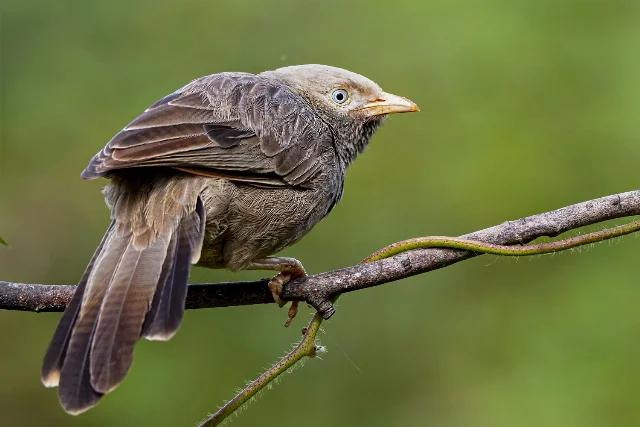
Standing at a modest size of 13 to 15 centimeters, the Red-billed Leiothrix is a masterclass in avian aesthetics. The primary plumage is a soft, earthy olive-green, which provides excellent camouflage within the dense foliage of its native habitat. This muted base color serves as the perfect backdrop for the bird's more vivid markings. The most iconic feature, from which it derives its name, is its bright, coral-red bill, which contrasts sharply against the olive tones. Further enhancing its beauty are the yellow and orange patches found on the wings and the subtle yellow ring surrounding its dark, intelligent eyes. The throat and chest exhibit a warm, golden-yellow hue that gradually transitions into the olive-green of the mantle. Both males and females share similar coloration, although males often display slightly more intense red and yellow pigments during the breeding season. Its compact, rounded wings and relatively long tail allow for agile movement through tangled underbrush, making it a highly efficient navigator of the forest floor and mid-canopy layers where it spends most of its active hours.
Habitat
The Red-billed Leiothrix thrives in diverse, high-altitude environments, primarily inhabiting the dense undergrowth of evergreen and deciduous forests. They are most commonly found in the Himalayan foothills, ranging from Pakistan through Northern India, Nepal, and into parts of Southern China and Vietnam. These birds prefer the thick, scrubby vegetation of forest edges, secondary growth, and bamboo thickets, which offer both protection from predators and an abundance of food sources. While they are primarily mountain dwellers, they are known to migrate altitudinally, moving to lower elevations during the harsh winter months to seek warmer temperatures and more accessible foraging grounds. Their ability to adapt to dense, shrubby environments makes them elusive to the casual observer, as they rarely venture into open fields or exposed areas.
Diet
As an omnivorous species, the Red-billed Leiothrix maintains a varied diet that shifts according to the seasonal availability of resources. During the spring and summer months, their diet is heavily supplemented with protein-rich insects, larvae, and spiders, which are crucial for fueling their high metabolism during the demanding breeding season. As autumn approaches and temperatures drop, they transition to a more frugivorous diet. They are particularly fond of small berries, seeds, and wild fruits, which they forage with remarkable dexterity. This bird is often seen moving through the lower canopy in small, active groups, using its strong bill to probe crevices and foliage for hidden invertebrates, demonstrating an opportunistic feeding strategy that ensures survival throughout the changing seasons.
Breeding and Nesting
The breeding season for the Red-billed Leiothrix typically commences in late spring, characterized by complex courtship displays and melodic, flute-like songs performed by the males to attract potential mates. Once a pair bond is established, both the male and female collaborate in the construction of a cup-shaped nest. These nests are expertly crafted from fine grasses, moss, rootlets, and spider silk, usually positioned securely within the dense foliage of a shrub or a bamboo clump, often between one and three meters above the ground. A typical clutch consists of three to four eggs, which are pale blue with reddish-brown speckles. Both parents share the responsibility of incubation, which lasts approximately two weeks. Following hatching, the fledglings are fed a high-protein diet of insects by both parents, ensuring rapid development before they leave the nest at roughly two weeks of age.
Behavior
The Red-billed Leiothrix is a highly social and active bird, typically observed in small, cohesive flocks outside of the breeding season. They are known for their constant motion, flitting energetically through the underbrush while maintaining contact with one another through soft, chattering calls. Despite their small size, they are surprisingly bold and curious. They exhibit a distinct hierarchy within their flocks, often engaging in playful interactions that help strengthen social bonds. While they are generally peaceful toward other species, they can become territorial during the nesting period, actively defending their chosen patch of habitat from intruders with sharp alarm calls and aggressive posturing.
Conservation Status - LC Least Concern
Currently, the Red-billed Leiothrix is classified by the IUCN as a species of Least Concern. Their population remains stable across their expansive native range in the Himalayas and Southeast Asia. However, habitat degradation due to deforestation and agricultural expansion remains a long-term concern. While they have successfully established introduced populations in other parts of the world, it is vital to prioritize the protection of their natural, primary habitats to ensure the continued health of the species. Conservation efforts focusing on forest preservation will inherently benefit the entire ecosystem that supports these vibrant birds.
Interesting Facts
- The Red-billed Leiothrix is also famously known as the Japanese Nightingale or Pekin Robin.
- They were once highly sought after in the international pet trade due to their beautiful, complex songs.
- They possess a unique social structure where they often forage in mixed-species flocks.
- Their bright red bill is a result of specific carotenoids in their diet.
- They are known to be quite intelligent, often learning to recognize specific human caretakers in captivity.
- Their flight is typically short and darting, preferring to hop through dense branches rather than fly long distances.
- In some parts of the world, they are considered an invasive species due to their ability to adapt to new environments.
Tips for Birdwatchers
For birdwatchers hoping to catch a glimpse of the Red-billed Leiothrix, patience and keen ears are essential. Because they favor dense undergrowth, they are often heard before they are seen. Listen for their distinctive, melodic warbles and sharp, short contact calls during the early morning hours, which is when they are most active. Position yourself near the edges of thickets or bamboo forests and remain as still as possible. Using high-quality binoculars is recommended, as these birds are quick and rarely sit in the open for long. Patience is key; if you remain quiet and unobtrusive, a foraging flock may eventually move into a clearer patch of foliage, providing an excellent opportunity for observation or photography.
Pro-Tip: To spot this bird in dense forest canopy, a 8x42 binoculars or telescope is highly recommended.
- [Check out our top recommended gear here]
Pro-Tip: To capture the stunning beauty of this bird, a high-quality wildlife camera and lens are highly recommended.
- [Check out best wildlife cameras here]
Conclusion
The Red-billed Leiothrix is truly a jewel of the avian world, embodying the vibrant energy of the high-altitude forests it calls home. From its striking olive and red plumage to its complex, social nature and melodious song, it remains a species that captivates the imagination of bird enthusiasts globally. Throughout this guide, we have explored the various facets of its life, including its dietary habits, nesting behaviors, and the ecological importance of its habitat. While the species is currently secure, the ongoing threats to forest biodiversity remind us of our responsibility to protect these natural spaces. Whether you are a seasoned ornithologist or a novice birdwatcher, observing the Red-billed Leiothrix in its natural environment is a rewarding experience that highlights the intricate beauty of our planet's wildlife. By continuing to support habitat conservation and promoting ethical birdwatching practices, we ensure that future generations will also have the privilege of witnessing this enchanting bird as it flits through the canopy, adding color and music to the wild landscapes of the world. Its resilience and adaptability serve as a testament to the wonders of evolution, making the Red-billed Leiothrix a species worthy of our continued study, admiration, and protection.
Tag:

200 Follower
is a writer who draws. He’s the Bestselling author of “Number of The Year”. Donec vitae tortor efficitur, convallis lelobortis elit.
Recent Posts




Subscribe For Daily Newsletter