Not available
Silver-eared Mesia
Leiothrix argentauris
Last update: 11 Mar 2026
Read in:
English
Español
Português
हिन्दी
বাংলা
தமிழ்
മലയാളം
मराठी
ગુજરાતી
తెలుగు
French
Deutsch
Русский
日本語
简体中文
Italiano
Tiếng Việt
العربية
ಕನ್ನಡ
ਪੰਜਾਬੀ
Silver-eared Mesia Basic Information
| Scientific Name | Leiothrix argentauris |
|---|---|
| Status | LC Least Concern |
| Size | 16-18 cm (6-7 inch) |
| Colors |
Olive
Silver
|
| Type |
Perching Birds

|
| Family | Laughingthrushes and allies |
Silver-eared Mesia Names In Other Languages
| assamese | ৰূপালী কাণৰ মেছিয়া |
|---|---|
| hindi | चांदी के कान वाली मेसिया |
| malayalam | വെള്ളി ചെവിയൻ മെസിയ |
| portuguese | Mésia-de-orelhas-prateadas |
| spanish | Mesia de orejas plateadas |
| tamil | வெள்ளி-காது மேசியா |
Introduction
The Silver-eared Mesia (Leiothrix argentauris) is one of the most visually striking members of the Leiothrichidae family. Often admired for its vibrant coloration and melodic song, this small perching bird has captured the hearts of ornithologists and birdwatchers across Southeast Asia. As a member of the babbler family, it is known for its social nature and active lifestyle within the dense undergrowth of its native forests. Measuring between 16 and 18 centimeters, this bird is relatively small, yet its presence is easily felt due to its constant activity and distinctive, high-pitched vocalizations. The species is widely distributed across various mountain ranges, thriving in both primary and secondary forests. Understanding the Silver-eared Mesia requires a deep dive into its unique biological traits, social structures, and ecological niche. Whether you are a seasoned birder or a casual nature enthusiast, learning about this fascinating avian species offers a window into the rich biodiversity of the Asian tropical landscapes, highlighting the importance of forest conservation for maintaining healthy, thriving bird populations in the wild.
Physical Appearance
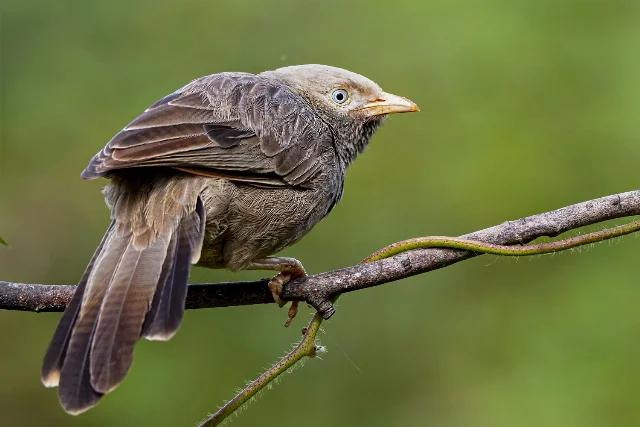
The Silver-eared Mesia is a masterclass in avian aesthetics, characterized by a complex and beautiful color palette. Its primary plumage is a soft, deep olive, which provides excellent camouflage against the dense forest foliage. The most iconic feature, from which it derives its common name, is the brilliant silver patch located on the ear coverts, which contrasts sharply against its dark head. The bird also features a striking yellow throat and a vibrant orange-red patch on its wings, which becomes particularly visible during flight. Its underparts are a lighter, yellowish-olive, while the tail is relatively long and often tipped with yellow. The beak is strong and slightly curved, ideal for its diverse diet, and its legs are typically a pale, flesh-toned color. Sexual dimorphism is present, though subtle, with males often displaying slightly more intense color saturations compared to their female counterparts. Juvenile birds appear slightly duller, lacking the full intensity of the silver ear patches and the vivid wing markings until they reach maturity. This intricate combination of colors serves both as a means of identification among flock members and as a potential signaling mechanism during courtship displays within their social groups.
Habitat
The Silver-eared Mesia is primarily a bird of the mountain forests, typically found at elevations ranging from 600 to 2,500 meters. Its preferred habitat consists of dense evergreen forests, bamboo thickets, and secondary growth areas where the vegetation is thick and provides ample cover. They are commonly observed in the understory and mid-story levels of the forest, rarely venturing into the open canopy. This species is highly adaptable and can often be found in forest edges or near clearings, provided there is enough dense shrubbery for nesting and foraging. Their distribution spans across parts of Southeast Asia, including countries like Vietnam, Thailand, Malaysia, and parts of Southern China and India. Because they rely heavily on dense vegetation for protection against predators, the preservation of primary and secondary forest corridors is essential for their survival. Fragmentation of these habitats due to human activity remains a significant concern for the long-term stability of their populations in many regions.
Diet
The Silver-eared Mesia is an opportunistic omnivore, displaying a diverse diet that varies depending on the seasonal availability of food sources. Its primary intake consists of a wide variety of small insects, including beetles, caterpillars, ants, and spiders, which it gleans from the leaves and branches of shrubs. During the fruiting seasons, the mesia switches its focus to a diet of berries, small fruits, and nectar from various forest flowers. This varied diet makes them essential contributors to the forest ecosystem, as they play a role in both insect population control and seed dispersal. They are often seen foraging in small, noisy flocks, moving rapidly through the foliage in search of food. Their agility allows them to hang upside down or make quick, acrobatic leaps to capture prey, showcasing their highly energetic nature. By consuming both plant and animal matter, the Silver-eared Mesia maintains a balanced nutritional intake, which is necessary to support their high metabolic rate and active lifestyle in the humid, mountainous regions they call home.
Breeding and Nesting
Breeding for the Silver-eared Mesia typically occurs during the spring and early summer months, coinciding with the peak availability of insects and fruits. The nesting process is a collaborative effort between the male and female, who work together to construct a cup-shaped nest. These nests are expertly woven from dry grasses, twigs, moss, and spider webs, usually placed in a hidden location within a dense shrub or a thick clump of bamboo, often just a few meters above the ground. A typical clutch consists of two to four pale blue or white eggs, speckled with fine reddish-brown spots. Both parents take turns incubating the eggs, which usually hatch after about two weeks. Once the chicks emerge, both the mother and father are actively involved in feeding them a protein-rich diet of small insects to ensure rapid growth. The fledglings typically leave the nest within two to three weeks but remain under the protection of their parents for some time as they learn to forage and navigate the complex forest environment. Their commitment to cooperative parenting is a testament to the strong social bonds observed within this species.
Behavior
The Silver-eared Mesia is a highly social bird, almost always encountered in small, active groups or family parties. They are known for their lively and inquisitive behavior, often engaging in playful interactions with other flock members. Their communication is equally active, featuring a variety of complex whistles, warbles, and scolding calls that help keep the flock together while navigating the dense forest. Despite their beauty, they can be somewhat elusive, preferring to stay hidden within the thick cover of the undergrowth. However, they are not particularly shy and will occasionally venture into clearer areas if they feel secure. Their movement is characterized by quick, hopping flights from branch to branch as they forage. During the non-breeding season, they may join mixed-species bird flocks, which is a common survival strategy in tropical forests to increase the chances of finding food and spotting potential predators. This gregarious nature makes them one of the most entertaining and engaging birds to observe in their natural habitat, provided one has the patience to wait for them to emerge from the dense foliage.
Conservation Status - LC Least Concern
Currently, the Silver-eared Mesia is classified as a species of Least Concern by the IUCN. While their populations are generally stable, they are not immune to the pressures of habitat loss and environmental degradation. The primary threat to this species is the clearing of mountain forests for agriculture and urban development. Furthermore, their popularity as cage birds has historically led to trapping in certain regions, which can negatively impact local populations. Conservation efforts should focus on protecting large, contiguous forest tracts and managing human impact on their specific elevational zones. Because they are sensitive to changes in forest structure, monitoring their population trends is a vital component of local biodiversity conservation programs. Protecting the Silver-eared Mesia means protecting the entire ecosystem they inhabit, ensuring that these vibrant birds continue to thrive in the wild for generations to come.
Interesting Facts
- The Silver-eared Mesia is known for its incredible vocal range, producing complex, flute-like songs.
- They are highly social birds and are rarely seen alone, preferring the company of their flock.
- The silver ear patch is a diagnostic feature that helps distinguish them from other similar babbler species.
- They play a crucial role in the ecosystem by acting as pollinators for various forest flowers.
- Despite their small size, they are remarkably bold when defending their nesting territory from intruders.
- Their nests are often so well-camouflaged that they are nearly impossible to spot for the untrained eye.
- They are often kept in captivity due to their striking appearance and pleasant, melodic singing abilities.
Tips for Birdwatchers
For birdwatchers hoping to spot the Silver-eared Mesia, patience and timing are key. The best approach is to visit known mountain forest habitats during the early morning hours, as this is when the birds are most active and vocal. Since they prefer dense undergrowth, it is often easier to hear their distinct calls before you actually see them. Use a high-quality pair of binoculars and stay quiet, allowing the birds to become accustomed to your presence. Avoid wearing bright colors that might startle them. If you hear the flock chattering, remain still and scan the middle layers of the vegetation. Patience will eventually be rewarded, as these curious birds are often attracted to movement and may come closer to investigate. Bringing a directional microphone can also help you pinpoint their exact location within the dense greenery. Remember to respect their space, especially during the breeding season, to ensure that you do not disrupt their natural behaviors or nesting sites.
Pro-Tip: To spot this bird in dense forest canopy, a 8x42 binoculars or telescope is highly recommended.
- [Check out our top recommended gear here]
Conclusion
The Silver-eared Mesia is truly a jewel of the Asian mountain forests, representing the intricate beauty and social complexity of the avian world. From its stunning olive and silver plumage to its harmonious, flute-like songs, this species provides a unique and rewarding experience for anyone fortunate enough to encounter it in the wild. As we have explored, their role as social, forest-dwelling omnivores is vital to the health of the ecosystems they inhabit, contributing to seed dispersal and insect control. While they are currently categorized as a species of Least Concern, the ongoing challenges of habitat fragmentation and environmental change remind us of the fragility of our natural world. By fostering a deeper understanding of the Silver-eared Mesia—its habits, its needs, and its place in the forest—we are better equipped to advocate for the protection of the environments that support such remarkable biodiversity. Whether you are observing them in the mist-covered mountains or studying their complex social interactions, the Silver-eared Mesia serves as a beautiful reminder of the wonders of nature and the importance of our continued commitment to conservation. Protecting these birds ensures that the vibrant colors and melodies of the forest will endure, enriching the natural heritage of our planet for future generations of birders and conservationists to appreciate and study.
Tag:

200 Follower
is a writer who draws. He’s the Bestselling author of “Number of The Year”. Donec vitae tortor efficitur, convallis lelobortis elit.
Recent Posts




Subscribe For Daily Newsletter