Not available
Palani Chilappan
Montecincla fairbanki
Last update: 11 Mar 2026
Read in:
English
Español
Português
हिन्दी
বাংলা
தமிழ்
മലയാളം
मराठी
ગુજરાતી
తెలుగు
French
Deutsch
Русский
日本語
简体中文
Italiano
Tiếng Việt
العربية
ಕನ್ನಡ
ਪੰਜਾਬੀ
Palani Chilappan Basic Information
| Scientific Name | Montecincla fairbanki |
|---|---|
| Status | NT Near Threatened |
| Size | 20-21 cm (8-8 inch) |
| Colors |
Olive-grey
Rufous
|
| Type |
Perching Birds

|
| Family | Laughingthrushes and allies |
Introduction
The Palani Chilappan, scientifically known as Montecincla fairbanki, is a fascinating member of the Leiothrichidae family, often referred to as the Palani laughingthrush. This medium-sized perching bird is a true gem of the Indian subcontinent, specifically endemic to the high-altitude regions of the Southern Western Ghats. Found primarily in the hills of Kerala and Tamil Nadu, this species has captivated ornithologists and bird enthusiasts alike with its distinct vocalizations and social nature. As an inhabitant of specialized montane ecosystems, the Palani Chilappan plays a vital role in the biodiversity of the Shola forests and surrounding grasslands. Understanding this bird requires a look into its unique evolutionary history and its adaptation to the cool, misty environment of the Palani and Annamalai hills. As human encroachment and climate change threaten these fragile ecosystems, the presence of the Palani Chilappan remains a critical indicator of the health of the high-altitude montane habitats that characterize the majestic Western Ghats landscape.
Physical Appearance
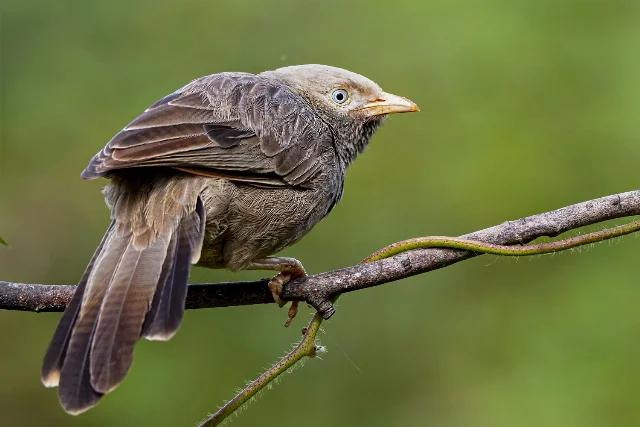
Measuring approximately 20-21 cm in length, the Palani Chilappan is a robust and visually distinct bird. Its plumage is primarily defined by a sophisticated palette of olive-grey tones, which provide excellent camouflage against the lichen-covered branches of its montane habitat. This primary coloration is complemented by rich, warm rufous patches, particularly visible on the wings and the underparts, which add a vibrant contrast to its otherwise muted appearance. The bird features a sturdy, slightly curved bill adapted for foraging in dense foliage and a long, graduated tail that aids in balance while navigating through thick undergrowth. Its eyes are often surrounded by a light-colored ring, and the overall build of the bird is typical of the laughingthrush group, appearing stout yet agile. Juveniles may show slightly duller coloration, but both sexes share the characteristic markings that make the species recognizable to experienced observers in the field.
Habitat
The Palani Chilappan is strictly confined to the high-altitude montane regions of the Southern Western Ghats, typically found at elevations above 1,200 meters. Its preferred habitat consists of the unique 'Shola' forest patches—stunted, evergreen tropical montane forests—interspersed with grasslands. These areas are characterized by high humidity, frequent mist, and cool temperatures throughout the year. The birds are rarely seen in the lowlands, as they are highly specialized to the dense understory and mid-canopy layers of these island-like forest fragments. They rely heavily on the complex structure of native trees and shrubs to provide both protection from predators and ample foraging grounds within the protected landscapes of the Palani and Annamalai hills.
Diet
As an opportunistic feeder, the Palani Chilappan possesses a diverse diet that sustains it through the varying seasons of the Western Ghats. Its primary food sources consist of a wide variety of small insects, larvae, and spiders, which it gleans from the bark of trees and the leaf litter of the forest floor. In addition to its insectivorous habits, the bird also consumes a significant amount of plant matter, including berries, small fruits, and nectar from native flowers. This mixed diet makes the Palani Chilappan an essential seed disperser within its ecosystem. During the fruiting season, they are often seen in small, active groups moving through the canopy, searching for the most succulent berries to supplement their nutritional needs.
Breeding and Nesting
The breeding season of the Palani Chilappan typically coincides with the arrival of the monsoon, usually between the months of March and June. During this time, the birds become increasingly vocal as they establish and defend their territories. They construct cup-shaped nests, meticulously woven from twigs, moss, grass, and rootlets, usually placed in the dense foliage of small trees or thick shrubs, often hidden from plain sight to avoid predators. A typical clutch consists of two to three eggs, which are incubated primarily by the female, although the male remains nearby to guard the site. Both parents are highly involved in the rearing process, bringing a steady supply of insects to the nestlings until they are ready to fledge. This cooperative approach to nesting ensures the survival of their young in the challenging, high-altitude environment.
Behavior
Social and highly active, the Palani Chilappan is almost always observed in small, noisy groups, a trait common among laughingthrushes. Their presence is often announced by their loud, melodious, and sometimes harsh calls that echo through the misty forests. They are agile movers, hopping between branches with great speed while foraging. Despite their social nature, they can be quite shy and will quickly retreat into the dense undergrowth if they sense a disturbance. Their behavior is characterized by constant movement and interaction with other group members, including social grooming and synchronized foraging, which helps them maintain strong bonds within their small family units.
Conservation Status - NT Near Threatened
The Palani Chilappan is currently listed as Near Threatened by the IUCN, primarily due to its restricted range and the ongoing fragmentation of its montane habitat. The Shola forests it inhabits are particularly vulnerable to climate change, invasive species, and human-induced land-use changes, such as tea and coffee plantations. Protecting the remaining patches of native forest and establishing wildlife corridors are essential for the long-term survival of this species. Conservation efforts must focus on maintaining the integrity of these high-altitude ecosystems to ensure that the Palani Chilappan continues to thrive in its natural environment.
Interesting Facts
- The Palani Chilappan is an endemic species found only in the Southern Western Ghats of India.
- It is known for its loud, laughing-like calls, which is why it is often referred to as a laughingthrush.
- They are vital for forest health as they act as important seed dispersers for many native montane tree species.
- They prefer the cool, misty climate of the Shola forests and are rarely found below 1,200 meters.
- These birds are highly social and are almost always seen in small, chatty groups.
- The species was named after the British colonial officer, Mr. Fairbank, who served in India.
Tips for Birdwatchers
For birdwatchers hoping to spot the elusive Palani Chilappan, patience and timing are key. The best time to visit the Western Ghats for birding is during the early morning, when the birds are most active and vocal. Focus your efforts in the high-altitude Shola forest patches of Kodaikanal or Munnar. Because they are often shy, using a high-quality pair of binoculars is essential. Listen for their distinct, loud calls, which often give away their location before you see them. Wear neutral-colored clothing to blend into the environment and remain as quiet as possible. Avoid using playback calls excessively, as this can cause unnecessary stress to the birds during their sensitive breeding season.
Pro-Tip: To spot this bird in dense forest canopy, a 8x42 binoculars or telescope is highly recommended.
- [Check out our top recommended gear here]
Conclusion
The Palani Chilappan (Montecincla fairbanki) stands as a quintessential ambassador of the high-altitude biodiversity found in the Southern Western Ghats. Through its unique physical characteristics, such as its olive-grey and rufous plumage, and its complex social behaviors, this bird offers a glimpse into the evolutionary wonders of the Shola forests. While its status as a Near Threatened species serves as a sobering reminder of the environmental challenges facing our planet, it also highlights the urgent need for habitat preservation and sustainable land management in these precious mountain ecosystems. For birdwatchers and nature enthusiasts, encountering a group of Palani Chilappans in their natural, misty habitat is a deeply rewarding experience that emphasizes the beauty and fragility of our natural world. By understanding their needs, respecting their habitat, and supporting conservation initiatives, we can ensure that these vibrant, vocal birds continue to grace the high peaks of the Western Ghats for generations to come. Their presence is not just a treat for the eyes and ears, but a vital component of the ecological tapestry of India.
Tag:

200 Follower
is a writer who draws. He’s the Bestselling author of “Number of The Year”. Donec vitae tortor efficitur, convallis lelobortis elit.
Recent Posts





Subscribe For Daily Newsletter