
Not available
Striated Babbler
Argya earlei
Last update: 11 Mar 2026
Read in:
English
Español
Português
हिन्दी
বাংলা
தமிழ்
മലയാളം
मराठी
ગુજરાતી
తెలుగు
French
Deutsch
Русский
日本語
简体中文
Italiano
Tiếng Việt
العربية
ಕನ್ನಡ
ਪੰਜਾਬੀ
Striated Babbler Basic Information
| Scientific Name | Argya earlei |
|---|---|
| Status | LC Least Concern |
| Size | 21-25 cm (8-10 inch) |
| Colors |
Brown
Buff
|
| Type |
Perching Birds

|
| Family | Laughingthrushes and allies |
Introduction
The Striated Babbler (Argya earlei) is a fascinating member of the Leiothrichidae family, known for its distinctive appearance and gregarious nature. As a medium-sized perching bird, it is primarily found across the Indian subcontinent, thriving in specific wetland and scrubland ecosystems. Often spotted in small groups, these birds are social, noisy, and highly active, making them a favorite among birdwatchers who frequent marshy areas. The species exhibits a unique set of behaviors that highlight its adaptation to life in dense reeds and tall grasses. Understanding the Striated Babbler requires a look into its evolutionary niche, where it has perfected the art of navigating complex vegetation. Whether it is through their social calls or their rhythmic foraging patterns, these birds offer a glimpse into the intricate biodiversity of South Asian wetlands. As we delve deeper into their biology, we uncover the complexities of their lifestyle, from their specialized diet to their elaborate nesting habits, all of which contribute to their survival in a rapidly changing environment.
Physical Appearance
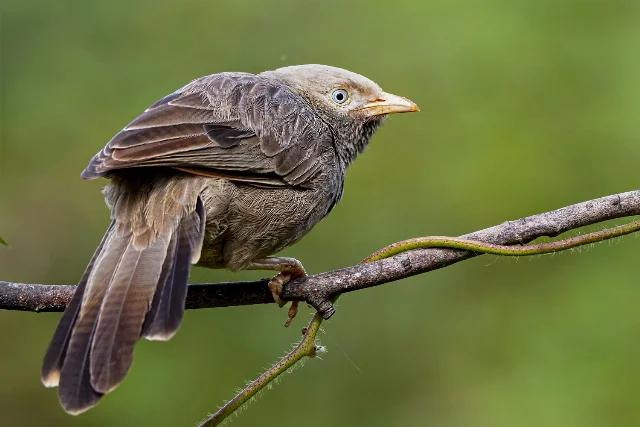
The Striated Babbler is a medium-sized bird, typically measuring between 21 and 25 cm in length. Its plumage is characterized by a rich, warm brown primary color, which is heavily streaked with darker brown or blackish longitudinal markings, giving the bird its common name. The underparts are a lighter buff or off-white shade, providing a subtle contrast to the darker, streaked back and wings. The bird possesses a relatively long, graduated tail, which is a hallmark feature of the genus Argya. Its bill is strong, slightly curved, and dark-colored, perfectly adapted for probing into dense foliage or soil for insects. The eyes are often a striking yellow or pale orange, adding character to its expressive face. The wings are short and rounded, indicative of a bird that prefers short, agile flights between reeds rather than long-distance migration. Juveniles often display a slightly duller plumage compared to the vibrant streaks of the adults, but the overall structural profile remains consistent, making identification easier for experienced observers.
Habitat
The Striated Babbler is a habitat specialist, primarily found in areas characterized by tall, dense vegetation. They are most frequently observed in wetlands, riverine grasslands, and reed beds, particularly near water bodies like lakes, marshes, and slow-moving rivers. These birds rely heavily on the cover provided by tall grasses such as Phragmites and Saccharum. They are rarely found in dense forests or high-altitude regions, preferring the lowland plains of the Indian subcontinent. Their habitat choice is driven by the need for abundant insect prey and secure nesting sites that are protected from predators by the thick, tangled stalks of wetland plants. As these wetland ecosystems face pressure from agricultural expansion and development, the Striated Babbler's range is increasingly restricted to protected areas and preserved marshlands, highlighting the critical importance of wetland conservation.
Diet
The diet of the Striated Babbler is primarily insectivorous, although it is known to be opportunistic. These birds spend much of their day actively foraging in the lower strata of reeds and grasses, searching for a variety of invertebrates including beetles, spiders, caterpillars, and small larvae. Their strong, slightly curved bills allow them to probe deep into the crevices of plants or sift through the leaf litter at the base of reeds. Occasionally, they will supplement their insect-heavy diet with small seeds, nectar, or berries, especially during seasons when insect populations might be lower. Because they forage in groups, they are highly efficient at flushing out prey, with members of the flock communicating constantly to coordinate their search patterns. This cooperative foraging behavior allows them to exploit food sources that might be difficult for a solitary bird to access.
Breeding and Nesting
Breeding for the Striated Babbler typically occurs during the monsoon season or shortly thereafter, when food resources are at their peak. These birds build a sturdy, cup-shaped nest, usually constructed from dry grasses, roots, and fine twigs, and lined with soft materials like hair or down. The nest is carefully concealed within the dense center of a reed clump or a thick bush, usually low to the ground or just above the water level. A typical clutch consists of three to five glossy, greenish-blue eggs. Both the male and female participate in nest building and the incubation of the eggs, which lasts about two weeks. Cooperative breeding is sometimes observed in this species, where other members of the flock assist in feeding the chicks. This behavior ensures higher survival rates for the young, as the constant vigilance of the group protects the nest from potential predators like snakes or larger birds.
Behavior
The Striated Babbler is a highly gregarious bird, almost always seen in small family groups or larger flocks of up to ten or more individuals. They are notoriously noisy, frequently emitting a series of chattering, musical calls that help maintain group cohesion while foraging. When moving through the dense reeds, they often hop from stem to stem, displaying remarkable agility. They are generally shy and will quickly dive deeper into the cover if they sense danger. Despite their social nature, they are territorial and will defend their preferred patch of reeds from other groups. Their flight is typically short and labored, characterized by a series of rapid wing beats followed by a glide, as they move between patches of vegetation in their marshy home.
Conservation Status - LC Least Concern
Currently, the Striated Babbler is classified as a species of Least Concern by the IUCN. However, this status does not imply that they are immune to environmental threats. Their reliance on specific wetland and grassland habitats makes them vulnerable to habitat degradation and loss. The draining of marshes for urban development and the conversion of grasslands into agricultural land are significant threats to their long-term survival. Protecting large, contiguous patches of wetlands is essential to ensure that populations remain stable. Continued monitoring of their population trends is necessary to detect any localized declines before they become widespread issues.
Interesting Facts
- They are known for their distinctively loud and chattering social calls.
- The long, graduated tail is a key identification feature for the genus Argya.
- They often engage in cooperative breeding to protect their young from predators.
- They are rarely found far from water, preferring marshy and reedy environments.
- Their plumage acts as excellent camouflage within the brown, dried reeds.
- They are highly social birds that forage in coordinated groups.
- The Striated Babbler can be found throughout much of the Indian subcontinent.
Tips for Birdwatchers
To observe the Striated Babbler, patience is your best tool. Head to wetland areas with tall reeds early in the morning, as this is when the birds are most active and vocal. Listen for their characteristic chattering calls, which will often lead you to their location before you actually see them. Use high-quality binoculars to scan the lower levels of the vegetation, as they rarely perch at the very tops of plants. Avoid sudden movements, as these birds are quite wary and will quickly retreat into the thickest part of the reeds if startled. If you find a flock, stay still and observe their group dynamics; you will likely see them foraging in a coordinated manner. Bringing a field guide specific to South Asian birds will help you distinguish them from other similar-looking babbler species, such as the Jungle Babbler, by focusing on their specific habitat preferences and the distinct streaking patterns on their feathers.
Pro-Tip: To spot this bird in dense forest canopy, a 8x42 binoculars or telescope is highly recommended.
- [Check out our top recommended gear here]
Conclusion
The Striated Babbler is a quintessential example of how specialized avian species adapt to their unique environments. By thriving in the dense, often overlooked ecosystems of wetlands and riverine grasslands, these birds play a vital role in the health of their habitats, acting as insect controllers and contributing to the rich tapestry of biodiversity in the Indian subcontinent. Their social nature, complex communication, and cooperative breeding strategies provide endless fascination for ornithologists and bird enthusiasts alike. As we continue to study and appreciate the Striated Babbler, we are reminded of the importance of preserving the very landscapes they call home. Conservation efforts focused on protecting wetlands are not just about saving a single species, but about maintaining the delicate balance of an entire ecosystem. Whether you are a casual observer or a dedicated researcher, the Striated Babbler offers a rewarding experience, inviting us to look closer at the hidden worlds within our reeds. By fostering a deeper understanding of these remarkable perching birds, we can better advocate for the preservation of the natural world, ensuring that future generations will also have the chance to hear the lively chatter of the Striated Babbler echoing through the marshes.
Tag:

200 Follower
is a writer who draws. He’s the Bestselling author of “Number of The Year”. Donec vitae tortor efficitur, convallis lelobortis elit.
Recent Posts







Subscribe For Daily Newsletter