Ridgway's Rail
Rallus obsoletus
Last update: 04 Aug 2026
Read in:
English
Español
Português
हिन्दी
বাংলা
தமிழ்
മലയാളം
मराठी
ગુજરાતી
తెలుగు
French
Deutsch
Русский
日本語
简体中文
Italiano
Tiếng Việt
العربية
ಕನ್ನಡ
ਪੰਜਾਬੀ
Ridgway's Rail Basic Information
| Scientific Name | Rallus obsoletus |
|---|---|
| Status | NT Near Threatened |
| Size | 32-40 cm (13-16 inch) |
| Colors |
Brown
Grey
|
| Type |
Waders

|
| Family | Rails, Gallinules, Coots |
Introduction
The Ridgway's Rail (Rallus obsoletus), formerly considered a subspecies of the Clapper Rail, is a fascinating and elusive inhabitant of coastal salt marshes and brackish wetlands. As a member of the Rallidae family, this bird is a specialized wader perfectly adapted to life in dense, tidal vegetation. Known for its secretive nature, the Ridgway's Rail is rarely seen by casual observers, often heard long before it is spotted. Its presence is a vital indicator of the health of California's coastal ecosystems, particularly its remaining salt marsh habitats. Due to extensive habitat loss and fragmentation, this species has become a focal point for conservation efforts in the western United States. Understanding the biology, behavior, and environmental requirements of the Ridgway's Rail is essential for protecting this unique bird. Through dedicated habitat restoration and monitoring programs, biologists aim to ensure that this remarkable wader continues to thrive in its fragile, tide-influenced environment for generations to come.
Physical Appearance
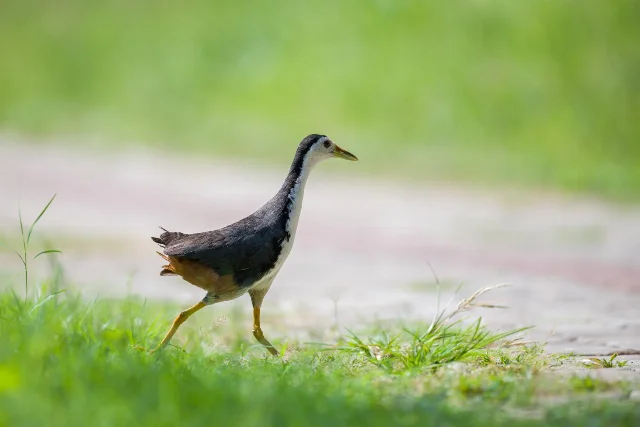
The Ridgway's Rail is a medium-sized bird, typically measuring between 32 to 40 cm in length. Its physical appearance is characterized by a sturdy, laterally compressed body, which allows it to navigate easily through dense marsh grasses. The primary plumage color is a rich, mottled brown, providing excellent camouflage against the mud and vegetation of its habitat. This brown coloration is complemented by greyish tones, particularly on the cheeks and breast, which give the bird a somewhat muted, understated appearance. It possesses a long, slightly decurved bill, which is perfectly adapted for probing into soft mud and shallow water to search for prey. The legs are relatively long and strong, supporting the bird as it stalks through the marsh. Both males and females look similar, although males are generally slightly larger. Their short, rounded wings are suited for short, explosive flights rather than sustained migration, reflecting their sedentary lifestyle in stable wetland environments.
Habitat
The Ridgway's Rail is highly specialized and restricted to specific coastal habitats, primarily salt marshes and brackish wetlands. They are most commonly found in the tidal marshes of California, particularly around the San Francisco Bay area and along the southern California coast. These birds require areas with dense, emergent vegetation, such as cordgrass (Spartina) and pickleweed (Salicornia), which provide essential cover from predators and protection during high tides. They are intricately linked to tidal cycles, as the rise and fall of the water dictate their foraging and nesting opportunities. Consequently, they are rarely found far from these tide-influenced environments, making them particularly vulnerable to habitat destruction caused by urban development and sea-level rise.
Diet
As a specialized wader, the Ridgway's Rail is an opportunistic omnivore with a diet heavily reliant on the invertebrates found in its marshy home. Its primary food sources include a variety of crustaceans, such as crabs and shrimp, which it expertly captures using its long, specialized bill. Additionally, they consume mollusks, worms, small fish, and occasionally insects found in the mudflats. During low tide, the rail can be observed actively probing the substrate for prey. While they are primarily carnivorous, they may also consume small amounts of plant material. Their foraging technique is methodical, moving slowly through the marsh vegetation and mud, relying on their keen senses to locate food buried just beneath the surface.
Breeding and Nesting
Breeding for the Ridgway's Rail typically occurs from early spring through summer, depending on local tidal conditions and food availability. These birds are monogamous and build elaborate, well-hidden nests constructed from woven marsh vegetation. The nest is typically placed in a dense clump of vegetation, often slightly elevated above the high-tide line to prevent flooding, although nests are still vulnerable to extreme tidal events. A typical clutch consists of 5 to 10 eggs, which are incubated by both parents for approximately three to four weeks. Once hatched, the precocial chicks are able to follow their parents shortly after, learning to forage in the marsh. Both adults share responsibilities in protecting and feeding the young, which is crucial given the high predation pressure in these open, wetland environments.
Behavior
Ridgway's Rails are notoriously secretive and primarily crepuscular, meaning they are most active during dawn and dusk. They are rarely seen in the open, preferring to remain hidden within the thick cover of marsh vegetation. When moving through the marsh, they often walk or run rather than fly, utilizing their narrow bodies to slip between dense stems. However, they are capable of flight when necessary, usually over short distances. They are also proficient swimmers, often crossing tidal channels to reach different parts of their home range. Their vocalizations are highly distinctive, consisting of a series of grunts and clattering calls, often used to communicate with mates or defend their territories.
Conservation Status - NT Near Threatened
The Ridgway's Rail is currently listed as an endangered species under both federal and state laws. Its populations have declined significantly due to the extensive destruction and degradation of coastal salt marshes caused by human development, industrial pollution, and invasive species. Furthermore, climate change and rising sea levels pose a severe, ongoing threat to their remaining habitat. Conservation efforts are currently focused on habitat restoration, protection of existing marshes, and predator control programs to increase nesting success. Continued monitoring and public awareness are essential for the long-term survival of this species.
Interesting Facts
- They are expert swimmers and can cross tidal channels with ease.
- Their bodies are laterally compressed, allowing them to move through dense vegetation without resistance.
- They are rarely seen in flight, preferring to run or walk through the marsh.
- Their calls are loud and distinctive, often used to establish territory.
- They rely on high-tide refugia to survive during extreme flooding events in the marsh.
- The Ridgway's Rail was formerly classified as a subspecies of the Clapper Rail.
Tips for Birdwatchers
Birdwatching for the Ridgway's Rail requires immense patience and a quiet approach. The best time to spot them is during a very high tide when the water forces them to move out of the deepest cover and into slightly more exposed areas of vegetation. Visit known salt marsh reserves in California, particularly during the early morning or late evening hours. Use high-quality binoculars or a spotting scope from a distance to avoid disturbing them, as they are easily spooked. Listen carefully for their characteristic, raucous calls, which are often the best indicator of their presence. Remember that they are endangered, so always adhere to ethical birding practices and never attempt to approach or flush them from their nesting areas.
Pro-Tip: To spot this bird in dense forest canopy, a 8x42 binoculars or telescope is highly recommended.
- [Check out our top recommended gear here]
Conclusion
The Ridgway's Rail stands as a poignant symbol of the fragile beauty found within California's coastal salt marshes. As a specialized wader, its life is entirely intertwined with the rhythms of the tides and the health of the dense vegetation that defines its habitat. While its secretive nature and camouflaged plumage make it a challenging subject for birdwatchers, the effort to observe this bird in its natural environment is immensely rewarding. However, the true importance of the Ridgway's Rail extends beyond its appeal to observers; it serves as a critical indicator species for the ecological integrity of our wetlands. The ongoing conservation challenges, from habitat loss to the impacts of climate change, highlight the urgent need for continued protection and restoration efforts. By valuing and safeguarding these unique marshlands, we are not only ensuring the survival of the Ridgway's Rail but also preserving the vital ecosystem services that these marshes provide to the broader environment. Protecting the Ridgway's Rail is a testament to our commitment to biodiversity and the preservation of our natural heritage.
Tag:

200 Follower
is a writer who draws. He’s the Bestselling author of “Number of The Year”. Donec vitae tortor efficitur, convallis lelobortis elit.
Recent Posts




Subscribe For Daily Newsletter