
Not available
Least Sandpiper
Calidris minutilla
Last update: 18 Mar 2026
Read in:
English
Español
Português
हिन्दी
বাংলা
தமிழ்
മലയാളം
मराठी
ગુજરાતી
తెలుగు
French
Deutsch
Русский
日本語
简体中文
Italiano
Tiếng Việt
العربية
ಕನ್ನಡ
ਪੰਜਾਬੀ
Least Sandpiper Basic Information
| Scientific Name | Calidris minutilla |
|---|---|
| Status | NT Near Threatened |
| Size | 13-15 cm (5-6 inch) |
| Colors |
Brown
White
|
| Type |
Waders

|
| Family | Sandpipers, Snipes, Phalaropes |
Introduction
The Least Sandpiper (Calidris minutilla) holds the prestigious title of being the smallest shorebird in the entire world. Despite its diminutive stature, this fascinating member of the Scolopacidae family is a marvel of endurance and adaptation. Often found probing the muddy edges of wetlands, these tiny waders are a common sight for birdwatchers across North and South America. They belong to the group of birds known as 'peeps'—a colloquial term used by ornithologists to describe a collection of small, fast-moving sandpipers that are notoriously difficult to tell apart in the field. The Least Sandpiper is distinguished by its subtle, earthy plumage and its preference for inland marshes rather than exclusively coastal beaches. Their migratory journey is nothing short of extraordinary, as they travel thousands of miles from their Arctic breeding grounds to the warmer climates of the southern hemisphere. Understanding the life cycle and ecological significance of the Least Sandpiper provides a window into the complex dynamics of wetland ecosystems and the vital importance of preserving stopover habitats for migratory birds.
Physical Appearance
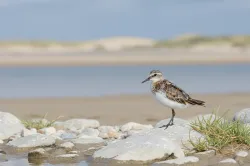
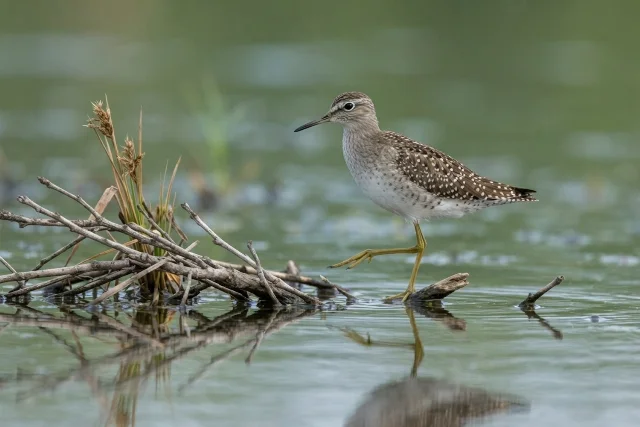
Measuring a mere 13 to 15 centimeters in length, the Least Sandpiper is a masterclass in compact avian design. Its primary coloration is a mottled, streaky brown, which provides exceptional camouflage against the mud, decaying vegetation, and grasses of its preferred habitats. The upperparts feature feathers with dark centers and light edges, creating a textured appearance that blends seamlessly into the environment. In contrast, the underparts are predominantly white, particularly on the belly and throat, providing a clean counterpoint to the darker, more intricate markings on the back and wings. One of the most reliable identification features for this species is the color of its legs; unlike many other small sandpipers that possess black legs, the Least Sandpiper typically sports yellowish or dull greenish-yellow legs. Their bill is short, thin, and slightly decurved at the very tip, which is perfectly suited for their surface-level foraging style. When in flight, they display a faint white wing stripe and dark central tail feathers, characteristics that help experienced birders distinguish them from similar species like the Semipalmated Sandpiper.
Habitat
The Least Sandpiper is highly adaptable, though it shows a clear preference for specific wetland environments. During the breeding season, they migrate to the subarctic and arctic regions of North America, where they inhabit moist tundra, boggy meadows, and areas near shallow ponds. These environments provide the necessary insect abundance for raising their young. During migration and wintering, their habitat requirements shift to include a broader range of wet areas. They are frequently found in freshwater marshes, mudflats, rice fields, and the edges of salt ponds. Unlike some other shorebirds that prefer the open, high-energy environment of the sandy ocean coast, the Least Sandpiper is much more likely to be found in quieter, vegetated inland wetlands where they can forage in the soft, damp soil.
Diet
As a specialized wader, the Least Sandpiper occupies a specific ecological niche that revolves around the consumption of invertebrates. Their diet consists primarily of small insects, larvae, spiders, and tiny crustaceans found in the mud or shallow water. They are surface foragers, meaning they use their sensitive, slightly curved bills to probe the top layer of mud or pick prey directly off the surface of vegetation and water. During the breeding season, they rely heavily on midge larvae and other aquatic insects emerging from the tundra. Throughout their migration, they take advantage of the nutrient-rich mudflats where they consume small mollusks, worms, and various aquatic arthropods. This diet is essential for fueling their high-energy lifestyle and long-distance migratory flights.
Breeding and Nesting
Breeding for the Least Sandpiper occurs during the short, intense Arctic summer. The male performs elaborate aerial displays to attract a mate, often hovering and singing to defend his territory. Once a pair is formed, they establish a nest on the ground, typically hidden within a depression in the moss or tucked near a small shrub in the tundra. The nest is a simple scrape lined with bits of grass, leaves, and lichens. The female usually lays a clutch of four speckled, camouflaged eggs, which are incubated by both parents for approximately three weeks. The chicks are precocial, meaning they are active and able to forage for themselves shortly after hatching. This rapid development is crucial for survival in the harsh Arctic environment, where the window for successful breeding is extremely limited before the arrival of winter.
Behavior
The Least Sandpiper is known for its social and active nature. They are often seen in small groups or mixed flocks with other shorebird species. When foraging, they move quickly, constantly bobbing their heads and prodding the mud with rapid, rhythmic motions. They are generally less timid than some of their larger cousins, often allowing humans to get relatively close if the observer remains still. When flushed, they take flight with a characteristic, sharp 'kreet' call, flying in tight, synchronized formations before landing again to resume feeding. Their social hierarchy and communication via subtle vocalizations are essential for maintaining cohesion within their flocks during their long, perilous migratory journeys across the continent.
Conservation Status - NT Near Threatened
According to the IUCN Red List, the Least Sandpiper is classified as a species of Least Concern, indicating that their global population remains stable. However, this does not mean they are free from threats. As a migratory species, they rely on a chain of high-quality stopover sites across the Americas. The loss of wetland habitat due to agricultural expansion, urban development, and climate change poses a significant long-term risk. Protecting the integrity of mudflats and freshwater marshes is essential to ensure these small birds have the necessary resources to complete their arduous annual migrations.
Interesting Facts
- The Least Sandpiper is the smallest shorebird species in the entire world.
- They can be identified by their distinctive yellowish-green legs, which differ from the black legs of similar 'peeps'.
- They are known to travel from the high Arctic all the way to South America during migration.
- Unlike many shorebirds, they prefer freshwater marshes over saltwater coastal beaches.
- Their scientific name, Calidris minutilla, reflects their tiny size.
- Chicks are capable of finding their own food within hours of hatching.
- They often forage in mixed flocks with other shorebird species to find safety in numbers.
Tips for Birdwatchers
For birdwatchers hoping to spot the Least Sandpiper, the best strategy is to visit freshwater wetlands, sewage ponds, or muddy edges of lakes during the migration seasons. Because they are so small, they can be easily overlooked among taller grasses or debris. Use a high-quality pair of binoculars or a spotting scope to scan the mudflats carefully. Pay close attention to the leg color, as this is the 'tell-tale' sign to differentiate them from the Semipalmated Sandpiper. Patience is key; if you find a flock, remain still and let the birds resume their natural foraging behavior. Observing their feeding patterns, such as the rapid, shallow prodding, will help you become more proficient at field identification over time.
Pro-Tip: To spot this bird in dense forest canopy, a 8x42 binoculars or telescope is highly recommended.
- [Check out our top recommended gear here]
Conclusion
In conclusion, the Least Sandpiper is a remarkable example of nature's ability to pack immense resilience into a tiny package. From their breeding grounds in the rugged Arctic tundra to their wintering homes in the wetlands of the southern hemisphere, these birds demonstrate an incredible capacity for survival. As bird enthusiasts, our role is to appreciate their beauty and advocate for the conservation of the fragile wetland ecosystems they depend on. Whether you are a seasoned ornithologist or a beginner birdwatcher, encountering a group of these 'peeps' is a rewarding experience that highlights the interconnectedness of our global environment. By continuing to study their behaviors and protecting their habitats, we ensure that future generations will also have the opportunity to witness the swift, energetic movements of the world's smallest wader. The Least Sandpiper serves as a poignant reminder that even the smallest creatures play a critical role in the health of our planet's biodiversity, and their annual journey remains one of the most impressive feats in the avian world. Always remember to practice ethical birding by keeping a respectful distance and minimizing your impact on their sensitive environments during your observations.
Tag:

200 Follower
is a writer who draws. He’s the Bestselling author of “Number of The Year”. Donec vitae tortor efficitur, convallis lelobortis elit.
Recent Posts





Subscribe For Daily Newsletter