Not available
Pin-tailed Snipe
Gallinago stenura
Last update: 05 Mar 2026
Read in:
English
Español
Português
हिन्दी
বাংলা
தமிழ்
മലയാളം
मराठी
ગુજરાતી
తెలుగు
French
Deutsch
Русский
日本語
简体中文
Italiano
Tiếng Việt
العربية
ಕನ್ನಡ
ਪੰਜਾਬੀ
Pin-tailed Snipe Basic Information
| Scientific Name | Gallinago stenura |
|---|---|
| Status | LC Least Concern |
| Size | 25-27 cm (10-11 inch) |
| Colors |
Brown
White
|
| Type |
Waders

|
| Family | Sandpipers, Snipes, Phalaropes |
Introduction
The Pin-tailed Snipe (Gallinago stenura) is a remarkable migratory wader that belongs to the Scolopacidae family. Known for its elusive nature and incredible long-distance journeys, this bird is a subject of great interest among ornithologists and birdwatchers alike. Breeding in the vast, remote regions of northern Russia and Siberia, the Pin-tailed Snipe embarks on a grueling migration path that takes it across the Asian continent to winter in tropical regions, including South and Southeast Asia. Its name, 'stenura,' derived from Greek, literally translates to 'narrow-tailed,' highlighting a key morphological feature that distinguishes it from its close relative, the Common Snipe. These birds are master practitioners of camouflage, often remaining perfectly still in muddy, marshy environments, making them incredibly difficult to spot. Understanding the life cycle and ecological requirements of the Pin-tailed Snipe is essential for conservation efforts, as their wetland habitats face increasing threats from human development and climate change. Whether you are a casual nature enthusiast or a seasoned birder, learning about this species offers a deep dive into the complexities of avian migration and survival strategies in the wild.
Physical Appearance
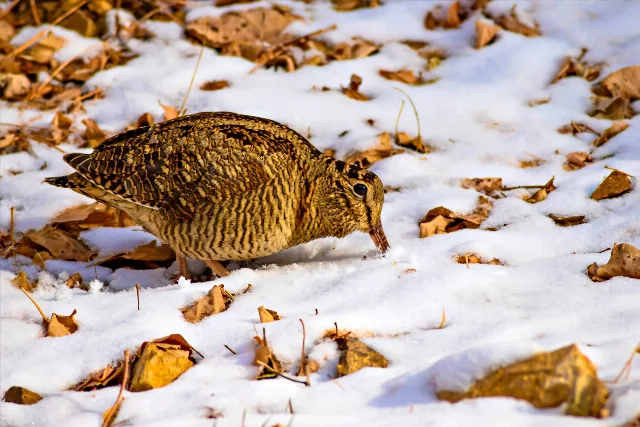
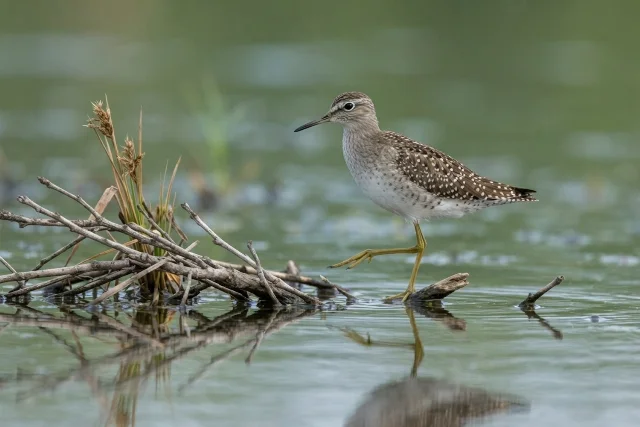
Standing approximately 25-27 cm in height, the Pin-tailed Snipe possesses a compact and robust build perfectly adapted for its lifestyle as a ground-dwelling wader. Its primary coloration is a mottled brown, featuring complex patterns of dark brown, buff, and black streaks that provide exceptional camouflage against dead vegetation and mud. The undersides are predominantly white, creating a stark contrast that is most visible during flight. One of its most defining characteristics is its extremely long, straight, and sensitive bill, which it uses to probe deeply into soft soil for invertebrates. The 'pin-tailed' name comes from the bird's unique tail structure, which consists of 26 to 28 feathers, with the outer ones being noticeably narrowed or needle-like. Unlike other snipes, the wings are relatively short and pointed, contributing to a distinctive flight silhouette. The head features bold, longitudinal stripes that run from the bill to the nape, adding to its cryptic appearance. Both sexes appear similar, though subtle differences in plumage may exist, making it a challenge for even experienced observers to differentiate them in the field without close inspection.
Habitat
The Pin-tailed Snipe is a highly specialized bird that thrives in diverse wetland ecosystems. During the breeding season, they prefer the damp, mossy tundra and boggy meadows of the Siberian taiga, where the soft, saturated ground allows for easy foraging. As they migrate, they exhibit a strong preference for freshwater marshes, paddy fields, shallow lakeshores, and damp grasslands. These environments are crucial, as the bird relies on the ability to probe the soil with its long bill. They are rarely found in saltwater environments, opting instead for inland wetlands that provide the necessary moisture and invertebrate-rich mud that defines their habitat requirements throughout their extensive migration route.
Diet
As a specialized wader, the Pin-tailed Snipe is primarily an insectivore. Its diet consists mainly of small invertebrates found within the top layers of soft mud and wet soil. This includes a variety of earthworms, insect larvae, mollusks, and small crustaceans. The bird uses its highly sensitive bill as a tactile probe; the tip is rich in nerve endings, allowing it to detect the movements of prey underground without the need for visual confirmation. Occasionally, they may also consume small seeds or plant matter, but these are secondary to their protein-rich invertebrate diet. Their foraging behavior is methodical, often involving repetitive 'stitching' motions into the mud to capture hidden prey.
Breeding and Nesting
The breeding cycle of the Pin-tailed Snipe is a testament to resilience, taking place during the short, intense summer months of the Siberian tundra. During this time, males perform spectacular, elaborate aerial displays to attract mates, involving rapid dives and vocalizations that produce a unique 'drumming' sound caused by air rushing through their tail feathers. Once a pair is formed, the female constructs a simple, well-hidden nest on the ground, usually concealed within a tussock of grass or moss. A typical clutch consists of three to four eggs, which are heavily camouflaged to match the surrounding environment. The female takes on the primary responsibility of incubation, which lasts for approximately three weeks. Chicks are precocial, meaning they are active and able to leave the nest shortly after hatching, following their mother to forage in the nutrient-rich wetlands.
Behavior
The Pin-tailed Snipe is a largely solitary and crepuscular bird, most active during the early morning and late evening hours. They are renowned for their 'freeze' response; when threatened, they remain perfectly motionless, relying on their cryptic brown plumage to blend seamlessly into the marsh vegetation. If approached too closely, they explode into the air with a sudden, zig-zagging flight pattern, often letting out a sharp, rasping call. This behavior makes them notoriously difficult to flush. They are also known for their incredible endurance, capable of flying thousands of kilometers during their annual migration, often crossing vast mountain ranges and oceans to reach their wintering grounds.
Conservation Status - LC Least Concern
Currently, the Pin-tailed Snipe is listed as Least Concern on the IUCN Red List. However, this status does not imply that the species is free from threats. Their reliance on specific wetland habitats makes them highly vulnerable to the loss of these ecosystems due to agricultural expansion, urbanization, and the effects of climate change. Many of the wetlands they frequent during migration are being drained or polluted. While their current population remains stable, continued monitoring and the protection of critical migratory stopover sites are essential to ensure the long-term survival of this unique wader across its vast range.
Interesting Facts
- The Pin-tailed Snipe has 26-28 tail feathers, far more than most other snipe species.
- Its scientific name, stenura, means 'narrow-tail' in Greek.
- These birds are famous for their erratic, zig-zag flight pattern when flushed.
- They can travel thousands of miles during migration, crossing major geographic barriers.
- The tip of their bill is highly sensitive, acting like a finger to find food in the dark.
- They are masters of camouflage, often invisible even when standing in the open.
- Male Pin-tailed Snipes perform aerial 'drumming' displays during courtship.
Tips for Birdwatchers
For birdwatchers seeking the elusive Pin-tailed Snipe, patience is your greatest asset. Focus your efforts on muddy edges of freshwater marshes, flooded rice paddies, or damp fields, especially during the migration months. Because these birds are so well-camouflaged, scan the ground slowly using binoculars or a spotting scope rather than looking for movement. If you find a potential location, approach slowly and quietly, as they are easily flushed. Early morning and late afternoon are the best times to observe them as they forage. Keep a sharp eye on the sky if you flush one, as their distinctive flight pattern and silhouette are the best ways to identify them in flight. Always maintain a respectful distance to avoid causing unnecessary stress to these long-distance travelers.
Pro-Tip: To spot this bird in dense forest canopy, a 8x42 binoculars or telescope is highly recommended.
- [Check out our top recommended gear here]
Conclusion
In conclusion, the Pin-tailed Snipe (Gallinago stenura) is a fascinating example of avian adaptation and endurance. From its intricate, camouflage-heavy plumage to its specialized, sensitive bill, every aspect of its biology is fine-tuned for survival in the challenging wetland environments it calls home. As a long-distance migrant, it connects diverse ecosystems across the Asian continent, serving as a reminder of the interconnectedness of our global environment. While currently categorized as a species of Least Concern, the Pin-tailed Snipe remains a sentinel of wetland health. Protecting the marshes, paddies, and tundra regions that these birds depend upon is not only vital for their continued existence but also for the preservation of the delicate biodiversity of the wetlands themselves. For the dedicated birdwatcher, encountering a Pin-tailed Snipe is a rewarding challenge that requires patience, observation skills, and a deep appreciation for the subtle beauty of nature. By continuing to study and protect this remarkable wader, we ensure that future generations can continue to marvel at the incredible migratory journeys and silent, hidden lives of the Pin-tailed Snipe, a true master of the marshlands.
Tag:

200 Follower
is a writer who draws. He’s the Bestselling author of “Number of The Year”. Donec vitae tortor efficitur, convallis lelobortis elit.
Recent Posts





Subscribe For Daily Newsletter