
Not available
Red-necked Stint
Calidris ruficollis
Last update: 05 Mar 2026
Read in:
English
Español
Português
हिन्दी
বাংলা
தமிழ்
മലയാളം
मराठी
ગુજરાતી
తెలుగు
French
Deutsch
Русский
日本語
简体中文
Italiano
Tiếng Việt
العربية
ಕನ್ನಡ
ਪੰਜਾਬੀ
Red-necked Stint Basic Information
| Scientific Name | Calidris ruficollis |
|---|---|
| Status | NT Near Threatened |
| Size | 13-17 cm (5-7 inch) |
| Colors |
Grey
Red
|
| Type |
Waders

|
| Family | Sandpipers, Snipes, Phalaropes |
Introduction
The Red-necked Stint (Calidris ruficollis) is one of the smallest and most fascinating waders found across the globe. Belonging to the family Scolopacidae, this diminutive shorebird is a marvel of endurance, undertaking incredible long-distance migrations between its breeding grounds in the high Arctic and its wintering territories in Southeast Asia and Australia. Despite its small size, the species is highly resilient, navigating vast oceans and diverse landscapes to survive. Ornithologists and birdwatchers alike are captivated by the Red-necked Stint due to its complex plumage changes and its gregarious nature, often observed foraging in large, energetic flocks along muddy shorelines. Understanding this species offers deep insights into the health of wetland ecosystems, as they rely heavily on productive intertidal zones to fuel their arduous journeys. As a key indicator species for migratory flyways, the Red-necked Stint represents the intricate, global connectivity of avian life, demanding our attention and dedicated conservation efforts to ensure their populations remain stable amidst a changing climate.
Physical Appearance
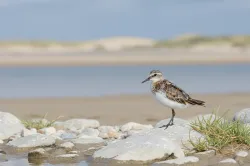
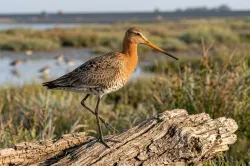
Measuring just 13 to 17 cm in length, the Red-necked Stint is a masterclass in compact avian design. Its most defining physical characteristic is the striking reddish-orange plumage that adorns its throat and breast during the breeding season, which stands in stark contrast to its otherwise subdued appearance. For the remainder of the year, these birds exhibit a predominantly grey upperparts pattern with fine dark streaking, providing excellent camouflage against the mudflats and sandy beaches they frequent. The underparts are generally white, creating a clean, crisp look that helps distinguish them from other similar calidrid species. Their bill is relatively short, black, and straight, perfectly adapted for probing soft substrates. The legs are also black, supporting a small, agile frame that allows for rapid movement. Juveniles often display a more scaly, brownish appearance on their back feathers, which gradually molts into the adult grey pattern. Their wings are long and pointed, a physiological necessity for the long-distance flight paths they navigate annually, making them aerodynamic wonders of the shorebird world.
Habitat
The Red-necked Stint is primarily found in coastal and wetland environments, showcasing a high degree of adaptability. During the breeding season, they occupy the barren, mossy tundra regions of northern Siberia and Alaska. These harsh, treeless environments provide the necessary space and isolation for nesting. Once the breeding cycle is complete, they migrate south to coastal habitats, where they are most frequently observed in large numbers. Their preferred wintering grounds include mudflats, estuaries, salt marshes, and shallow lagoons. They are rarely found far from water, as these moist environments are crucial for their foraging success. By utilizing both high-latitude breeding sites and tropical/temperate coastal wintering areas, the Red-necked Stint demonstrates a remarkable ability to exploit diverse ecological niches across hemispheres.
Diet
As a specialized wader, the Red-necked Stint relies on a diet consisting primarily of small invertebrates. When foraging on mudflats and shallow coastal waters, they use their sensitive bills to probe the substrate for food. Their diet includes a variety of marine worms, small crustaceans, mollusks, and insect larvae. During the breeding season in the Arctic, they also consume a significant amount of surface insects and spiders to meet the high energy demands of egg-laying and chick rearing. Their foraging technique is highly energetic; they move rapidly across the mud, often pecking at the surface or probing deep into the sediment. This high-protein diet is essential for maintaining the fat reserves required for their grueling trans-hemispheric migratory flights.
Breeding and Nesting
The breeding cycle of the Red-necked Stint is a tightly timed event dictated by the brief Arctic summer. Upon arriving at their tundra breeding grounds, males perform intricate display flights to attract females. Once a pair is formed, they establish a nest, which is typically a simple, shallow scrape on the ground, often lined with a sparse layer of moss, lichen, or dry leaves to provide slight insulation. The female usually lays a clutch of four eggs, which are mottled with brown to provide camouflage against the tundra floor. Both parents share the responsibility of incubation, which lasts approximately three weeks. Once the chicks hatch, they are precocial, meaning they are active and able to feed themselves almost immediately, though they remain under the watchful eye of the adults. The parents protect the brood from predators until the chicks are capable of independent flight, usually within a few weeks, after which the adults begin their southward migration.
Behavior
Red-necked Stints are highly gregarious birds, almost always found in flocks, which can range from a few individuals to hundreds or even thousands of birds. This social behavior is likely an adaptation to reduce the risk of predation, as there is safety in numbers. They are known for their rapid, synchronized flight patterns when moving between feeding areas, often twisting and turning in unison. When foraging, they are constantly active, darting across the shoreline. Despite their busy nature, they are generally tolerant of other wader species and are frequently seen mixed in with other stint or sandpiper flocks. During the breeding season, however, they become more territorial and defensive of their immediate nesting area.
Conservation Status - NT Near Threatened
Currently, the Red-necked Stint is classified as Least Concern by the IUCN, but its population trends are being closely monitored. The greatest threat to this species is the degradation and loss of stopover habitats, particularly the intertidal mudflats along the East Asian-Australasian Flyway. Industrial development, land reclamation for coastal urban expansion, and pollution significantly impact the availability of food sources during migration. Climate change also poses a long-term risk, potentially altering the timing of insect emergence in the Arctic, which could create a mismatch between peak food availability and the needs of growing chicks.
Interesting Facts
- They are among the smallest long-distance migratory waders in the world.
- Some individuals travel over 10,000 kilometers from their breeding grounds to their wintering sites.
- They can fly at remarkable speeds, often outmaneuvering larger predators in the air.
- The red coloration on their neck during the breeding season is more intense in males.
- They are capable of completing their migration in just a few massive, non-stop flight segments.
- Their scientific name, Calidris ruficollis, translates roughly to 'red-necked shorebird.'
- They exhibit high site fidelity, often returning to the exact same wintering grounds year after year.
Tips for Birdwatchers
For birdwatchers hoping to spot the Red-necked Stint, timing is everything. Visit coastal mudflats and estuaries during the migration periods in spring and autumn. Use a high-quality spotting scope, as these birds are small and often stay at a distance to avoid disturbance. Because they blend in well with their surroundings, look for the rapid, jerky motion of their foraging rather than their color. It is helpful to study the differences between the Red-necked Stint and the Little Stint, as they can look very similar. Always maintain a respectful distance to avoid flushing the flock, as these birds need to conserve as much energy as possible for their long-distance flights. Joining a local birding group or checking eBird reports can help you locate recent sightings in your area.
Pro-Tip: To spot this bird in dense forest canopy, a 8x42 binoculars or telescope is highly recommended.
- [Check out our top recommended gear here]
Conclusion
The Red-necked Stint is truly a marvel of the avian world, a testament to the incredible resilience found in nature. From the remote, icy reaches of the Arctic tundra to the bustling mudflats of the Southern Hemisphere, this tiny bird links ecosystems across vast distances. Its survival depends on the preservation of a delicate chain of habitats that stretch across the globe. As bird enthusiasts, we have the unique opportunity to advocate for these environments and contribute to the scientific understanding of their migratory patterns. By protecting the wetlands they rely on, we are not only ensuring the future of the Red-necked Stint but also safeguarding the biodiversity of our planet's coastal zones. Whether you are a seasoned ornithologist or a casual nature lover, observing a flock of these energetic waders is a humbling experience that highlights the interconnectedness of our natural world. Let us continue to monitor, study, and cherish these small but mighty travelers, ensuring they continue to grace our shores for generations to come. Their journey is our journey, and their persistence is a reminder of the beauty and fragility of the natural order.
Tag:

200 Follower
is a writer who draws. He’s the Bestselling author of “Number of The Year”. Donec vitae tortor efficitur, convallis lelobortis elit.
Recent Posts




Subscribe For Daily Newsletter