
Not available
Red-necked Phalarope
Phalaropus lobatus
Last update: 05 Mar 2026
Read in:
English
Español
Português
हिन्दी
বাংলা
தமிழ்
മലയാളം
मराठी
ગુજરાતી
తెలుగు
French
Deutsch
Русский
日本語
简体中文
Italiano
Tiếng Việt
العربية
ಕನ್ನಡ
ਪੰਜਾਬੀ
Red-necked Phalarope Basic Information
| Scientific Name | Phalaropus lobatus |
|---|---|
| Status | LC Least Concern |
| Size | 18-19 cm (7-7 inch) |
| Colors |
Grey
Red
|
| Type |
Waders

|
| Family | Sandpipers, Snipes, Phalaropes |
Introduction
The Red-necked Phalarope (Phalaropus lobatus) is a fascinating species of small wader that captivates birdwatchers and ornithologists alike with its unique behaviors and striking appearance. Unlike many other shorebirds, phalaropes are renowned for their pelagic lifestyle, spending much of their lives on the open ocean despite being technically classified as waders. These birds breed in the high Arctic regions of both North America and Eurasia, embarking on incredible migratory journeys to reach their wintering grounds in productive marine environments.
What truly sets the Red-necked Phalarope apart is its reversal of traditional gender roles, a phenomenon that has long intrigued scientists. In this species, the females are more brightly colored than the males and take the lead in courtship, while the males are responsible for the entirety of incubation and chick-rearing duties. This behavior is a cornerstone of their evolutionary strategy, allowing for complex social dynamics within their breeding colonies. Understanding the life cycle of the Red-necked Phalarope provides valuable insights into avian adaptation, migration, and the health of the delicate marine ecosystems they inhabit. As we explore their physical traits, habitat, and dietary needs, it becomes clear why this small, energetic bird is a marvel of the avian world.
Physical Appearance
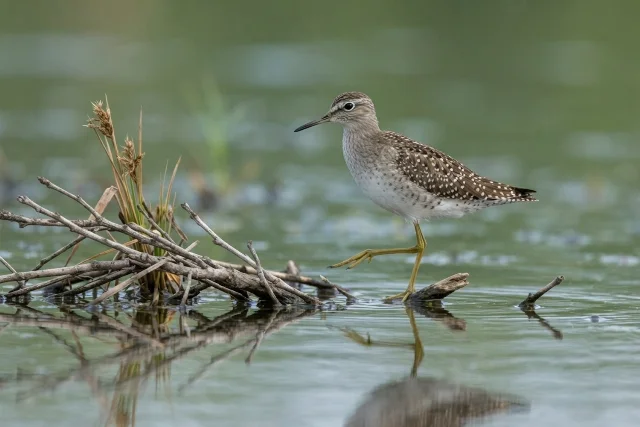
Measuring approximately 18 to 19 centimeters in length, the Red-necked Phalarope is a small, dainty shorebird with a distinctively slender, needle-like black bill. During the breeding season, the adult female is particularly striking, featuring a dark grey back and wings contrasted by a vibrant, reddish-brown patch running down the sides of the neck, which gives the species its name. The throat is white, and the upper breast is a rich, slate-grey, creating a sharp appearance that stands out against the tundra landscape.
Males, while similar in color pattern, are generally duller than females, with less intense reddish-brown coloration and more extensive grey patches. During the non-breeding season, both sexes undergo a significant molt, losing their bright reddish tones and adopting a much plainer plumage characterized by light grey upperparts and white underparts, with a dark mask around the eye. This seasonal transition is essential for camouflage in their wintering environments. Their lobed feet, from which the genus name Phalaropus is derived, are a key physical adaptation, allowing them to swim and maneuver efficiently on the water's surface, a trait that distinguishes them from most other sandpiper species.
Habitat
The Red-necked Phalarope has a circumpolar breeding distribution, favoring the high Arctic and sub-Arctic tundra regions. They are typically found nesting near shallow freshwater ponds, marshes, and damp meadows, often in close proximity to the coast or inland water bodies. These breeding grounds must provide ample insect life to sustain the adults and their developing chicks. After the breeding season, they undergo a dramatic shift, transitioning to a highly pelagic existence. They spend the vast majority of their lives on the open ocean, particularly in areas of upwelling where nutrient-rich waters support abundant plankton populations, which are essential for their survival during the non-breeding months.
Diet
As specialized foragers, the Red-necked Phalarope has developed a unique method for acquiring food. When on the water, they frequently engage in a frantic, spinning behavior, swimming in tight circles to create a small vortex. This motion brings small invertebrates, larvae, and plankton from the water column to the surface, where the bird can easily snatch them with its fine, needle-like bill. Their diet primarily consists of aquatic insects such as mosquito larvae, midges, and small crustaceans. During their time at sea, they shift their focus to tiny marine organisms, including copepods and other zooplankton, demonstrating remarkable dietary flexibility that allows them to thrive in varied aquatic environments.
Breeding and Nesting
The breeding biology of the Red-necked Phalarope is defined by a complete reversal of conventional avian sex roles. Upon arriving at the breeding grounds, females compete aggressively for mates, defending territories and courting males. Once a pair bond is established, the female lays a clutch of three to four eggs in a simple, well-hidden nest on the ground, usually lined with dry grass and situated near water. Immediately after egg-laying, the female often abandons the nest to seek other mates or begins her migration, leaving the male to perform the entirety of the incubation process. The male also takes full responsibility for brooding and protecting the chicks once they hatch, as they are precocial and capable of feeding themselves shortly after emergence from the shell.
Behavior
The Red-necked Phalarope is highly social, often gathering in large flocks during migration and on their wintering grounds. Their most famous behavioral trait is the spinning maneuver used for feeding, which is a highly efficient way to stir up food in shallow water. They are remarkably bold and exhibit little fear of humans, often allowing observers to approach quite closely. When threatened or disturbed, they are agile fliers, capable of quick, erratic movements. Their social structure is fluid, especially during the breeding season, where the intense competition among females for males creates a dynamic and fast-paced environment that is seldom seen in other bird species.
Conservation Status - LC Least Concern
The Red-necked Phalarope is currently listed as a species of Least Concern by the IUCN, but their populations are subject to various environmental pressures. As Arctic breeders, they are particularly vulnerable to climate change, which can alter the timing of insect emergence and degrade their sensitive tundra nesting habitats. Furthermore, their reliance on specific marine upwelling zones during the winter makes them susceptible to changes in ocean temperatures and pollution, such as oil spills or plastic ingestion. Ongoing monitoring and habitat preservation in both their breeding and wintering ranges are essential to ensure the long-term stability of this unique species.
Interesting Facts
- The Red-necked Phalarope is known for the 'spinning' behavior it uses to stir up food from the water.
- They exhibit reversed sexual dimorphism, with females being more brightly colored than males.
- Males are solely responsible for incubating the eggs and raising the young chicks.
- They have lobed feet, which act like oars, making them excellent swimmers.
- Unlike most shorebirds, they spend the majority of their lives on the open ocean.
- They are highly migratory, often traveling thousands of miles between their Arctic breeding grounds and their wintering areas.
- The species is known for being remarkably tame and can often be approached closely by birdwatchers.
Tips for Birdwatchers
To successfully spot a Red-necked Phalarope, timing and location are everything. During the breeding season, search for them in shallow tundra ponds in the high Arctic, where you might witness their courtship displays. If you are birding during migration, keep an eye on coastal lagoons, sewage ponds, or even calm bays where they may stop to refuel. When at the coast, look for the distinctive spinning motion in the water, which is a surefire way to identify them from a distance. Bring a high-quality pair of binoculars or a spotting scope, as these birds are small and can be easily overlooked. Patience is key; observe their feeding patterns, and you will likely be rewarded with a close-up view of their fascinating behavior.
Pro-Tip: To spot this bird in dense forest canopy, a 8x42 binoculars or telescope is highly recommended.
- [Check out our top recommended gear here]
Conclusion
The Red-necked Phalarope stands as a testament to the incredible diversity and adaptive capabilities of the avian world. From their high-latitude breeding grounds in the Arctic tundra to the vast, open expanses of the world's oceans, these small waders navigate a complex life cycle that defies standard biological expectations. Their unique gender roles, specialized feeding techniques, and resilience in the face of environmental change make them a subject of great interest for ornithologists and a source of delight for casual birdwatchers. As we continue to study the Red-necked Phalarope, we gain not only a better understanding of one specific species but also broader insights into the interconnectedness of our global ecosystems.
Protecting the habitats of the Red-necked Phalarope is more than just a conservation effort for a single bird; it is a commitment to the health of the Arctic tundra and the marine environments they rely on during their long migrations. By fostering awareness and supporting conservation initiatives, we can help ensure that these agile, spinning travelers continue to thrive for generations to come. Whether you are an experienced birder or a nature enthusiast, the opportunity to witness a Red-necked Phalarope in its natural environment is a rewarding experience that highlights the wonder of the natural world and the importance of preserving its delicate balance.
Tag:

200 Follower
is a writer who draws. He’s the Bestselling author of “Number of The Year”. Donec vitae tortor efficitur, convallis lelobortis elit.
Recent Posts




Subscribe For Daily Newsletter