Not available
Long-toed Stint
Calidris subminuta
Last update: 05 Mar 2026
Read in:
English
Español
Português
हिन्दी
বাংলা
தமிழ்
മലയാളം
मराठी
ગુજરાતી
తెలుగు
French
Deutsch
Русский
日本語
简体中文
Italiano
Tiếng Việt
العربية
ಕನ್ನಡ
ਪੰਜਾਬੀ
Long-toed Stint Basic Information
| Scientific Name | Calidris subminuta |
|---|---|
| Status | LC Least Concern |
| Size | 14-15 cm (6-6 inch) |
| Colors |
Brown
White
|
| Type |
Waders

|
| Family | Sandpipers, Snipes, Phalaropes |
Introduction
The Long-toed Stint (Calidris subminuta) is a fascinating species of small wader that belongs to the sandpiper family, Scolopacidae. Despite its diminutive size, this bird is a champion of long-distance migration, undertaking extensive journeys between its breeding grounds in the subarctic regions of Asia and its wintering quarters in Southeast Asia and Australia. Ornithologists and birdwatchers alike admire this species for its elusive nature and the unique challenges it presents during identification. Typically found in wetlands, muddy shorelines, and shallow freshwater pools, the Long-toed Stint relies on specialized environments to feed and rest during its arduous migratory cycles. Understanding the ecology of this bird provides valuable insights into the health of wetland ecosystems across the East Asian-Australasian Flyway. As a species that thrives in diverse, often remote environments, the Long-toed Stint remains a subject of ongoing research, highlighting the importance of global conservation efforts for migratory shorebirds that depend on interconnected habitats across international borders.
Physical Appearance
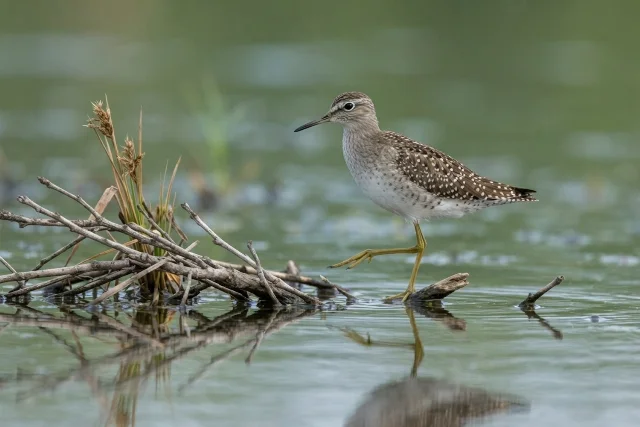
Standing at only 14-15 cm in length, the Long-toed Stint is one of the smallest waders in the Calidris genus. Its plumage is primarily a rich, mottled brown on the upperparts, providing excellent camouflage against the mud and vegetation of its habitat. The bird features a distinctive white belly and underparts, creating a striking contrast with its darker back. A key diagnostic feature, from which it derives its name, is its exceptionally long middle toe, which is noticeably longer than in other similar species of stints. The bill is relatively short, thin, and slightly decurved, perfectly adapted for probing soft mud. During the breeding season, the adult plumage becomes more vibrant, displaying warmer tones of rufous and black streaking on the crown and mantle. Juveniles tend to have a clearer, more defined white supercilium and a more patterned appearance. Observing these subtle physical characteristics is essential for birdwatchers to distinguish this species from the closely related Least Sandpiper or Little Stint in the field.
Habitat
The Long-toed Stint prefers a variety of wetland environments throughout its life cycle. During the breeding season, it occupies the taiga and tundra regions of Northern Asia, often nesting in mossy marshes, damp meadows, and the edges of pools within coniferous forests. This preference for forest-edge wetlands is somewhat unique among waders, which often prefer open tundra. During migration and in their wintering grounds, these birds are commonly found on the margins of freshwater lakes, flooded rice paddies, sewage ponds, and muddy estuaries. They require soft, nutrient-rich substrates where they can easily forage for invertebrate prey. The availability of shallow water is critical, as it allows the stint to wade while remaining vigilant for predators in the surrounding landscape.
Diet
As an insectivorous wader, the Long-toed Stint feeds primarily on a variety of small invertebrates. Its diet consists largely of chironomid larvae, small crustaceans, beetles, and other aquatic insects found in the mud or shallow water. The bird utilizes its sensitive bill to probe the soft sediment, detecting prey through touch rather than sight. During the non-breeding season, they may also consume small mollusks and worms found in intertidal zones or inland marshes. Efficient foraging is vital for these birds, as they must build up significant fat reserves to fuel their long migratory flights. By focusing on high-protein prey, the Long-toed Stint maintains the energy levels necessary for survival in diverse climates.
Breeding and Nesting
The breeding biology of the Long-toed Stint is characterized by its reliance on the subarctic taiga of Siberia. The nesting season typically begins in late spring, as the snow melts and reveals suitable marshy terrain. The nest is a simple scrape on the ground, usually concealed within a clump of grass or moss to avoid detection by predators. The female typically lays a clutch of four eggs, which are incubated primarily by the female, though males may assist in territorial defense. The precocial chicks are capable of feeding themselves shortly after hatching, following their parents to productive foraging sites. This rapid development is an evolutionary adaptation to the short subarctic summer, ensuring that the young are strong enough to undertake their first migration before the harsh winter conditions return to the breeding grounds.
Behavior
The Long-toed Stint is a gregarious bird, often found in small flocks, though it can be more solitary than other stint species. They are known for their frantic feeding behavior, moving quickly across the mudflats with a characteristic bobbing motion. Unlike some larger waders, they are relatively approachable, sometimes allowing observers to get quite close if they remain still. They are highly migratory, often traveling thousands of kilometers in a single season. During flight, they are agile and fast, often performing synchronized aerial maneuvers when startled. Vocalizations are usually soft, high-pitched calls, which help individuals maintain contact with their flock members while foraging in dense vegetation or marshy areas.
Conservation Status - LC Least Concern
The Long-toed Stint is currently classified as Least Concern by the IUCN. However, like many migratory shorebirds, it faces significant threats from habitat loss and degradation along the East Asian-Australasian Flyway. The conversion of coastal wetlands and rice paddies into industrial or residential land reduces the available stopover sites necessary for their long-distance migrations. Climate change also poses a potential risk, as it may alter the timing of insect emergence in their breeding grounds, leading to a mismatch between food availability and chick development. Continued monitoring and the protection of critical wetland sites are essential to ensure the long-term stability of their populations.
Interesting Facts
- The Long-toed Stint is named for its disproportionately long middle toe, a key identification feature.
- It is one of the few waders that breeds in the taiga zone of the Russian Far East.
- Despite their small size, they are capable of flying thousands of miles between breeding and wintering grounds.
- They often prefer freshwater habitats over the saltwater environments favored by many other shorebirds.
- The bird's scientific name, subminuta, translates to 'somewhat smaller' or 'lesser'.
- They are often seen foraging in flooded rice paddies during their migration through Asia.
- The species was first described by the Russian naturalist Alexander Middendorff in 1853.
Tips for Birdwatchers
To successfully spot a Long-toed Stint, birdwatchers should focus on shallow, muddy freshwater wetlands, especially during the migration months of spring and autumn. Because they are similar in appearance to other stints, carrying a high-quality spotting scope or binoculars is essential for observing subtle details like leg color and the length of the toes. Patience is key; these birds often blend perfectly into their surroundings, so scan the mudflats carefully for movement. Visiting known stopover sites, such as nature reserves or managed wetlands, significantly increases your chances of a sighting. Always maintain a respectful distance to avoid flushing the birds, as they require energy for their demanding migratory journeys. Recording sightings in citizen science databases helps researchers track their population trends.
Pro-Tip: To spot this bird in dense forest canopy, a 8x42 binoculars or telescope is highly recommended.
- [Check out our top recommended gear here]
Conclusion
The Long-toed Stint is a remarkable example of nature's resilience and evolutionary specialization. From its nesting grounds in the remote Siberian taiga to its wintering sites across Southeast Asia and Australia, this small wader plays a vital role in the ecological health of the wetlands it inhabits. Its unique physical adaptations, such as its elongated toes, and its specialized diet highlight the intricate relationship between birds and their environment. As birdwatchers and conservationists, we have a responsibility to protect the migratory routes and stopover sites that allow this species to thrive. By valuing biodiversity and advocating for the preservation of wetland habitats, we can ensure that future generations will have the opportunity to observe the Long-toed Stint in its natural element. Whether you are a seasoned ornithologist or a casual bird enthusiast, learning about the Long-toed Stint serves as a gateway to understanding the vast, interconnected world of global migratory bird species and the critical need for international conservation cooperation.
Tag:

200 Follower
is a writer who draws. He’s the Bestselling author of “Number of The Year”. Donec vitae tortor efficitur, convallis lelobortis elit.
Recent Posts



Subscribe For Daily Newsletter