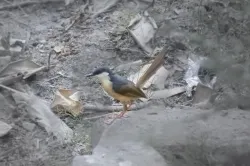
Bell's Sparrow Basic Information
| Scientific Name | Artemisiospiza belli |
|---|
| Status |
LC
Least Concern
|
| Size | 12-14 cm (5-6 inch) |
|---|
| Colors |
|
| Type |
|
| Family | New World sparrows |
|---|
Introduction
The Bell's Sparrow (Artemisiospiza belli) is a fascinating species of perching bird that captures the interest of ornithologists and casual birdwatchers alike. Belonging to the family Passerellidae, this small, elusive songbird is primarily associated with the arid landscapes of the southwestern United States and northwestern Mexico. Known for its distinct plumage and complex vocalizations, the Bell's Sparrow has long been a subject of taxonomic debate, often being grouped with the Sagebrush Sparrow. However, modern research has solidified its status as a unique species, highlighting its specific ecological niches and behavioral adaptations. These birds are master survivors, perfectly adapted to live in dense, scrubby vegetation where they spend much of their time foraging near the ground. Understanding the Bell's Sparrow requires a deep dive into its life cycle, from its specialized nesting habits to its highly specific dietary requirements. As environmental pressures continue to impact their native shrubland habitats, learning about this resilient sparrow becomes essential for conservation efforts and appreciating the biodiversity of our arid ecosystems.
Physical Appearance
The Bell's Sparrow is a relatively small bird, typically measuring between 12 to 14 cm in length. Its physical appearance is characterized by a sophisticated, albeit subtle, color palette that provides excellent camouflage within its dusty, shrubby environment. The primary color of the bird is a soft, earthy gray, which covers much of its upperparts and flanks. This gray is complemented by secondary markings of black, most notably a prominent black malar stripe that runs down the side of its throat, giving the bird a somewhat serious or stern expression. The underparts are usually a lighter, grayish-white, often showing a small, dark central breast spot that serves as a key identification mark for birdwatchers. The wings are relatively short and rounded, and the tail is long and dark, often held at an upward angle while the bird is moving through dense brush. The bill is short and conical, perfectly suited for the sparrow's granivorous diet, while its eyes are dark and alert, allowing it to remain vigilant against predators while foraging near the base of desert shrubs.
Habitat
The Bell's Sparrow is a quintessential inhabitant of the arid and semi-arid regions of the western United States, with a significant range extending through California and into Baja California. These birds show a strong preference for dense, low-growing shrublands, particularly those dominated by chamise, sagebrush, and other coastal sage scrub vegetation. They are rarely found in open areas, as they rely heavily on the cover provided by these thickets to protect them from avian predators. The structure of their habitat is vital; they require a mosaic of open ground for foraging and dense foliage for nesting and thermal regulation. Because they are highly territorial and sedentary, they often remain in the same general vicinity throughout the year, making them highly susceptible to local habitat fragmentation caused by urban development and wildfires.
Diet
As a member of the sparrow family, the Bell's Sparrow is primarily a ground-foraging bird with a diet that shifts according to seasonal availability. During the spring and summer months, their intake consists largely of insects, including spiders, beetles, and small caterpillars, which provide the essential protein needed for breeding and raising young. As the seasons transition into autumn and winter, the bird shifts its focus to a granivorous diet. They spend much of their day hopping along the ground beneath thick shrubs, searching for seeds from grasses and various desert plants. They are remarkably efficient at extracting food from the soil and are rarely seen visiting bird feeders, preferring the natural bounty of their native scrubland environment to sustain their high metabolic needs.
Breeding and Nesting
The breeding season for the Bell's Sparrow typically begins in the early spring, as males establish and defend territories through persistent, melodic singing. Once a pair is formed, the female takes the lead in selecting a well-concealed nesting site, usually tucked deep within the lower branches of a dense shrub or bush, often within 30 to 60 centimeters of the ground. The nest itself is a neatly constructed, cup-shaped structure made from dry grasses, twigs, and bark strips, and lined with finer materials like plant down or animal hair for insulation. The female typically lays a clutch of three to four eggs, which are pale blue or white with fine reddish-brown speckling. Both parents are involved in the process of raising the chicks, working diligently to provide a steady supply of insects to the nestlings, which grow rapidly before fledging after about two weeks of intense care.
Behavior
Behaviorally, the Bell's Sparrow is a secretive and often elusive bird. They are known for their habit of running along the ground with their tail cocked upwards, rather than flying, when disturbed. This behavior allows them to navigate through dense brush quickly and silently. During the breeding season, males become more conspicuous, often perching atop a prominent shrub to deliver their song, which consists of a series of clear, metallic notes. Outside of the breeding season, they become much quieter and harder to detect. They are generally solitary or found in pairs, rarely forming large flocks, and they maintain strong site fidelity, often returning to the same breeding territory year after year if the habitat remains undisturbed.
Conservation Status - LC
Least Concern
The conservation status of the Bell's Sparrow is a growing concern among ornithologists, particularly due to the loss of coastal sage scrub habitat. While not currently listed as endangered on a global scale, several subspecies face significant threats from habitat fragmentation, suburban sprawl, and the increased frequency of wildfires in California. These factors reduce the availability of suitable nesting sites and cover. Conservation strategies focus on protecting large, contiguous blocks of shrubland and managing fire regimes to prevent the conversion of native habitats into non-native grasslands, which do not support the sparrow's specific ecological needs.
Interesting Facts
- The Bell's Sparrow was named in honor of the 19th-century naturalist John Graham Bell.
- They are often confused with the Sagebrush Sparrow, but they are genetically and physically distinct.
- They possess a unique tail-cocking behavior used when moving through dense brush.
- These birds are almost exclusively found in the western United States and Baja California.
- Unlike many other sparrow species, they rarely migrate long distances, preferring to stay in their home territory.
- Their song is considered one of the most melodic and complex among the sparrow family in the region.
- They are highly sensitive to habitat degradation and are considered an indicator species for the health of sage scrub ecosystems.
Tips for Birdwatchers
For birdwatchers hoping to catch a glimpse of the elusive Bell's Sparrow, patience and careful observation are paramount. Because they spend the majority of their time on or near the ground within dense brush, scanning the tops of shrubs during the early morning hours is your best strategy. Look for the male perched atop a shrub singing, as this is the most common time they reveal their location. Avoid making sudden movements or loud noises, as these birds are naturally skittish and will quickly retreat into the thickest cover. Using high-quality binoculars or a spotting scope from a distance is highly recommended to observe their natural behavior without causing unnecessary stress to the individuals. Checking eBird reports for your local area can also provide valuable information on recent sightings, as these birds tend to be quite sedentary and often return to the same spots annually.
Conclusion
In conclusion, the Bell's Sparrow is a remarkable example of specialized adaptation within the avian world. From its understated, earth-toned plumage that perfectly mimics the dusty scrublands of the American West to its intricate, melodic song that signals the arrival of spring, this bird is a vital component of its ecosystem. While it may not possess the vibrant colors of more tropical species, its behavior and ecological role are deeply compelling to those who take the time to observe it. As we face increasing environmental challenges, the survival of the Bell's Sparrow serves as a poignant reminder of the importance of preserving our native shrublands and coastal sage habitats. For the dedicated birdwatcher, encountering this sparrow is a rewarding experience that requires patience, respect for the environment, and a keen eye for detail. By supporting conservation efforts and promoting the protection of their shrinking habitats, we can ensure that future generations will continue to hear the unique song of the Bell's Sparrow echoing through the desert landscape. It remains a true treasure of the North American wilderness, deserving of our continued study, admiration, and protection for years to come.
Bell's Sparrow Distribution Map & Range
The distribution map for this species will be available soon.
We are working with our official data partners to update this information.