Perching Birds
avatar
Photo by Admin
Not available

Pectoral Sparrow

Arremon taciturnus

Last update: 29 Jun 2026

Pectoral Sparrow Basic Information

Scientific NameArremon taciturnus
Status LC Least Concern
Size14-15 cm (6-6 inch)
Colors
Brown
Grey
Type
Perching Birds
type
FamilyNew World sparrows

Introduction

The Pectoral Sparrow (Arremon taciturnus) is a fascinating species belonging to the diverse Passerellidae family, commonly known as the New World sparrows. These birds are notable members of the perching bird group and are widely distributed across the tropical regions of South America. Known for their somewhat elusive nature and distinct vocalizations, they inhabit various wooded environments, often staying hidden within the understory. Although they are not as famous as some of their colorful cousins, the Pectoral Sparrow plays a vital role in its ecosystem by contributing to seed dispersal and insect control. Understanding this species requires patience and a keen ear, as they are often heard before they are seen. Their name, 'taciturnus,' hints at their quiet and reserved demeanor, which makes them a rewarding challenge for birdwatchers and ornithologists alike. Throughout this guide, we will explore the intricate details of their life cycle, physical characteristics, and the environmental factors that influence their survival in the wild.

Physical Appearance

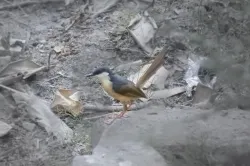
Standing at a modest size of 14 to 15 centimeters, the Pectoral Sparrow is a compact and well-proportioned passerine. Its plumage is primarily defined by earthy tones, with a rich brown coloration dominating the mantle, wings, and tail. This brown provides excellent camouflage against the forest floor and dense vegetation where the bird frequently forages. Complementing this, the bird features a distinct grey coloration on the head and underparts, which adds a sophisticated contrast to its overall appearance. A hallmark of the species is the dark, pectoral band that stretches across its chest, which serves as a primary identification feature for birdwatchers. The head often displays a bold pattern with black and grey stripes, giving it a sharp, alert expression. The bill is typically stout and dark, perfectly adapted for a varied diet consisting of seeds and small insects. Their legs are strong, supporting their perching lifestyle, and they possess relatively short, rounded wings that allow for agile flight within the thick, tangled vegetation of their habitat.

Habitat

The Pectoral Sparrow is primarily found in the tropical and subtropical regions of South America, including countries like Brazil, Venezuela, and Colombia. They show a strong preference for the dense undergrowth of humid forests, secondary growth areas, and the edges of tropical woodlands. Unlike species that thrive in the canopy, the Pectoral Sparrow is a ground-dwelling or low-perching bird. They require habitats with plenty of leaf litter and thick shrubs, which provide both food sources and essential protection from predators. As human activity continues to alter landscapes, this sparrow has shown some resilience, often adapting to human-modified environments such as coffee plantations and overgrown orchards, provided that sufficient cover remains available for nesting and foraging.

Diet

As an omnivorous species, the Pectoral Sparrow maintains a varied diet that changes depending on the seasonal availability of food. A significant portion of their nutrition comes from small seeds, grains, and various types of fruits found within the understory of their forest homes. In addition to plant matter, they are highly skilled at foraging for small invertebrates, including beetles, caterpillars, spiders, and ants. They typically feed by hopping along the ground, using their beaks to toss aside leaf litter to uncover hidden insects. This foraging behavior not only sustains them but also keeps local insect populations in check, highlighting their importance in the complex food webs of the neotropical undergrowth.

Breeding and Nesting

The breeding biology of the Pectoral Sparrow is characterized by careful nest placement and dedicated parental care. During the breeding season, which often coincides with the rainy season to ensure food availability, pairs will construct a cup-shaped nest. These nests are typically built using twigs, dry grass, and rootlets, and are strategically hidden in low, dense foliage or sometimes on the ground beneath protective vegetation. The female usually lays a small clutch of eggs, which are often pale in color with subtle markings. Both parents participate in the process of incubation and the subsequent feeding of the chicks. Once hatched, the nestlings remain in the nest for several weeks, protected by the dense cover, until they are ready to fledge and begin their independent lives in the forest understory.

Behavior

Pectoral Sparrows are generally solitary or found in pairs, maintaining a relatively low profile compared to more social bird species. They are known for their 'taciturn' or quiet nature, often remaining motionless for long periods to avoid detection. When they do move, they display quick, hopping motions through the brush. Their vocalizations are simple yet distinct, often consisting of short, rhythmic notes that serve to communicate with mates or defend their small territories. While they are not highly aggressive, they will defend their immediate nesting area if threatened. Their behavior is highly adapted to life in the shadows, relying on stealth and cryptic coloration to navigate their environment safely while avoiding larger predators that frequent the forest floor.

Conservation Status - LC Least Concern

Currently, the Pectoral Sparrow is classified as a species of Least Concern by major conservation organizations. Their wide geographic distribution across South America provides a buffer against localized environmental threats. However, like many neotropical birds, they are vulnerable to the ongoing destruction of forest habitats due to deforestation, agricultural expansion, and urban development. Maintaining large, interconnected patches of primary and secondary forest is crucial for their long-term survival. While they have shown some ability to persist in modified landscapes, continued monitoring is essential to ensure that habitat fragmentation does not lead to population declines in specific regions over the coming decades.

Interesting Facts

  1. The scientific name 'taciturnus' translates to 'silent' or 'quiet,' reflecting their reserved nature.
  2. They are expert foragers, often using their beaks to flip over heavy leaves on the forest floor.
  3. Despite their small size, they have a surprisingly loud and clear song that can be heard from a distance.
  4. They belong to the diverse Passerellidae family, which includes many other famous New World sparrows.
  5. These birds are highly territorial during the nesting season and will defend their chosen patch against intruders.
  6. The pectoral band that gives them their common name is a key diagnostic feature for differentiating them from similar species.

Tips for Birdwatchers

For birdwatchers hoping to spot the Pectoral Sparrow, patience is your most valuable tool. Because they prefer the dense understory, scanning the forest floor and low-hanging branches is essential. Use high-quality binoculars to look for the distinct pectoral band, as this is the best way to distinguish them from other look-alike sparrows in the region. Early morning is the best time for observation, as the birds are most active and vocal during the dawn chorus. If you hear a series of rhythmic, simple calls coming from the brush, remain still and avoid sudden movements. Often, the bird will reveal itself if it feels safe. Bringing a recording device to capture their songs can also help you identify them in areas where they are notoriously difficult to see.

Pro-Tip: To spot this bird in dense forest canopy, a 8x42 binoculars or telescope is highly recommended.
- [Check out our top recommended gear here]

Conclusion

The Pectoral Sparrow (Arremon taciturnus) is a quintessential example of the hidden biodiversity within South American forests. While they may not boast the vibrant plumage of a macaw or the complex flight patterns of a raptor, their role as an understory inhabitant is vital to the health of the ecosystem. By consuming insects and seeds, they help regulate the growth of plants and the population of invertebrates, serving as a silent but effective steward of the forest floor. For birdwatchers, the pursuit of this sparrow offers a lesson in observation and appreciation for the smaller, more subtle wonders of nature. As we continue to study and protect these birds, we gain deeper insights into the environmental health of the regions they call home. Protecting the dense, humid habitats they rely on is not just about saving one species; it is about preserving the intricate web of life that defines the neotropical landscape. Whether you are a casual enthusiast or a dedicated ornithologist, the Pectoral Sparrow remains a rewarding and significant subject of study, reminding us that even the most 'taciturn' creatures have a profound story to tell within the vast, green cathedrals of the world.

Pectoral Sparrow Distribution Map & Range

The distribution map for this species will be available soon.

We are working with our official data partners to update this information.

Share:

Previous
Next
avatar
{blogMain.author}
200 Follower
Follow
{blogMain.author} is a writer who draws. He’s the Bestselling author of “Number of The Year”. Donec vitae tortor efficitur, convallis lelobortis elit.
Subscribe For Daily Newsletter

Explore More Species in the New World sparrows Family

Abert's Towhee
21-24 cm
Abert's Towhee
Melozone aberti
American Tree Sparrow
14-15 cm
American Tree Sparrow
Passerella arborea
17-19 cm
Antioquia Brushfinch
Atlapetes blancae
Apurimac Brushfinch
18-20 cm
Apurimac Brushfinch
Atlapetes forbesi
13-15 cm
Ashy-throated Chlorospingus
Chlorospingus canigularis
13-16 cm
Bachman's Sparrow
Peucaea aestivalis
14-16 cm
Baird's Junco
Junco bairdi
Baird's Sparrow
11-13 cm
Baird's Sparrow
Passerculus bairdii
Bay-crowned Brushfinch
17-19 cm
Bay-crowned Brushfinch
Atlapetes seebohmi
Belding's Sparrow
12-14 cm
Belding's Sparrow
Passerculus guttatus
12-14 cm
Bell's Sparrow
Artemisiospiza belli
Bermuda Towhee
19-22 cm
Bermuda Towhee
Pipilo naufragus
Black-capped Sparrow
13-14 cm
Black-capped Sparrow
Arremon abeillei
Black-chested Sparrow
13-15 cm
Black-chested Sparrow
Peucaea humeralis
13-15 cm
Black-chinned Sparrow
Spizella atrogularis
Black-faced Brushfinch
18-20 cm
Black-faced Brushfinch
Atlapetes melanolaemus
Black-fronted Brushfinch
17-19 cm
Black-fronted Brushfinch
Atlapetes nigrifrons
18-20 cm
Black-headed Brushfinch
Arremon atricapillus
18-20 cm
Black-spectacled Brushfinch
Atlapetes melanopsis
15-17 cm
Black-striped Sparrow
Arremonops conirostris
12-14 cm
Black-throated Sparrow
Amphispiza bilineata
17-19 cm
Bolivian Brushfinch
Atlapetes rufinucha
13-15 cm
Botteri's Sparrow
Peucaea botterii
13-14 cm
Brewer's Sparrow
Spizella breweri
Bridled Sparrow
12-14 cm
Bridled Sparrow
Peucaea mystacalis
20-25 cm
California Towhee
Melozone crissalis
20-23 cm
Canyon Towhee
Melozone fusca
Caracas Brushfinch
17-19 cm
Caracas Brushfinch
Arremon phaeopleurus
13-15 cm
Cassin's Sparrow
Peucaea cassinii
Chaco Sparrow
13-14 cm
Chaco Sparrow
Rhynchospiza strigiceps
16-18 cm
Chestnut-capped Brushfinch
Arremon brunneinucha
12-15 cm
Chipping Sparrow
Spizella passerina
18-20 cm
Choco Brushfinch
Atlapetes crassus
Cinnamon-tailed Sparrow
13-14 cm
Cinnamon-tailed Sparrow
Peucaea sumichrasti
12-14 cm
Clay-colored Sparrow
Spizella pallida
18-20 cm
Collared Towhee
Pipilo ocai
13-15 cm
Common Chlorospingus
Chlorospingus flavopectus
17-19 cm
Costa Rican Brushfinch
Arremon costaricensis
15-17 cm
Costa Rican Ground-sparrow
Melozone cabanisi
Cream-crowned Brushfinch
17-19 cm
Cream-crowned Brushfinch
Atlapetes paynteri
17-19 cm
Cuzco Brushfinch
Atlapetes canigenis
13-17 cm
Dark-eyed Junco
Junco hyemalis
13-15 cm
Dusky Chlorospingus
Chlorospingus semifuscus
Dusky-headed Brushfinch
17-19 cm
Dusky-headed Brushfinch
Atlapetes fuscoolivaceus
18-23 cm
Eastern Towhee
Pipilo erythrophthalmus
13-15 cm
Field Sparrow
Spizella pusilla
Five-striped Sparrow
14-15 cm
Five-striped Sparrow
Amphispiza quinquestriata
17-19 cm
Fulvous-headed Brushfinch
Atlapetes fulviceps
15-18 cm
Golden-crowned Sparrow
Zonotrichia atricapilla
Golden-winged Sparrow
13-14 cm
Golden-winged Sparrow
Arremon schlegeli
11-14 cm
Grasshopper Sparrow
Ammodramus savannarum
12-14 cm
Grassland Sparrow
Ammodramus humeralis
13-15 cm
Green-backed Sparrow
Arremonops chloronotus
Green-striped Brushfinch
17-19 cm
Green-striped Brushfinch
Arremon virenticeps
17-19 cm
Green-tailed Towhee
Pipilo chlorurus
17-19 cm
Grey-browed Brushfinch
Arremon assimilis
Grey-crowned Ground-sparrow
15-17 cm
Grey-crowned Ground-sparrow
Melozone occipitalis
Guadalupe Junco
13-15 cm
Guadalupe Junco
Junco insularis
Half-collared Sparrow
13-14 cm
Half-collared Sparrow
Arremon semitorquatus
17-20 cm
Harris's Sparrow
Zonotrichia querula
Henslow's Sparrow
11-13 cm
Henslow's Sparrow
Passerculus henslowii
Large-billed Sparrow
14-16 cm
Large-billed Sparrow
Passerculus rostratus
18-20 cm
Large-footed Finch
Pezopetes capitalis
15-18 cm
Lark Bunting
Calamospiza melanocorys
15-17 cm
Lark Sparrow
Chondestes grammacus
11-13 cm
LeConte's Sparrow
Ammospiza leconteii
12-14 cm
Lincoln's Sparrow
Melospiza lincolnii
Maranon Sparrow
13-14 cm
Maranon Sparrow
Arremon nigriceps
Merida Brushfinch
17-19 cm
Merida Brushfinch
Atlapetes meridae
Moustached Brushfinch
17-18 cm
Moustached Brushfinch
Atlapetes albofrenatus
11-13 cm
Nelson's Sparrow
Ammospiza nelsoni
Oaxaca Sparrow
14-16 cm
Oaxaca Sparrow
Aimophila notosticta
16-17 cm
Ochre-breasted Brushfinch
Atlapetes semirufus
17-18 cm
Olive Finch
Arremon castaneiceps
14-16 cm
Olive Sparrow
Arremonops rufivirgatus
14-15 cm
Orange-billed Sparrow
Arremon aurantiirostris
14-16 cm
Orange-throated Chlorospingus
Chlorospingus hypophaeus
17-19 cm
Pale-headed Brushfinch
Atlapetes pallidiceps
18-20 cm
Pale-naped Brushfinch
Atlapetes pallidinucha
Paria Brushfinch
17-19 cm
Paria Brushfinch
Arremon phygas
Perija Brushfinch
17-19 cm
Perija Brushfinch
Arremon perijanus
14-16 cm
Pirre Chlorospingus
Chlorospingus inornatus
15-17 cm
Prevost's Ground-sparrow
Melozone biarcuata
15-19 cm
Red Fox-sparrow
Passerella iliaca
Rufous-capped Brushfinch
16-18 cm
Rufous-capped Brushfinch
Atlapetes pileatus
13-15 cm
Rufous-collared Sparrow
Zonotrichia capensis
13-15 cm
Rufous-crowned Sparrow
Aimophila ruficeps
Rufous-eared Brushfinch
17-19 cm
Rufous-eared Brushfinch
Atlapetes rufigenis
12-14 cm
Rufous-winged Sparrow
Peucaea carpalis
14-16 cm
Rusty Sparrow
Aimophila rufescens
17-19 cm
Rusty-bellied Brushfinch
Atlapetes nationi
Rusty-crowned Ground-sparrow
15-17 cm
Rusty-crowned Ground-sparrow
Melozone kieneri
14-16 cm
Saffron-billed Sparrow
Arremon flavirostris
13-15 cm
Sagebrush Sparrow
Artemisiospiza nevadensis
11-13 cm
Saltmarsh Sparrow
Ammospiza caudacuta
San Benito Sparrow
13-15 cm
San Benito Sparrow
Passerculus sanctorum
17-19 cm
Santa Marta Brushfinch
Atlapetes melanocephalus
Sao Francisco Sparrow
13-14 cm
Sao Francisco Sparrow
Arremon franciscanus
11-14 cm
Savannah Sparrow
Passerculus sandwichensis
12-15 cm
Seaside Sparrow
Ammospiza maritima
13-15 cm
Short-billed Chlorospingus
Chlorospingus parvirostris
13-14 cm
Sierra Madre Sparrow
Xenospiza baileyi
Sierra Nevada Brushfinch
18-20 cm
Sierra Nevada Brushfinch
Arremon basilicus
Slate-coloured Fox-sparrow
15-19 cm
Slate-coloured Fox-sparrow
Passerella schistacea
17-19 cm
Slaty Brushfinch
Atlapetes schistaceus
Socorro Towhee
18-20 cm
Socorro Towhee
Pipilo socorroensis
12-17 cm
Song Sparrow
Melospiza melodia
Sooty Fox-sparrow
15-19 cm
Sooty Fox-sparrow
Passerella unalaschcensis
14-16 cm
Sooty-capped Chlorospingus
Chlorospingus pileatus
13-15 cm
Sooty-faced Finch
Arremon crassirostris
17-23 cm
Spotted Towhee
Pipilo maculatus
13-15 cm
Stripe-crowned Sparrow
Arremon dorbignii
14-16 cm
Stripe-headed Sparrow
Peucaea ruficauda
Striped Sparrow
13-15 cm
Striped Sparrow
Oriturus superciliosus
12-15 cm
Swamp Sparrow
Melospiza georgiana
14-16 cm
Tacarcuna Chlorospingus
Chlorospingus tacarcunae
17-19 cm
Taczanowski's Brushfinch
Atlapetes taczanowskii
14-16 cm
Tanager Finch
Oreothraupis arremonops
Tepui Brushfinch
17-18 cm
Tepui Brushfinch
Atlapetes personatus
Thick-billed Fox-sparrow
16-19 cm
Thick-billed Fox-sparrow
Passerella megarhyncha
13-14 cm
Tocuyo Sparrow
Arremonops tocuyensis
Tricolored Brushfinch
17-19 cm
Tricolored Brushfinch
Atlapetes tricolor
Tumbes Sparrow
14-15 cm
Tumbes Sparrow
Rhynchospiza stolzmanni
13-16 cm
Vesper Sparrow
Pooecetes gramineus
Vilcabamba Brushfinch
17-18 cm
Vilcabamba Brushfinch
Atlapetes terborghi
13-15 cm
Volcano Junco
Junco vulcani
White-browed Brushfinch
17-19 cm
White-browed Brushfinch
Arremon torquatus
15-18 cm
White-crowned Sparrow
Zonotrichia leucophrys
15-18 cm
White-eared Ground-sparrow
Melozone leucotis
White-headed Brushfinch
18-20 cm
White-headed Brushfinch
Atlapetes albiceps
17-19 cm
White-naped Brushfinch
Atlapetes albinucha
18-20 cm
White-rimmed Brushfinch
Atlapetes leucopis
15-17 cm
White-throated Sparrow
Zonotrichia albicollis
White-throated Towhee
19-21 cm
White-throated Towhee
Melozone albicollis
17-19 cm
White-winged Brushfinch
Atlapetes leucopterus
Worthen's Sparrow
13-14 cm
Worthen's Sparrow
Spizella wortheni
17-19 cm
Yellow-breasted Brushfinch
Atlapetes latinuchus
13-15 cm
Yellow-browed Sparrow
Ammodramus aurifrons
14-16 cm
Yellow-eyed Junco
Junco phaeonotus
Yellow-green Brushfinch
16-17 cm
Yellow-green Brushfinch
Pselliophorus luteoviridis
Yellow-headed Brushfinch
17-19 cm
Yellow-headed Brushfinch
Atlapetes flaviceps
Yellow-mandibled Sparrow
14-16 cm
Yellow-mandibled Sparrow
Arremon axillaris
16-18 cm
Yellow-striped Brushfinch
Atlapetes citrinellus
Yellow-thighed Brushfinch
17-18 cm
Yellow-thighed Brushfinch
Pselliophorus tibialis
Yellow-throated Chlorospingus
14-16 cm
Yellow-throated Chlorospingus
Chlorospingus flavigularis
13-14 cm
Yungas Sparrow
Rhynchospiza dabbenei
Zapata Sparrow
15-16 cm
Zapata Sparrow
Torreornis inexpectata