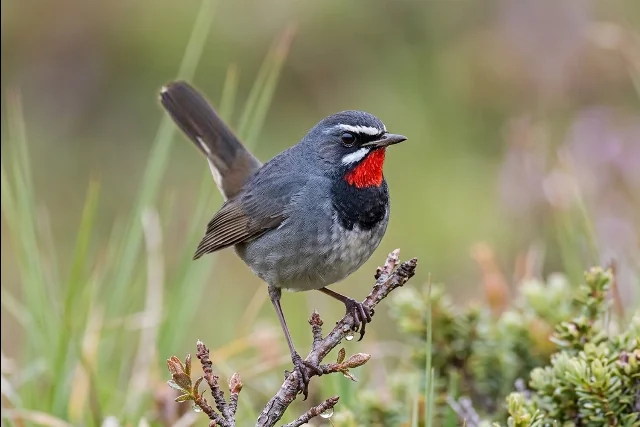
Field Sparrow Basic Information
| Scientific Name |
Spizella pusilla
|
| Status |
LC
Least Concern
|
| Size |
13-15 cm (5-6 inch)
|
| Colors |
|
| Type |
|
| Family |
New World sparrows |
Introduction
The Field Sparrow (Spizella pusilla) is a quintessential inhabitant of North America’s overgrown fields and shrublands. As a member of the diverse group of perching birds, this small, unassuming sparrow is often heard before it is seen, thanks to its distinctive, accelerating song that rings out across open countrysides. Despite its diminutive size, the Field Sparrow plays a vital role in the ecosystem, acting as both a consumer of seeds and insects and a prey item for various predators. Its preference for early-successional habitats—areas characterized by grasses, weeds, and scattered shrubs—makes it a fascinating subject for ornithologists and bird enthusiasts alike. As landscapes change due to human development and forest maturation, the presence of the Field Sparrow serves as a biological indicator of the health of our shrub-grassland ecosystems. Understanding the life history of this species allows us to better appreciate the complex relationships between avian populations and their rapidly shifting environments.
Physical Appearance
The Field Sparrow is a compact perching bird measuring approximately 13 to 15 centimeters in length, making it a relatively small member of the passerine order. Its plumage is primarily defined by a warm, earth-toned palette that provides excellent camouflage within its preferred habitat. The back and wings are a mottled blend of brown and rusty-red, featuring fine dark streaks that break up the bird's silhouette against dry vegetation. Perhaps the most striking feature of the Field Sparrow is its clear, unstreaked buff-colored breast and belly, which contrast subtly with its darker, more patterned upperparts. The bird’s head exhibits a distinct reddish-brown crown and a noticeable white eye-ring, which is a key diagnostic feature for identification. Furthermore, the Field Sparrow possesses a bright pinkish bill, a trait that distinguishes it from many other sparrow species that sport darker or yellow beaks. Its legs are also typically pinkish, blending well with the stems of grasses where it frequently perches. This combination of a plain chest, pink bill, and clean eye-ring creates an elegant, refined appearance that birders can easily recognize once they become familiar with these specific markers.
Habitat
The Field Sparrow is primarily associated with open, early-successional habitats. You will most commonly find them in abandoned agricultural fields, overgrown pastures, and the edges of woodlands where shrubs and small trees are beginning to encroach. They require a landscape that offers a mosaic of tall grasses for foraging and dense, low-growing shrubs for nesting and protection. Because they rely on this specific stage of ecological succession, they are rarely found in mature, closed-canopy forests or in intensively managed, manicured landscapes. Maintaining suitable habitat for the Field Sparrow often requires periodic management, such as controlled burns or light mowing, to prevent these areas from transitioning into dense forests, which would ultimately drive the species away.
Diet
The diet of the Field Sparrow changes significantly depending on the season, reflecting the availability of food resources. During the spring and summer months, these birds are largely insectivorous, feeding on a wide variety of beetles, caterpillars, grasshoppers, and spiders. This protein-rich diet is essential for fueling their high metabolic needs during the breeding season and for providing necessary nutrients to their growing nestlings. As autumn approaches and temperatures drop, the Field Sparrow shifts its focus toward a granivorous diet. They spend much of their time foraging on the ground, consuming the seeds of various grasses, weeds, and small herbaceous plants. This dietary flexibility allows them to thrive throughout the year, even as environmental conditions change.
Breeding and Nesting
Breeding for the Field Sparrow typically begins in the spring, with males claiming territories in open shrubby fields. They are known for their persistent singing, which serves to attract mates and defend their chosen patch of land. Nests are usually built by the female, who constructs a cup-shaped structure made of fine grasses, weeds, and rootlets. Early in the season, these nests are often placed on or near the ground, concealed within a clump of grass. As the season progresses and vegetation grows taller, nests are frequently placed higher up in the branches of small shrubs or saplings. The female typically lays a clutch of three to five pale, spotted eggs, which she incubates for about two weeks. Both parents participate in feeding the chicks, which fledge approximately 10 to 12 days after hatching.
Behavior
Field Sparrows are generally shy and unobtrusive, often keeping to the cover of brush when disturbed. They are most active during the early morning and late evening, when the males can be heard singing their characteristic trilling song from elevated perches, such as the top of a small bush or a fence post. While they are social during the non-breeding season, often joining mixed-species flocks, they become highly territorial during the spring and summer. They move with quick, hopping motions while foraging on the ground, frequently pausing to inspect the surrounding vegetation for food. Their ability to remain still and blend into the brown, buff, and green hues of their habitat makes them masters of concealment, often allowing them to escape detection by both predators and birdwatchers.
Conservation Status
-
LC
Least Concern
The Field Sparrow is currently listed as a species of Least Concern by the IUCN, but this designation masks a troubling trend. Across much of its range in North America, populations have seen a steady decline over the past several decades. This decline is largely attributed to the loss of suitable shrub-grassland habitats. As farmland is abandoned and allowed to revert to mature forest, or as it is developed for commercial or residential use, the early-successional habitat required by the Field Sparrow disappears. Conservation efforts focusing on land management, such as maintaining grassland buffers and preventing forest encroachment, are vital for stabilizing their numbers.
Interesting Facts
- The Field Sparrow's song is a series of clear, slurred whistles that accelerate in tempo, often sounding like a bouncing ball that eventually comes to a rest.
- They are known to build two distinct types of nests: one on the ground in early spring and another in shrubs later in the season.
- The bright pink bill is one of the most reliable ways to distinguish the Field Sparrow from other similar-looking sparrows.
- They are strictly North American breeders, primarily found in the eastern and central regions of the United States.
- Field Sparrows are remarkably site-faithful, often returning to the exact same breeding territory year after year.
- They are often referred to as 'field' sparrows because they are almost exclusively found in open, grassy fields rather than dense woods.
Tips for Birdwatchers
To successfully spot a Field Sparrow, timing and technique are essential. The best time to look for them is during the spring breeding season when males are actively singing. Instead of searching visually, listen for their unique, accelerating trill, which often stands out from the songs of other birds. Once you hear a song, scan the tops of isolated shrubs or tall weed stalks, as these are preferred singing perches. Because they are shy, using binoculars from a distance is recommended to avoid startling them. If you are birding in the fall or winter, look for them foraging in weedy fields or at the edges of hedgerows, where they often associate with other sparrow species in loose, mixed flocks.
Conclusion
In conclusion, the Field Sparrow (Spizella pusilla) is a remarkable example of a bird species perfectly adapted to the transient beauty of shrub-grassland ecosystems. Its subtle coloration, characterized by its warm browns and buff underparts, serves as a masterclass in natural camouflage, while its complex, accelerating song provides a melodic backdrop to the North American countryside. By understanding their specific requirements—from their reliance on early-successional vegetation to their seasonal shift from insect-based to seed-based diets—we can better appreciate the ecological balance they maintain. Unfortunately, their ongoing population declines serve as a sobering reminder of the fragility of the habitats they call home. As observers, we have the responsibility not only to enjoy their presence but also to support the conservation of the open spaces they require to survive. Whether you are an experienced birder or a casual nature enthusiast, taking the time to observe the Field Sparrow offers a rewarding glimpse into the intricate lives of our native perching birds. Protecting these small, elegant creatures ensures that the vibrant, trilling sounds of our fields will continue to echo for future generations to enjoy and study.
Field Sparrow Distribution Map & Range
The distribution map for this species will be available soon.
We are working with our official data partners to update this information.