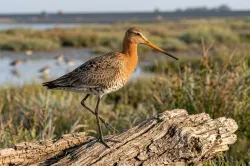
Seaside Sparrow Basic Information
| Scientific Name |
Ammospiza maritima
|
| Status |
LC
Least Concern
|
| Size |
12-15 cm (5-6 inch)
|
| Colors |
|
| Type |
|
| Family |
New World sparrows |
Introduction
The Seaside Sparrow (Ammospiza maritima) is a fascinating and specialized member of the sparrow family, uniquely adapted to the harsh environments of coastal salt marshes. As a member of the perching birds, or passerines, this species is intrinsically linked to the intertidal zones of the Atlantic and Gulf coasts of the United States. Unlike many of its inland cousins that prefer meadows or forests, the Seaside Sparrow has evolved to thrive in a landscape dominated by saltwater cordgrass and tidal fluctuations. Because of their restricted range and specific habitat requirements, they serve as vital indicators of the health of our coastal ecosystems. These birds are often elusive, preferring to skulk through thick vegetation rather than taking to the wing, which makes observing them a rewarding challenge for dedicated birdwatchers. Understanding the biology and ecological role of this species is essential for appreciating the biodiversity found within our nation's fragile estuarine environments.
Physical Appearance
Measuring between 12 and 15 centimeters in length, the Seaside Sparrow is a small, compact bird characterized by its subtle yet distinct coloration, which serves as perfect camouflage against the backdrop of salt marsh grasses. Its plumage is primarily a muted gray, often washed with olive-green tones on the back, complemented by brown streaks that provide excellent concealment. Key identification features include a grayish face, a dark eye-line, and a yellowish patch near the base of the bill, which often acts as a diagnostic mark for birders. The bird’s bill is relatively long and sturdy, adapted for foraging in muddy substrates. Its wings are short and rounded, reflecting its preference for short, fluttery flights over long-distance migration. The overall appearance is understated, yet the intricate pattern of streaks on the breast and the contrast between its gray and brown tones make it a remarkably handsome species when viewed at close range in good light.
Habitat
The Seaside Sparrow is a quintessential inhabitant of the coastal salt marshes found along the Atlantic and Gulf coasts of North America. These birds are almost exclusively found in expansive areas of salt marsh grasses, particularly smooth cordgrass (Spartina alterniflora). They require stable, high-quality marshland that provides both nesting sites above the high-tide line and abundant foraging areas within the mudflats. Their habitat is highly dynamic, dictated by the rhythm of the tides, and they have adapted to survive in environments that are frequently inundated with saltwater. Unfortunately, this reliance on specific coastal zones makes them extremely vulnerable to habitat loss, sea-level rise, and coastal development, which threaten to shrink the available marshland they call home.
Diet
As an insectivore and opportunist feeder, the Seaside Sparrow’s diet is heavily influenced by the seasonal availability of prey within the salt marsh. They primarily forage on the ground, hopping through the mud and thick grass to capture a variety of invertebrates. Their diet consists largely of marine snails, small crabs, insects like grasshoppers and beetles, and various arachnids found within the marsh vegetation. During the winter months, when insect populations decline, they may supplement their diet with small seeds of salt-tolerant plants. Their foraging behavior is methodical; they probe the soft mud with their specialized bills, searching for hidden prey, which allows them to thrive in an environment where food sources are often buried or hidden within dense tidal debris.
Breeding and Nesting
The breeding season for the Seaside Sparrow is a critical time, typically occurring from late spring through early summer. These birds are monogamous and exhibit strong site fidelity, often returning to the same marsh area year after year. The nest is a complex, cup-shaped structure woven from dry marsh grasses and lined with softer materials, strategically built within the dense cover of salt marsh vegetation. To protect their brood from the dangers of rising tides, they often weave the nest directly into the standing grass, sometimes even creating a canopy or dome over the top. Females typically lay a clutch of 3 to 5 eggs, which are incubated for about two weeks. Both parents participate in the demanding task of feeding the chicks, which grow rapidly to leave the nest before the next major tidal cycle.
Behavior
Seaside Sparrows are notably secretive and shy birds, often difficult to spot as they spend the majority of their time on the ground or low in the marsh grasses. They are not known for extensive migration; many populations are sedentary, remaining in their coastal marshes throughout the year. During the breeding season, males become more conspicuous, often climbing to the top of a grass stalk to belt out their buzzy, repetitive song to defend their territory. Their flight is typically low and fluttering, rarely lasting more than a few seconds before they drop back into the safety of the vegetation. This "skulking" behavior is a primary defense mechanism, allowing them to avoid predators in an environment with very little vertical cover.
Conservation Status
-
LC
Least Concern
The conservation status of the Seaside Sparrow is a significant concern for ornithologists, as several subspecies, such as the extinct Dusky Seaside Sparrow, have already been lost. Currently, the species faces ongoing threats from habitat degradation, pollution, and the accelerating impact of climate change, specifically sea-level rise which threatens to submerge their nesting grounds. Conservation efforts are focused on protecting remaining salt marshes and restoring degraded habitats. Monitoring population trends is vital, as the loss of these birds would signal a broader collapse of the delicate estuarine ecosystems that provide essential services to coastal regions.
Interesting Facts
- The Seaside Sparrow is one of the few birds that can drink saltwater and excrete the excess salt through specialized glands.
- They are known to build their nests at varying heights depending on the tidal patterns of their specific location.
- The extinct Dusky Seaside Sparrow was a subspecies of the Seaside Sparrow that lived in Florida.
- They possess a very distinct, buzzy song that sounds like the mechanical chirping of an insect.
- Their coloring provides near-perfect camouflage, making them nearly invisible when they are still in the grass.
- They rarely fly long distances, preferring to remain within a small, localized home range for their entire lives.
Tips for Birdwatchers
Birdwatching for the Seaside Sparrow requires patience and a keen ear. The best time to observe them is during the breeding season when males are actively singing from exposed perches atop the cordgrass. Use a high-quality pair of binoculars or a spotting scope to scan the edges of the marsh, especially during low tide when they are more likely to be foraging in the open mud. It is crucial to stay on designated trails to avoid disturbing their fragile nesting sites. If you are struggling to find them, listen for their unique, buzzy, insect-like song, which is often the first clue to their presence. Always check the weather, as these birds are less active during heavy wind or rain, and prioritize visiting during the early morning hours when activity levels are at their peak.
Conclusion
The Seaside Sparrow is a testament to the incredible power of evolutionary adaptation, having carved out a niche in one of the most challenging environments on Earth. As we have explored, their gray and brown plumage, specialized diet, and unique nesting habits are all perfectly tuned to the rhythms of the coastal salt marsh. However, their future remains precarious. As climate change continues to alter our coastlines, the survival of the Seaside Sparrow serves as a stark reminder of our responsibility to protect these vital habitats. By valuing the salt marsh not just as a piece of land, but as a complex ecosystem that supports unique life, we can contribute to the preservation of this species. Whether you are an experienced ornithologist or a curious birdwatcher, spending time in the presence of this elusive bird offers a profound connection to the natural world. Let us continue to advocate for the conservation of our wetlands, ensuring that the song of the Seaside Sparrow continues to resonate across our marshes for generations to come. Their story is our story, and their survival is intrinsically linked to the health of the world we share.
Seaside Sparrow Distribution Map & Range
The distribution map for this species will be available soon.
We are working with our official data partners to update this information.