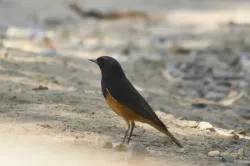
Guadalupe Junco Basic Information
| Scientific Name |
Junco insularis
|
| Status |
VU
Vulnerable
|
| Size |
13-15 cm (5-6 inch)
|
| Colors |
|
| Type |
|
| Family |
New World sparrows |
Introduction
The Guadalupe Junco (Junco insularis) is a fascinating and highly specialized member of the sparrow family, Passerellidae. This small, perching bird is endemic to the remote Guadalupe Island, located off the western coast of Baja California, Mexico. Due to its extremely limited geographic range, it is considered one of the most unique avian species in North America. Historically, the taxonomy of the Guadalupe Junco has been a subject of significant debate among ornithologists, as it was previously considered a subspecies of the Dark-eyed Junco. However, recent genetic and morphological studies have increasingly supported its status as a distinct species. Living in a fragile island ecosystem, this bird has adapted to specific environmental pressures, making it an essential subject for study in evolutionary biology and island biogeography. Its presence on the island represents a delicate balance of biodiversity, reflecting the evolutionary history of isolated populations that have diverged from their mainland ancestors over thousands of years.
Physical Appearance
Measuring approximately 13 to 15 centimeters in length, the Guadalupe Junco is a compact and resilient perching bird. Its plumage is primarily characterized by a sophisticated palette of gray tones, which provide excellent camouflage against the volcanic rocks and pine bark of its native environment. The bird features distinct black markings, particularly around its eyes and wings, which create a sharp, elegant contrast against its slate-gray body. The bill is typically light-colored, often pinkish or horn-toned, which is a common trait among many junco species. The wings are relatively short and rounded, suited for short-distance flights between pine branches rather than long-distance migration. When observing the bird closely, one might notice the subtle variation in color intensity between the male and female, though both share the same fundamental color scheme. The overall appearance is that of a quintessential montane sparrow, refined by the evolutionary requirements of living in a high-altitude island habitat, where blending into the shadows of the cypress and pine forest is essential for survival.
Habitat
The Guadalupe Junco is exclusively found on Guadalupe Island, Mexico. Its primary habitat is restricted to the high-elevation pine and cypress forests located on the island’s northern ridges. These forests are often shrouded in thick fog, which provides the necessary moisture for the vegetation and the birds themselves. The species relies heavily on the dense canopy for nesting and protection from predators. Unlike many other junco species that migrate to lower altitudes, the Guadalupe Junco remains a permanent resident of these cloud forests throughout the year, adapting to the specific microclimate of the island's unique ecosystem.
Diet
The diet of the Guadalupe Junco consists primarily of seeds, small berries, and various insects found within the island's pine forests. During the breeding season, the birds increase their consumption of protein-rich insects, such as small beetles, spiders, and larvae, to feed their developing chicks. During the winter months, when insect populations decline, they shift their focus to the seeds of native trees and shrubs. Their foraging behavior involves hopping along the ground or flitting through the lower branches of trees, using their specialized beaks to crack open seeds and capture small prey with remarkable precision.
Breeding and Nesting
Breeding for the Guadalupe Junco typically occurs during the spring and summer months when food resources are most abundant. The birds are known for their meticulous nest-building process, which usually takes place in the dense foliage of Guadalupe cypress or pine trees. The nest is a cup-shaped structure constructed from twigs, moss, grass, and lined with soft feathers or animal hair to provide insulation for the eggs. A typical clutch consists of three to four eggs, which are incubated primarily by the female for about two weeks. Both parents play an active role in feeding the nestlings once they hatch, demonstrating high levels of parental investment. The young birds fledge roughly two weeks after hatching, though they remain dependent on their parents for food and protection for an additional period while they learn to forage independently within the safety of their forest home.
Behavior
The Guadalupe Junco is generally a social bird, often observed in small, active flocks outside of the breeding season. They are known for their inquisitive nature and can sometimes be seen investigating human activity, provided they feel secure. Their flight pattern is bouncy and direct, usually moving between nearby branches. Communication is vital for these birds, and they utilize a series of soft trills and chips to maintain contact with flock members. During the breeding season, males become more territorial, singing from prominent perches to defend their nesting area. Their behavior is highly adapted to the island's environment, focusing on energy conservation and predator avoidance.
Conservation Status
-
VU
Vulnerable
The Guadalupe Junco is currently listed as Endangered. Its population is extremely vulnerable due to its restricted range and the historical degradation of its habitat by invasive species, particularly feral goats that decimated the island's native vegetation. While conservation efforts, including the removal of invasive herbivores and reforestation programs, have shown positive results, the species remains at risk from environmental changes and potential disease. Protecting the remaining pine and cypress forest is critical to ensuring the long-term survival of this unique island endemic.
Interesting Facts
- The Guadalupe Junco is found nowhere else on Earth but Guadalupe Island.
- It was once considered a subspecies of the Dark-eyed Junco before being reclassified.
- They rely on the island's unique cloud forest for essential hydration.
- The removal of invasive goats has been the most significant factor in their habitat recovery.
- They are known for being surprisingly bold around observers compared to mainland relatives.
Tips for Birdwatchers
Birdwatchers hoping to spot the Guadalupe Junco must be prepared for a challenging journey. Access to Guadalupe Island is strictly controlled, and visitors usually require special permits and logistical support. Once on the island, focus your search on the high-elevation pine forests, especially during the early morning when the birds are most active. Use high-quality binoculars and maintain a quiet, respectful distance to avoid causing stress to the birds. Patience is key; spend time in a single, quiet area rather than wandering constantly, as the birds will eventually emerge from the dense foliage. Always prioritize the bird's welfare by following ethical birding guidelines and local regulations.
Conclusion
The Guadalupe Junco is more than just a bird; it is a symbol of the resilience of island life. As a species restricted to a single, small island, it represents the fragility of our planet's biodiversity. Throughout this guide, we have explored its unique physical traits, its specialized habitat, and the conservation challenges it faces. Protecting the Guadalupe Junco requires ongoing commitment to habitat restoration and careful monitoring of the island's delicate ecosystem. For ornithologists and bird enthusiasts alike, this species offers a profound look into the processes of evolution and the importance of preserving endemic wildlife. By understanding the needs of the Guadalupe Junco, we gain valuable insights into how we can better protect vulnerable species across the globe. Whether through scientific research or responsible birdwatching, every effort to learn about and safeguard this charming perching bird contributes to a larger goal of environmental stewardship. The future of this species remains tied to our ability to maintain the health of the Guadalupe Island forests, ensuring that future generations can witness this rare and beautiful bird in its natural, mist-covered home.
Guadalupe Junco Distribution Map & Range
The distribution map for this species will be available soon.
We are working with our official data partners to update this information.