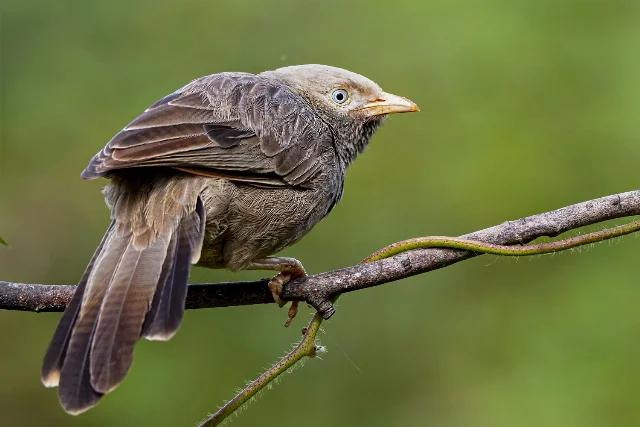
Blue-capped Tanager Basic Information
| Scientific Name |
Sporathraupis cyanocephala
|
| Status |
LC
Least Concern
|
| Size |
15-16 cm (6-6 inch)
|
| Colors |
|
| Type |
|
| Family |
Tanagers |
Introduction
The Blue-capped Tanager, scientifically known as Sporathraupis cyanocephala, is a striking member of the Thraupidae family, often celebrated for its vibrant plumage and charismatic presence in the neotropical forests of South America. As a medium-sized perching bird, it captures the attention of ornithologists and casual birdwatchers alike. This species is primarily characterized by its distinct blue crown, which gives it its common name, contrasting beautifully against its more muted, greyish-toned body. These tanagers are highly social, frequently moving through the canopy in small, active groups while searching for food. Their presence is a vital indicator of forest health, and they play a significant role in their ecosystem by aiding in seed dispersal. Understanding the life cycle, behavior, and environmental requirements of the Blue-capped Tanager provides deep insight into the complex biodiversity of South American montane forests. Whether you are an experienced birder or a nature enthusiast, observing this bird in its natural habitat is a rewarding experience that highlights the intricate beauty of avian evolution.
Physical Appearance
Measuring approximately 15 to 16 cm in length, the Blue-capped Tanager is a compact and well-proportioned perching bird. The most defining feature of this species is, undeniably, the brilliant, deep blue coloration that adorns the crown of its head. This vibrant blue cap stands out sharply against a largely grey-toned body, which often features subtle olive or brownish washes depending on the specific subspecies and lighting conditions. Their wings and tail are usually a darker, more slate-grey or blackish hue, providing an elegant contrast to the rest of the plumage. The bird possesses a strong, conical beak, perfectly adapted for its varied diet of seeds, fruits, and insects. Its eyes are typically dark and alert, set within a face that may show hints of darker markings. Both males and females share similar, though sometimes subtly distinct, color patterns, maintaining a sophisticated look that helps them blend into the dappled light of the forest canopy while remaining distinctly identifiable to others of their species. The overall texture of their feathers is smooth, giving them a sleek and agile appearance as they move gracefully between branches.
Habitat
The Blue-capped Tanager is primarily found in the montane forests and cloud forests of South America, particularly along the Andes mountain range. They prefer mid-to-high altitude regions, often dwelling in the canopy and sub-canopy layers of humid forests, forest edges, and sometimes even in secondary growth areas or plantations that have matured. These birds are well-adapted to the cool, moist environment of montane regions, where the thick foliage provides both protection from predators and an abundance of food resources. Their distribution spans several countries, including Colombia, Venezuela, Ecuador, Peru, and Bolivia, showcasing their adaptability to diverse but ecologically similar mountainous environments across the continent.
Diet
As an omnivorous species, the Blue-capped Tanager has a varied and flexible diet that sustains its high-energy lifestyle. Their primary food sources include a wide variety of small fruits and berries, which they forage for in the upper branches of trees. They are particularly fond of mistletoe berries and other small, fleshy fruits common in their habitat. In addition to plant matter, they are known to supplement their nutritional intake with insects, spiders, and small larvae, especially during the breeding season when protein requirements for developing chicks are significantly higher. This dual-feeding strategy allows them to thrive in fluctuating environments where specific food sources may be seasonally limited.
Breeding and Nesting
The breeding season of the Blue-capped Tanager is a period of intense activity and careful construction. These birds typically build cup-shaped nests, meticulously crafted from fine twigs, moss, lichens, and spider silk to ensure both stability and camouflage against the branch where it is anchored. The nest is usually placed in a sheltered fork of a tree or a dense shrub within the forest canopy, providing protection from the elements and potential predators. A typical clutch consists of two to three eggs, which are incubated primarily by the female. Both parents are highly attentive, working together to feed the nestlings a diet rich in insects and fruit until they are ready to fledge. The parents exhibit strong territorial instincts during this phase, defending the immediate vicinity of their nest from intruders.
Behavior
Blue-capped Tanagers are known for their social and active nature. They are rarely seen alone, preferring the company of small, energetic flocks as they forage through the treetops. These flocks often join mixed-species groups, which is a common behavioral adaptation among many tanager species to improve predator detection and foraging efficiency. They are vocal birds, often communicating with high-pitched calls and songs that echo through the forest. When moving, they are remarkably agile, hopping between branches and fluttering quickly from tree to tree. Their behavior is characterized by a constant state of alertness, as they are always scanning their surroundings for both food and potential threats.
Conservation Status
-
LC
Least Concern
Currently, the Blue-capped Tanager is classified as a species of Least Concern by the IUCN. While they remain relatively common within their preferred montane forest habitats, they are not entirely immune to environmental pressures. Habitat fragmentation and deforestation due to agricultural expansion and urban development pose the greatest long-term threats to their populations. As these birds rely heavily on stable, humid forest ecosystems, protecting large corridors of montane forest is essential for their survival. Continued monitoring and conservation efforts that focus on maintaining forest integrity will ensure these birds continue to thrive in their natural range.
Interesting Facts
- The Blue-capped Tanager is a vital seed disperser for many native plant species in the Andes.
- They are known to participate in mixed-species foraging flocks to increase their chances of finding food.
- Despite their name, the blue on their head can appear more violet or indigo depending on the angle of sunlight.
- They are highly vocal birds, using distinct calls to maintain contact with their flock.
- Their nests are architectural marvels, often decorated with lichen to blend into the tree bark.
- They are well-adapted to high-altitude living, thriving in cool, misty cloud forests.
Tips for Birdwatchers
To successfully spot a Blue-capped Tanager, birdwatchers should focus their efforts on the mid-to-high canopy of montane forests in the early morning hours, when the birds are most active. Using high-quality binoculars or a spotting scope is essential, as these birds often forage in the dense foliage of the upper branches. Listen for their high-pitched, social calls, which often give away their location before they are visually spotted. Joining a mixed-species flock is a common occurrence, so if you see a group of smaller birds moving together, scan them carefully for the distinct blue crown. Patience is key; remain still and quiet, and you will likely be rewarded with a great view as they move through the trees.
Conclusion
The Blue-capped Tanager (Sporathraupis cyanocephala) is a magnificent example of the avian diversity found in the neotropical montane forests. With its vibrant blue crown and graceful movements, it serves as a constant reminder of the beauty inherent in the high-altitude ecosystems of South America. By understanding its unique biology, from its specific dietary needs to its complex social behaviors, we gain a greater appreciation for the delicate balance of life in the canopy. While currently stable in terms of population, the species relies on the preservation of its forest habitat to remain a fixture of the Andean landscape. For birdwatchers, the challenge of spotting this elusive yet social bird is a highlight of any trekking trip through the cloud forests. Ultimately, the presence of the Blue-capped Tanager not only adds color to the forest but also plays an essential ecological role. As we continue to study and protect these habitats, we ensure that future generations will have the opportunity to witness this stunning bird in its natural environment, further emphasizing the importance of biodiversity and conservation in our ever-changing world.
Blue-capped Tanager Distribution Map & Range
The distribution map for this species will be available soon.
We are working with our official data partners to update this information.