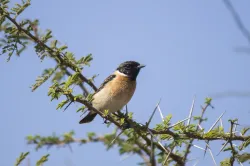
Brown-flanked Tanager Basic Information
| Scientific Name |
Thlypopsis pectoralis
|
| Status |
LC
Least Concern
|
| Size |
14-15 cm (6-6 inch)
|
| Colors |
|
| Type |
|
| Family |
Tanagers |
Introduction
The Brown-flanked Tanager (Thlypopsis pectoralis) is a fascinating and somewhat elusive member of the Thraupidae family. Primarily found in the dense, humid montane forests of the Andes, this small perching bird is a jewel for ornithologists and avid birdwatchers alike. While it may not possess the vibrant, multi-colored plumage of some of its more famous relatives, its subtle elegance and specific ecological niche make it a significant subject of study in South American ornithology. Understanding the life cycle, behaviors, and environmental requirements of the Brown-flanked Tanager provides vital insights into the health of the high-altitude forest ecosystems they inhabit. As habitat loss continues to threaten various avian populations in the region, the Brown-flanked Tanager serves as an indicator species for the stability of montane cloud forests. This guide explores the intricate details of this species, from its physical characteristics to its complex social behaviors, offering a comprehensive look at what makes this bird a truly remarkable avian resident.
Physical Appearance
Measuring approximately 14 to 15 centimeters in length, the Brown-flanked Tanager is a compact and agile perching bird. Its overall appearance is defined by a sophisticated, understated color palette that blends seamlessly into the shadows of the forest canopy. The primary coloration of the bird is a soft, slate-grey, which covers much of its upper body and wings. This neutral tone is beautifully contrasted by the bird's namesake feature: the rich, earthy brown flanks that give the species its distinct character. The breast area often features a lighter, sometimes yellowish or buff-tinted wash, providing a subtle transition between the grey upperparts and the brown flanks. Its bill is sharp and adapted for foraging among leaves and small branches, while its eyes are dark and expressive. The combination of these colors creates a perfect camouflage, allowing the bird to remain hidden from predators while foraging in the dense undergrowth. Both sexes share a similar aesthetic, though juvenile birds may display slightly duller plumage until they reach full maturity.
Habitat
The Brown-flanked Tanager is predominantly restricted to the humid montane forests of the Andean slopes. These birds show a strong preference for high-altitude environments, typically thriving at elevations where cloud cover is consistent and vegetation is lush. They are often found in the mid-story and canopy layers of primary forests, where they navigate through dense foliage, moss-covered branches, and epiphytes. The presence of dense shrubbery and secondary growth is also essential for their survival, as these areas offer both protection and abundant food sources. Due to their specific environmental requirements, they are rarely found in open areas or highly disturbed agricultural landscapes, making them true specialists of the pristine Andean montane ecosystem.
Diet
As an active forager, the Brown-flanked Tanager maintains a diverse diet that reflects its arboreal lifestyle. Its primary food sources consist of small fruits, berries, and a variety of arthropods. During the warmer months, the bird is frequently observed gleaning insects and small spiders from the underside of leaves and bark crevices, which provides the necessary protein for breeding and molting. The bird's sharp, slender bill is highly efficient for probing into flower buds and catching insects in mid-air or off vegetation. By incorporating both plant-based materials and animal proteins, the Brown-flanked Tanager plays a crucial role in its ecosystem, acting as both a seed disperser and a natural pest control agent within the forest canopy.
Breeding and Nesting
Breeding for the Brown-flanked Tanager is a highly seasonal affair, strictly timed to coincide with the periods of maximum food availability in the Andean forests. During the nesting season, pairs become highly territorial, defending their chosen patch of forest from intruders. The nest itself is a masterclass in avian architecture; it is typically a cup-shaped structure woven from fine plant fibers, moss, lichen, and spider silk, carefully hidden in the dense foliage of a tree or a thick shrub. The female takes the lead in construction, while the male remains nearby, often singing to mark his territory. Once the eggs are laid, both parents share the responsibilities of incubation and feeding the chicks. The young birds are altricial, requiring intensive care and protection from both parents before they are ready to fledge and face the challenges of their highland environment.
Behavior
The Brown-flanked Tanager is generally a social bird, often found moving in small, active groups or participating in mixed-species foraging flocks. This behavior is a strategic advantage, as traveling with other species increases the chances of spotting predators and finding hidden food sources. Despite their social nature, they are highly vigilant and shy, often disappearing into the canopy at the slightest sign of disturbance. They are energetic and constant movers, rarely staying in one spot for long as they hop between branches. Their vocalizations, while not as complex as some songbirds, serve as an essential communication tool for maintaining group cohesion and signaling territory boundaries to other members of their species.
Conservation Status
-
LC
Least Concern
Currently, the Brown-flanked Tanager faces moderate pressure due to the ongoing fragmentation of its natural Andean habitats. While not classified as critically endangered, the loss of primary forest cover due to agricultural expansion and climate-induced changes to cloud forest moisture levels poses a long-term risk. Conservation efforts are focused on protecting key corridors of montane forest and promoting sustainable land-use practices in the surrounding regions. Monitoring their population density is crucial for assessing the success of these conservation initiatives and ensuring that this unique tanager continues to thrive in its native range.
Interesting Facts
- They are expert at blending into the shadows of the Andean canopy.
- The brown flanks serve as an evolutionary adaptation for camouflage in dense foliage.
- They often join mixed-species flocks to improve their foraging efficiency.
- Their nests are often reinforced with spider silk for extra structural integrity.
- They play a significant role as seed dispersers within high-altitude forests.
- Despite their small size, they are fiercely territorial during the breeding season.
- They are highly sensitive to changes in humidity, making them excellent indicators of forest health.
Tips for Birdwatchers
For birdwatchers hoping to spot the Brown-flanked Tanager, patience and stealth are your greatest allies. The best time for viewing is during the early morning hours when the birds are most active in their search for food. Because they often move within mixed-species flocks, listen for the calls of other tanagers or small forest birds, as these can lead you to the flock's location. Using high-quality binoculars with good light transmission is essential, as the dense canopy can make identifying these grey-toned birds difficult even in daylight. Avoid sudden movements and wear neutral-colored clothing to minimize your profile. Checking known montane forest trails during the breeding season will significantly increase your chances of witnessing their unique nesting behaviors.
Conclusion
The Brown-flanked Tanager (Thlypopsis pectoralis) is a testament to the quiet beauty found within the high-altitude forests of the Andes. Throughout this guide, we have explored the various facets of its existence, from its subtle grey and brown plumage to its vital role as a forest inhabitant. As we have seen, this species is not just a bird to be admired for its appearance but a crucial component of its ecosystem, contributing to the biodiversity and health of its environment. Protecting the Brown-flanked Tanager means protecting the intricate web of life that defines the Andean cloud forests. For those fortunate enough to encounter this bird in the wild, it serves as a reminder of the importance of habitat preservation and the wonders of avian evolution. By continuing to support research and conservation efforts, we can ensure that future generations of birdwatchers will also be able to marvel at the presence of this elegant tanager in its natural habitat. Whether you are a seasoned ornithologist or a casual enthusiast, the Brown-flanked Tanager remains a symbol of the resilience and complexity of nature.
Brown-flanked Tanager Distribution Map & Range
The distribution map for this species will be available soon.
We are working with our official data partners to update this information.