Pardusco Basic Information
| Scientific Name |
Nephelornis oneilli
|
| Status |
LC
Least Concern
|
| Size |
15-16 cm (6-6 inch)
|
| Colors |
|
| Type |
|
| Family |
Tanagers |
Introduction
The Pardusco (Nephelornis oneilli) is one of the most enigmatic and specialized avian residents of the high-altitude Andes. Belonging to the order Passeriformes, this unique species is the sole member of its genus, making it a highly sought-after sighting for dedicated ornithologists and birdwatchers alike. Primarily found in the dense, mist-shrouded cloud forests of Peru, the Pardusco is often overlooked due to its elusive nature and preference for the thick undergrowth of high-elevation habitats. Its scientific name, Nephelornis oneilli, translates to 'cloud bird,' which perfectly encapsulates its ethereal existence in the montane forests where clouds cling to the canopy. As a perching bird, it has adapted perfectly to the rugged, vertical landscapes of the Andes. Despite its relatively unassuming appearance, the Pardusco holds significant interest for evolutionary biologists, as it represents a distinct lineage that offers insights into the complex biogeography of South American mountain ecosystems. Understanding this bird requires patience, a keen ear for its subtle vocalizations, and an appreciation for the fragile, high-altitude environments it calls home.
Physical Appearance
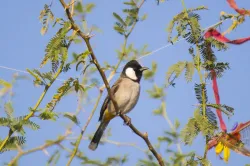
The Pardusco is a medium-sized perching bird, typically measuring between 15 and 16 centimeters in length. Its plumage is characterized by a sophisticated, albeit subdued, color palette that provides excellent camouflage within the mossy, shadowed environment of the cloud forest. The primary coloration is a deep, rich brown, which covers much of the dorsal area and wings. This earthy tone is complemented by secondary grey hues, particularly around the head, throat, and underparts, giving the bird a somewhat dusky, slate-like appearance. The bill is relatively stout and adapted for foraging among dense foliage and bark. Its eyes are often described as dark and intelligent, set against the muted tones of its facial plumage. The overall body shape is compact and robust, typical of birds that must navigate the dense, tangled vegetation of the Andean treeline. Unlike more brightly colored tropical species, the Pardusco’s beauty lies in its subtle gradients and the way its feathers interact with the low-light conditions of its high-altitude habitat. Both sexes share similar coloration, a common trait in many high-mountain passerines where sexual dimorphism is less pronounced than in lowland species.
Habitat
The Pardusco is endemic to the humid montane forests of central Peru. It is strictly restricted to high-altitude zones, typically found at elevations ranging from 3,000 to 4,000 meters above sea level. This bird thrives in the 'elfin forests' and the dense understory of the humid transition zones where the Andes meet the cloud line. These habitats are characterized by high humidity, constant mist, and a thick carpet of bryophytes and epiphytes. The Pardusco prefers areas with dense shrubbery and stunted, wind-pruned trees, which provide both protection from the harsh mountain weather and a rich substrate for its specialized foraging behavior. Because its range is so specific and limited to these high-elevation pockets, the Pardusco is highly sensitive to habitat fragmentation and changes in the local microclimate.
Diet
The diet of the Pardusco is primarily insectivorous, though it is known to be somewhat opportunistic. It spends much of its time foraging in the mid-to-lower levels of the forest, meticulously searching through moss, lichen, and the bark of stunted trees for small invertebrates. This includes a variety of beetles, spiders, caterpillars, and small larvae that thrive in the damp, high-altitude environment. By probing into crevices and searching under leaf litter, the Pardusco fills a specific ecological niche in the cloud forest. While insects form the bulk of its nutritional intake, it may occasionally consume small berries or seeds if they are seasonally available, reflecting a flexible dietary strategy that helps it survive the unpredictable conditions of the Andean peaks.
Breeding and Nesting
Breeding habits for the Pardusco are largely shrouded in mystery, reflecting its elusive nature. Ornithologists believe that the breeding season coincides with the period of peak invertebrate abundance, typically during the wetter months of the year. The bird constructs a cup-shaped nest, expertly hidden within the dense foliage of a shrub or a cluster of epiphytes, which provides both insulation and camouflage from potential predators. Both parents are thought to be involved in the care of the chicks, sharing the responsibilities of feeding and protecting the brood. Given the harsh, cold environment of the high Andes, the nest is likely lined with soft mosses and plant fibers to maintain a stable temperature for the eggs. Further field research is required to fully document their courtship displays and precise nesting cycles, which remain one of the many fascinating unknowns regarding this unique species.
Behavior
The Pardusco is a relatively quiet and unobtrusive bird, often moving stealthily through the dense vegetation of its habitat. It is generally observed singly or in pairs, though it may occasionally join mixed-species foraging flocks in the cloud forest. Its movement is deliberate; it tends to hop through branches with great agility, often pausing to scan the foliage for food. Despite its shyness, it is not particularly timid when it feels secure within the cover of the thicket. Its vocalizations are subtle, consisting of soft, high-pitched chirps and whistles that can be easily masked by the sound of wind or rain in the canopy. This behavioral pattern is a classic adaptation to a life spent in the shadows, helping the bird avoid detection by predators while maintaining social bonds with its mate.
Conservation Status
-
LC
Least Concern
The Pardusco is currently categorized as a species of Least Concern by the IUCN, but this status is somewhat misleading due to its restricted range. Its reliance on specific, high-altitude cloud forest habitats makes it inherently vulnerable to climate change and localized deforestation. As temperatures rise, the cloud forest zones may shift higher, potentially squeezing the Pardusco into smaller, less suitable areas. Current conservation efforts focus on the protection of the Andean cloud forests through the establishment of national parks and private reserves. Protecting the integrity of these high-altitude ecosystems is essential to ensure the long-term survival of this unique and specialized bird.
Interesting Facts
- The Pardusco is the only member of the genus Nephelornis.
- Its name translates to 'cloud bird' in reference to its habitat.
- It is endemic to the high-altitude cloud forests of Peru.
- It was only discovered by science in the mid-20th century.
- It is known for its highly specialized, elusive behavior.
- The bird is perfectly adapted to the cold, misty conditions of the Andes.
Tips for Birdwatchers
For birdwatchers hoping to spot the Pardusco, preparation is key. You must visit the high-altitude cloud forests of central Peru, specifically areas like the Carpish Pass or similar high-elevation sites. Patience is your greatest tool; plan to spend several hours slowly scanning the dense, mossy undergrowth where these birds prefer to hide. Using a high-quality pair of binoculars is essential, as the light in the cloud forest can be quite low. Listen carefully for soft, thin calls that differ from the more boisterous birds of the lower slopes. Hiring a local guide who knows the specific territories of the Pardusco is highly recommended, as they can significantly increase your chances of a successful sighting.
Conclusion
The Pardusco (Nephelornis oneilli) stands as a testament to the incredible biodiversity hidden within the remote corners of the Andes. As a specialized inhabitant of the high-altitude cloud forests, this bird represents a unique evolutionary path, having adapted to an environment that is both harsh and incredibly rich in life. Its subtle physical beauty, characterized by shades of brown and grey, mirrors the misty, mysterious atmosphere of its home. While it may not possess the vibrant plumage of some tropical species, the Pardusco offers a profound reward to those who seek it out in the wild. Its existence serves as a reminder of the importance of preserving fragile mountain ecosystems, which are currently under threat from various environmental pressures. Whether you are a scientist studying avian evolution or a birdwatcher ticking off rare species, the Pardusco is an unforgettable highlight of the Andean avifauna. By continuing to support habitat conservation and fostering a deeper understanding of this elusive 'cloud bird,' we can ensure that future generations will also have the opportunity to marvel at the quiet, persistent life of the Pardusco in its native, mist-covered mountain home.
Pardusco Distribution Map & Range
The distribution map for this species will be available soon.
We are working with our official data partners to update this information.