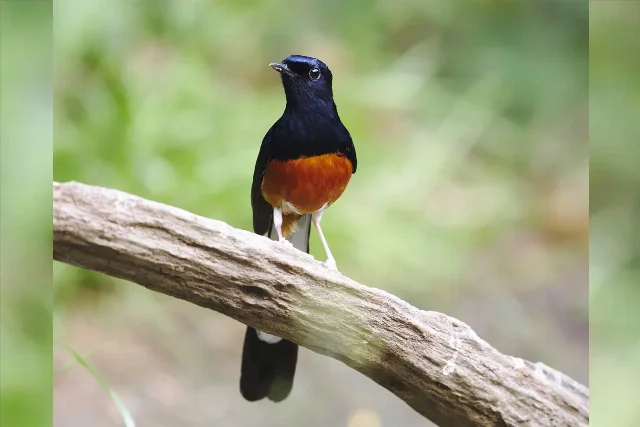
Blue Dacnis Basic Information
| Scientific Name |
Dacnis cayana
|
| Status |
LC
Least Concern
|
| Size |
11-13 cm (4-5 inch)
|
| Colors |
|
| Type |
|
| Family |
Tanagers |
Introduction
The Blue Dacnis (Dacnis cayana) is a small, charismatic passerine bird belonging to the tanager family, Thraupidae. Renowned for its breathtaking cerulean plumage, this bird is a true jewel of the Neotropics. Stretching across a vast range from Nicaragua down to Argentina, the Blue Dacnis is a familiar sight in tropical forests, secondary growth, and even well-wooded gardens. As a member of the perching bird group, it exhibits remarkable agility, often seen maneuvering through the canopy with acrobatic ease. Despite its small stature, the Blue Dacnis commands attention due to the intense, almost iridescent blue coloration of the male, which contrasts sharply with its black mask and wings. Ornithologists and birdwatchers alike admire this species for its social nature and its role in ecosystem health, particularly as a seed disperser and insect controller. Understanding the life history of the Blue Dacnis offers a window into the complex biodiversity of South and Central American ecosystems, highlighting the importance of preserving the lush habitats they call home.
Physical Appearance
The Blue Dacnis is a compact, small bird, typically measuring between 11 and 13 centimeters in length. The species exhibits pronounced sexual dimorphism, meaning males and females look quite distinct. The male is primarily a brilliant, deep turquoise-blue, which appears almost electric in bright sunlight. This vibrant body color is accented by a prominent black mask that covers the lores and eyes, extending down the throat. Furthermore, the male possesses black wings and a black tail, creating a striking aesthetic contrast. In contrast, the female is predominantly green, which acts as excellent camouflage within the dense foliage of the forest canopy. The female displays a paler, yellowish-green belly and a blue-tinted head, with wings that are more brownish than those of the male. Both sexes possess a sharp, pointed, and slightly curved bill, which is perfectly adapted for their varied diet. Their small, agile feet allow them to cling to slender branches, making them well-suited for their life in the high canopy.
Habitat
The Blue Dacnis is widely distributed across the Neotropics, favoring environments with dense vegetation and consistent food sources. They are most commonly found in the canopy and borders of humid forests, as well as in secondary growth, plantations, and parks with mature trees. Unlike some interior forest specialists, the Blue Dacnis is quite adaptable and frequently ventures into semi-open areas, provided there are sufficient trees for cover and foraging. Their range extends from Central America through much of tropical South America, reaching as far south as Argentina. They rarely descend to the forest floor, preferring to stay within the middle to upper levels of the canopy where they can find fruits and insects.
Diet
The diet of the Blue Dacnis is diverse and opportunistic, categorizing them as primarily frugivorous and insectivorous. They are frequently seen foraging in small groups, moving through the canopy in search of small berries, seeds, and soft fruits. They are particularly fond of the fruits of various trees such as Cecropia and Miconia. In addition to plant matter, they are skilled at gleaning insects and spiders from leaves and branches. During the breeding season, their intake of protein-rich insects increases to support the growth of their chicks. Their sharp, slender bill is highly effective at plucking insects from crevices and stripping fruit pulp, showcasing their specialized feeding behavior.
Breeding and Nesting
Breeding patterns for the Blue Dacnis vary depending on the geographic location within their extensive range. These birds are monogamous and typically build a small, cup-shaped nest constructed from fine fibers, rootlets, and spider silk, often lined with softer material like moss or plant down. The nest is carefully placed in a fork of a tree branch, usually high up in the canopy to avoid predators. The female is primarily responsible for nest construction and incubation, laying a clutch of two to three eggs that are usually white with dark spots. Incubation lasts approximately two weeks, and both parents participate in feeding the chicks. The young fledge after about two to three weeks, remaining dependent on their parents for a short period before joining the foraging flock.
Behavior
Blue Dacnis are highly social birds, often observed moving through the canopy in pairs or small family groups. They are frequently found in mixed-species foraging flocks, associating with other tanagers, honeycreepers, and warblers. This behavior is thought to provide better protection against predators and increase the efficiency of finding food. They are energetic and constantly on the move, displaying acrobatic flight as they navigate the canopy. While they are generally not aggressive, they will defend their immediate feeding territory from other small birds. Their vocalizations consist of thin, high-pitched chirps and whistles, which help maintain contact within the flock as they forage through dense foliage.
Conservation Status
-
LC
Least Concern
According to the IUCN Red List, the Blue Dacnis is currently classified as Least Concern. This status is due to its extremely large range and presumably stable population trends. While they are adaptable to secondary growth and human-altered landscapes, they still depend on the presence of trees for survival. Deforestation and habitat fragmentation represent the primary threats to their long-term viability. Protecting large tracts of mature forest and reforestation efforts remain essential to ensure that these vibrant birds continue to thrive throughout their expansive Neotropical range.
Interesting Facts
- The Blue Dacnis is known for its intense, almost iridescent blue plumage in males.
- They often participate in mixed-species foraging flocks to increase safety and food-finding efficiency.
- The female's green coloration provides excellent camouflage while nesting.
- Their diet consists of both fruits and insects, making them important for seed dispersal.
- They are highly agile and rarely descend to the forest floor.
- The species was first described by Carl Linnaeus in 1766.
- They are often seen in suburban gardens if the area has mature fruit-bearing trees.
Tips for Birdwatchers
To spot the Blue Dacnis, focus your efforts on the mid-to-upper levels of the forest canopy. Early morning is the best time, as they are most active during the first few hours of daylight. Look for mixed-species flocks, as the Blue Dacnis is a frequent participant; once you locate a flock, scan the canopy for the male's brilliant blue color. Utilizing high-quality binoculars or a spotting scope is essential for observing them in the high canopy. Patience is key, as they are constantly moving. If you are in a tropical garden, setting up a fruit feeder with bananas or papayas can be an excellent way to attract them closer for a better view.
Conclusion
The Blue Dacnis is a spectacular example of the biodiversity found within the Neotropical regions. Its brilliant colors, engaging social behavior, and adaptability make it a favorite among birdwatchers and nature enthusiasts. By understanding their specific needs—such as their reliance on fruit-bearing trees and their preference for canopy habitats—we can better appreciate the complex ecological roles they fulfill. As we continue to face global challenges regarding habitat loss and climate change, the presence of the Blue Dacnis serves as a vibrant reminder of the importance of conservation. Protecting the forested corridors where these birds live not only ensures the survival of this species but also safeguards countless others that share their ecosystem. Whether you are an experienced ornithologist or a casual observer, encountering the Blue Dacnis in the wild is a rewarding experience that highlights the sheer beauty and resilience of avian life. As research continues to uncover more about their biology and habits, we gain further insight into the intricate web of life that defines our planet's tropical forests. Embracing conservation and responsible birdwatching is the best way to ensure that future generations can enjoy the breathtaking sight of a Blue Dacnis darting through the trees.
Blue Dacnis Distribution Map & Range
The distribution map for this species will be available soon.
We are working with our official data partners to update this information.