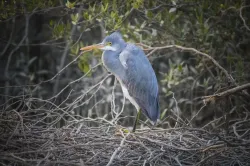
Sayaca Tanager Basic Information
| Scientific Name |
Tangara sayaca
|
| Status |
LC
Least Concern
|
| Size |
16-17 cm (6-7 inch)
|
| Colors |
|
| Type |
|
| Family |
Tanagers |
Introduction
The Sayaca Tanager (Tangara sayaca) is a charismatic and widely distributed species of bird belonging to the diverse Thraupidae family. Native to the neotropical regions of South America, this perching bird is a common sight in gardens, woodlands, and urban parks across countries such as Brazil, Argentina, Paraguay, and Bolivia. Often referred to by locals as the 'Sanhaçu-cinzento' in Portuguese, the Sayaca Tanager is celebrated for its subtle yet elegant plumage and its active, social demeanor. Unlike some of its more brightly colored relatives, the Sayaca Tanager possesses a sophisticated palette of blue and grey, which serves as excellent camouflage within the canopy. These birds are highly adaptable, frequently interacting with human environments, which has made them a favorite subject for amateur birdwatchers and ornithologists alike. As a quintessential representative of South American avian life, the Sayaca Tanager plays a vital ecological role, contributing to seed dispersal and forest regeneration. Understanding this species offers a fascinating glimpse into the avian biodiversity that flourishes within the continent's varied landscapes.
Physical Appearance
The Sayaca Tanager is a medium-sized perching bird, typically measuring between 16 and 17 centimeters in length. Its physical appearance is characterized by a harmonious blend of muted tones, primarily dominated by shades of blue and grey. The overall body coloration is a soft, dusty blue that transitions into a more pronounced slate-grey on the wings and back. One of the most distinctive features of this species is the iridescent quality of its wing coverts, which can appear more vibrant under direct sunlight. The underparts are generally lighter, often exhibiting a pale, silvery-grey hue that provides a stark contrast to the deeper blue tones of the upper body. The bird possesses a strong, conical bill, which is perfectly adapted for its varied diet of fruits and insects. Its eyes are dark and alert, set within a head that maintains a sleek, rounded profile. Juveniles often display a duller, more brownish-grey plumage, which helps them blend into the foliage to avoid predation during their early stages of development. Both males and females share similar coloration, a trait known as monomorphism, making it difficult to distinguish between the sexes based on sight alone in the field.
Habitat
The Sayaca Tanager is incredibly versatile when it comes to habitat selection, which explains its widespread success across South America. They are most commonly found in semi-open environments, including forest edges, secondary-growth woodlands, and scrublands. However, the species has shown a remarkable ability to thrive in anthropogenically altered landscapes. It is a frequent visitor to suburban gardens, orchards, and urban parks where fruit-bearing trees are abundant. While they prefer areas with a mix of tall trees and shrubby vegetation that provides both cover and nesting sites, they are rarely found in the deep, undisturbed interior of dense primary rainforests. Their adaptability allows them to inhabit diverse biomes ranging from the humid Atlantic Forest to the drier regions of the Cerrado and the Chaco, proving that they are not strictly tethered to a single ecosystem type.
Diet
As an opportunistic feeder, the Sayaca Tanager maintains a varied diet that shifts according to seasonal availability. Their primary food source consists of a wide array of fruits and berries, making them significant seed dispersers within their range. They are particularly fond of the fruit from trees like the cecropia, melastomes, and various palms found in their habitat. In addition to plant matter, they are also avid insectivores. They frequently forage for small insects, caterpillars, and spiders, especially during the breeding season when the extra protein is crucial for the development of their chicks. This combination of frugivory and insectivory allows the Sayaca Tanager to remain healthy and active throughout the year, even when fruit supplies might be temporarily scarce in certain local environments.
Breeding and Nesting
The breeding season for the Sayaca Tanager typically coincides with the period of greatest food abundance, usually during the warmer months of the year. The pair works together to construct a neat, cup-shaped nest, which is meticulously woven from fine plant fibers, twigs, moss, and spiderwebs to ensure structural integrity. These nests are generally placed in the fork of a tree or hidden within dense shrubbery, often several meters above the ground, to protect the contents from terrestrial predators. The female usually lays two to three pale, spotted eggs. Incubation is primarily performed by the female, while the male remains nearby to defend the territory and provide food. Once the eggs hatch, both parents share the responsibility of feeding the chicks, bringing a steady supply of insects to ensure rapid growth. The fledglings typically leave the nest after about two to three weeks, though they continue to receive parental care for a short period before becoming fully independent.
Behavior
Sayaca Tanagers are highly social birds, often observed moving in pairs or small family groups. They are energetic and constantly on the move, hopping through branches with agility as they forage for food. While they are generally peaceful, they can become quite territorial, especially when defending a prime fruit tree or their immediate nesting area from other birds. Their vocalizations are simple, consisting of a series of sharp, rhythmic chirps that help maintain contact between members of a group. They are not particularly shy and often allow human observers to get relatively close, provided the observer remains still and quiet. Their constant activity and social nature make them one of the most visible and lively inhabitants of the South American canopy.
Conservation Status
-
LC
Least Concern
Currently, the Sayaca Tanager is classified as a species of Least Concern by the International Union for Conservation of Nature (IUCN). Their population is considered stable, and they have benefited from the expansion of agricultural and urban areas, which have created the semi-open habitats they prefer. Unlike many other neotropical birds that suffer from habitat loss and fragmentation, the Sayaca Tanager has proven to be highly resilient. However, continued monitoring is essential to ensure that their populations remain healthy as regional landscapes continue to change due to human development and climate shifts.
Interesting Facts
- The Sayaca Tanager is often called 'Sanhaçu' in Brazil, an onomatopoeic name reflecting its common call.
- They are known to be frequent visitors to backyard bird feeders offering pieces of banana or papaya.
- Despite their blue-grey appearance, they are part of the family Thraupidae, which contains some of the most colorful birds on the planet.
- They play a crucial ecological role by dispersing seeds of various native plants through their droppings.
- They are remarkably intelligent and can quickly learn to associate humans with the provision of food in urban settings.
- The species is monomorphic, meaning males and females look identical to the naked eye.
Tips for Birdwatchers
For birdwatchers hoping to spot the Sayaca Tanager, the best strategy is to look in open areas with scattered trees, such as public parks, gardens, or the edges of forest trails. Because they are active during the day, they are relatively easy to find. Bringing a pair of high-quality binoculars is recommended, even though they are not particularly shy. If you want to attract them to a specific spot, setting up a feeder with fresh fruit like bananas or oranges is highly effective. They are most active in the early morning and late afternoon. Patience is key; observe the canopy level of trees, and listen for their characteristic, sharp chirping calls. They are often found in the company of other small birds, so keep an eye out for mixed-species foraging flocks, where the Sayaca Tanager is a frequent participant.
Conclusion
The Sayaca Tanager is a testament to the beauty and resilience of South American birdlife. By thriving in a variety of environments, from deep forest edges to the heart of bustling cities, this species has secured its place as a familiar and cherished inhabitant of the neotropics. Its subtle blue and grey plumage, combined with its energetic and social personality, offers a delightful experience for anyone interested in ornithology. Beyond its aesthetic appeal, the Sayaca Tanager fulfills a vital ecological niche, acting as an important seed disperser and insect controller within its habitat. As we continue to modify our natural landscapes, the success of the Sayaca Tanager serves as an encouraging example of how certain species can adapt to changing conditions. For birdwatchers, they provide endless opportunities for observation, photography, and appreciation of avian behavior. Whether you are a seasoned expert or a beginner, taking the time to observe a Sayaca Tanager in its natural element is a rewarding endeavor that connects us more deeply to the vibrant biodiversity of our world. We must continue to value and protect the habitats that sustain such magnificent birds, ensuring that future generations can also enjoy the presence of the Sayaca Tanager in their own backyards.
Sayaca Tanager Distribution Map & Range
The distribution map for this species will be available soon.
We are working with our official data partners to update this information.