Belding's Sparrow Basic Information
| Scientific Name |
Passerculus guttatus
|
| Status |
LC
Least Concern
|
| Size |
12-14 cm (5-6 inch)
|
| Colors |
|
| Type |
|
| Family |
New World sparrows |
Introduction
The Belding's Sparrow (Passerculus guttatus) is a specialized and elusive inhabitant of the coastal salt marshes of Southern California and Baja California. Long considered a subspecies of the Savannah Sparrow, it has gained recognition as a distinct species due to its unique morphological and ecological characteristics. As a bird that thrives in one of the most fragile environments on Earth, the Belding's Sparrow serves as a critical indicator species for the health of intertidal ecosystems. These small, perching birds are perfectly adapted to the daily cycles of the tides, navigating the thick vegetation of pickleweed with remarkable agility. Because of their restricted range and the ongoing loss of coastal wetlands, they are a species of high conservation interest. Understanding the life cycle, behaviors, and habitat requirements of the Belding's Sparrow is essential for ornithologists and conservationists alike who aim to preserve the biodiversity of our remaining coastal marshlands.
Physical Appearance
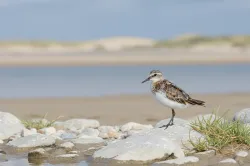
The Belding's Sparrow is a small, nondescript perching bird, measuring approximately 12 to 14 centimeters in length. Its plumage is primarily brown, featuring a complex pattern of dark streaking that allows it to blend seamlessly into the dried grasses and mudflats of its marshy home. One of the most distinctive features of this species is the subtle wash of yellow around the face and eyebrows, which provides a key diagnostic marker for birdwatchers attempting to distinguish it from other sparrow species. The bird possesses a relatively short, notched tail and a small, conical bill, which is perfectly adapted for foraging on the ground among the dense stalks of salt-tolerant vegetation. Its wings are relatively long and pointed, facilitating the short, fluttery flights it takes when startled. The contrast between its pale underparts, marked by bold brown streaks, and its darker, mottled back creates an effective camouflage that renders the bird nearly invisible when it remains motionless against the marsh substrate.
Habitat
The Belding's Sparrow is an obligate resident of coastal salt marshes, meaning it relies entirely on this specific ecosystem for its survival. Specifically, they are most frequently associated with stands of pickleweed (Salicornia), which provides both nesting cover and protection from predators. Unlike many other sparrow species that migrate long distances, the Belding's Sparrow is largely sedentary, staying within its home marsh throughout the entire year. This extreme habitat specificity makes them highly vulnerable to sea-level rise and human encroachment. They occupy the higher zones of the marsh, where they can avoid the highest tides while remaining close to the nutrient-rich mudflats where they forage for food during low tide.
Diet
As an insectivore and granivore, the Belding's Sparrow maintains a diverse diet that reflects the seasonal availability of resources in the salt marsh. During the warmer months, their primary food source consists of small invertebrates, including beetles, flies, spiders, and larvae found within the marsh vegetation. They are adept at gleaning these organisms from the surface of the mud or picking them off the stems of salt-tolerant plants. In the winter months, when insect populations decline, they shift their focus to foraging for seeds produced by marsh grasses and other halophytic flora. Their foraging behavior is methodical; they move through the base of the vegetation, carefully inspecting the ground and lower plant structures for any available organic matter.
Breeding and Nesting
Breeding for the Belding's Sparrow typically begins in the early spring, as the marsh vegetation begins to green and provide cover. The nest is a cup-shaped structure built primarily by the female, constructed from fine grasses and lined with softer plant materials. It is almost always situated on the ground, tucked deep inside a dense clump of pickleweed to shield it from both the elements and potential predators. A typical clutch consists of three to four eggs, which the female incubates for approximately two weeks. Both parents participate in the feeding of the altricial chicks, making frequent trips to provide them with a steady supply of insects. The young fledge within a few weeks, though they remain dependent on the parents for a short period while they learn to navigate the complex marsh environment.
Behavior
The Belding's Sparrow is a shy and secretive bird, rarely venturing far from the safety of the marsh vegetation. When disturbed, they typically take short, low flights, diving back into the thick pickleweed as soon as possible rather than flying long distances. During the breeding season, males can be heard singing their soft, buzzing songs from the tops of low bushes or high points in the vegetation to defend their territory. They are generally solitary or found in small pairs, though they may congregate in larger groups during the non-breeding season when resources are concentrated. Their movements are often quick and jerky, reflecting their constant state of vigilance against predators such as hawks and small mammals.
Conservation Status
-
LC
Least Concern
The Belding's Sparrow is currently considered a species of conservation concern due to the rapid destruction and degradation of coastal wetlands. Because they are restricted to a very narrow band of habitat, even minor changes in water levels or pollution can have devastating effects on their population density. In California, they are listed as an endangered subspecies, and intensive management efforts are in place to restore salt marshes and protect nesting sites from disturbance. Continued monitoring and habitat restoration are vital to ensuring this unique sparrow does not face extinction in the coming decades.
Interesting Facts
- Belding's Sparrows are year-round residents and do not migrate.
- They are named after Lyman Belding, an early California naturalist.
- They possess a specialized gland that helps them excrete excess salt from their bodies.
- They are considered an 'indicator species' for the health of California salt marshes.
- Their nests are expertly hidden at the base of pickleweed plants.
- They are rarely seen in the open, preferring the dense cover of marsh plants.
Tips for Birdwatchers
For birdwatchers hoping to catch a glimpse of the elusive Belding's Sparrow, patience is the ultimate virtue. The best time to observe them is during the early morning hours, when the air is calm and the birds are most active foraging. Focus your efforts on known salt marsh reserves in Southern California, particularly during low tide when the birds are forced out of the deepest vegetation to feed on the exposed mud. Use high-quality binoculars or a spotting scope, and keep a respectable distance to avoid flushing the birds from their cover. Remember that these birds are highly sensitive to disturbance, so staying on marked trails is essential for both your safety and the preservation of their habitat. Listen for their distinctive, buzzy calls, which are often the first sign of their presence in the dense grass.
Conclusion
The Belding's Sparrow (Passerculus guttatus) is more than just a bird; it is a symbol of the fragile beauty found within our coastal salt marshes. By studying this species, we gain profound insights into the ecological balance of intertidal zones and the critical need for habitat conservation. From their unique yellow-tinged plumage to their specialized ability to survive in saline environments, every aspect of their biology is a testament to evolution's ingenuity. However, their survival is inextricably linked to our commitment to protecting the wetlands they call home. As we face the dual challenges of urban development and climate change, the Belding's Sparrow serves as a call to action. Protecting these marshes ensures that future generations will be able to hear the soft, buzzy song of this sparrow echoing across the pickleweed. Whether you are an avid birdwatcher or a nature enthusiast, supporting organizations dedicated to wetland restoration is a tangible way to help secure the future for this remarkable perching bird. Let us cherish and protect the Belding's Sparrow and the vital ecosystems that sustain it.
Belding's Sparrow Distribution Map & Range
The distribution map for this species will be available soon.
We are working with our official data partners to update this information.