Black-faced Solitaire Basic Information
| Scientific Name |
Myadestes melanops
|
| Status |
LC
Least Concern
|
| Size |
18-20 cm (7-8 inch)
|
| Colors |
|
| Type |
|
| Family |
Thrushes |
Introduction
The Black-faced Solitaire, scientifically known as Myadestes melanops, is a captivating and elusive songbird that graces the cloud forests of Central America. Belonging to the thrush family, Turdidae, this perching bird is renowned for its hauntingly beautiful and flute-like song, which often echoes through the misty canopy, signaling its presence long before it is spotted. Primarily found in the high-altitude forests of Costa Rica and western Panama, this species plays a vital role in its ecosystem as a seed disperser. Ornithologists and birdwatchers alike are drawn to the Black-faced Solitaire not only for its distinct vocalizations but also for its elegant, understated appearance. Despite its relatively small size, the bird commands attention through its behavior and the mysterious aura surrounding its life in the dense, moss-covered trees. Understanding the biology and ecological requirements of the Black-faced Solitaire is essential for the continued preservation of the fragile cloud forest environments they call home. As climate change and habitat loss threaten these high-altitude regions, the study of this specific solitaire provides critical insights into the health of tropical mountain ecosystems and the biodiversity they support.
Physical Appearance
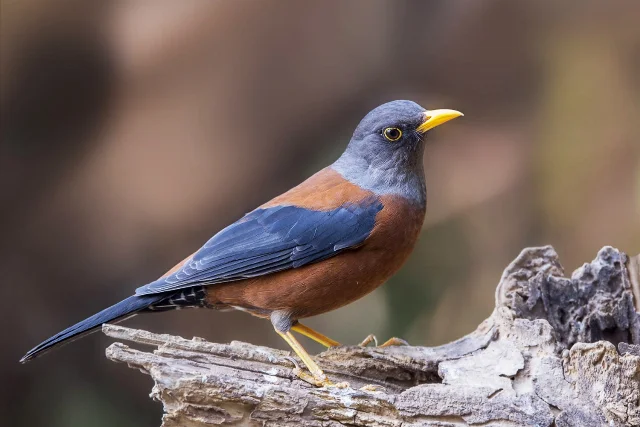
The Black-faced Solitaire is a medium-sized perching bird measuring approximately 18 to 20 centimeters in length. Its plumage is characterized by a sophisticated palette of greys and blacks, offering a perfect camouflage against the shadowed, lichen-covered branches of the cloud forest. The adult bird features a primary slate-grey body, which contrasts sharply with its namesake black face mask that extends from the bill to the eyes, giving it a distinctive and masked appearance. The wings and tail feathers often display darker, charcoal-grey to black hues, which are particularly visible during flight. The bill is short and dark, adapted for a diet of small fruits and insects, while the legs are thin and suited for perching on narrow branches. Unlike some of its more brightly colored tropical counterparts, the Black-faced Solitaire relies on its subtle coloration to blend into the misty environment. Juveniles may appear slightly duller with faint spotting on their plumage, a common characteristic among thrushes that helps them hide from predators in the understory. The sleek, streamlined body shape allows for swift movement through the dense forest foliage, making them agile flyers despite their preference for stationary singing perches.
Habitat
The Black-faced Solitaire is a high-altitude specialist, primarily inhabiting the pristine cloud forests of Costa Rica and western Panama. These birds are typically found at elevations ranging from 750 to 2,500 meters above sea level. They prefer dense, humid environments characterized by heavy rainfall, frequent fog, and an abundance of epiphytes, mosses, and ferns. These forests provide the necessary cover and food sources, such as fruiting trees, that the solitaire relies upon year-round. Because they are highly sensitive to habitat fragmentation and temperature changes, they are considered indicator species for the health of the montane forest ecosystems. Protecting these high-altitude corridors is essential for their survival, as they require large, contiguous tracts of forest to thrive and maintain stable populations.
Diet
The diet of the Black-faced Solitaire is primarily frugivorous, with a significant portion of their daily intake consisting of small forest fruits and berries. They are particularly fond of fruits from the Melastomataceae and Lauraceae families, which are abundant in their cloud forest habitat. In addition to fruit, these birds supplement their diet with a variety of small insects and arthropods, especially during the breeding season when protein requirements for developing chicks are higher. Their feeding behavior often involves plucking fruits directly from branches or performing short, aerial sallies to capture prey. By consuming a wide variety of forest fruits, they act as important seed dispersers, contributing to the regeneration and diversity of the cloud forest canopy.
Breeding and Nesting
Breeding for the Black-faced Solitaire typically occurs during the wetter months of the year, which ensures an ample supply of food for the upcoming brood. They are known for their meticulous nest-building skills, often choosing sites located in mossy banks, tree cavities, or dense clusters of epiphytes, which provide excellent protection against predators and the elements. The nest is typically constructed using a combination of moss, fine rootlets, and plant fibers, creating a sturdy yet well-hidden structure. Both parents are involved in the process, though the female usually takes the lead in the construction. The clutch size is typically small, and both parents share the responsibility of incubation and feeding the chicks. The fledglings remain under the care of the parents for several weeks, learning the complex vocalizations that define their species before venturing out on their own.
Behavior
Known for its solitary and somewhat shy nature, the Black-faced Solitaire is often heard more than it is seen. Their behavior is largely centered around their singing, which is most active during the early morning and late afternoon hours. These songs are complex, flute-like, and carry over long distances through the forest. When they are not singing, they are relatively quiet and inactive, often sitting motionless on a high branch to scan for food or potential threats. They are not highly migratory, preferring to stay within their altitudinal range, though they may move slightly downslope during periods of extreme weather or food scarcity. Their movements through the forest are deliberate and graceful, reflecting their adaptation to a life in the canopy.
Conservation Status
-
LC
Least Concern
The Black-faced Solitaire is currently listed as a species of Least Concern by the IUCN. However, this status does not reflect the potential threats posed by habitat loss and climate change in their restricted high-altitude range. As cloud forests are extremely sensitive to temperature shifts, the warming climate could force these birds to move to even higher elevations, eventually leaving them with nowhere to go. Conservation efforts focused on protecting montane forest corridors and preventing deforestation are vital to ensuring the long-term survival of this species and the unique biodiversity of the Central American cloud forests.
Interesting Facts
- The Black-faced Solitaire is famous for its haunting, melodic song that sounds like a flute.
- They are primarily seed dispersers, helping to maintain the health of cloud forest ecosystems.
- The black mask on their face is their most distinguishing physical feature.
- They prefer high-altitude cloud forests, often above 750 meters.
- These birds are members of the thrush family, sharing traits with robins and bluebirds.
- They are notoriously difficult to photograph because they prefer to stay in the shaded, dense canopy.
- Their nests are often camouflaged with moss to blend perfectly into the forest environment.
Tips for Birdwatchers
For birdwatchers hoping to spot the Black-faced Solitaire, patience is the most important tool. Because they are often hidden in the dense foliage of the cloud forest, it is usually best to locate them by their song first. Early morning is the optimal time to visit, as their vocalizations are most frequent at dawn. Bring high-quality binoculars or a spotting scope, as the bird often perches high up in the canopy. Avoid using playback recordings excessively, as this can disturb their natural behavior. Finally, visit reputable birding lodges in Costa Rica or Panama that prioritize habitat conservation, as these locations are the best places to see them in their natural, undisturbed state.
Conclusion
The Black-faced Solitaire is a true gem of the Central American cloud forests, representing the intricate beauty and ecological complexity of these mountain ecosystems. From its distinct black mask and grey plumage to its mesmerizing, flute-like song, the bird captivates anyone fortunate enough to encounter it in the wild. While it is currently considered a species of Least Concern, the reliance of the Black-faced Solitaire on high-altitude, humid environments makes it a sentinel for environmental health. As we continue to study and observe these birds, we gain a deeper appreciation for the delicate balance of life within the canopy. Birdwatchers, researchers, and nature enthusiasts play a crucial role in advocating for the protection of their habitats. By supporting conservation initiatives and promoting responsible ecotourism, we can ensure that the hauntingly beautiful song of the Black-faced Solitaire continues to ring through the misty forests for generations to come. Protecting this species is not just about saving a single bird; it is about preserving the vibrant, interconnected world of the cloud forest that sustains so much of our planet’s biodiversity.
Black-faced Solitaire Distribution Map & Range
The distribution map for this species will be available soon.
We are working with our official data partners to update this information.