Not available
Black-throated Thrush
Turdus atrogularis
Last update: 14 Jul 2026
Read in:
English
Español
Português
हिन्दी
বাংলা
தமிழ்
മലയാളം
मराठी
ગુજરાતી
తెలుగు
French
Deutsch
Русский
日本語
简体中文
Italiano
Tiếng Việt
العربية
ಕನ್ನಡ
ਪੰਜਾਬੀ
Black-throated Thrush Basic Information
| Scientific Name | Turdus atrogularis |
|---|---|
| Status | LC Least Concern |
| Size | 22-27 cm (9-11 inch) |
| Colors |
Brown
Black
|
| Type |
Perching Birds

|
| Family | Thrushes |
Introduction
The Black-throated Thrush (Turdus atrogularis) is a striking member of the thrush family, known for its elegant appearance and impressive migratory behavior. Classified as a perching bird, this species is primarily found across northern Asia, breeding in coniferous forests and moving south during the winter months. Ornithologists have long studied this bird due to its complex relationship with closely related species, such as the Red-throated Thrush, with which it was previously considered conspecific. As a hardy traveler, the Black-throated Thrush captures the imagination of birdwatchers across Europe and Asia, often appearing as a rare vagrant outside its traditional range. Its presence is a seasonal highlight, marking the shifts in climate and ecosystem dynamics. Understanding this bird requires a look into its unique life history, from its nesting habits in dense Siberian taiga to its wintering survival strategies in urban parks and open landscapes. This guide provides a detailed look at the biology, ecology, and identification markers of this fascinating avian species.
Physical Appearance
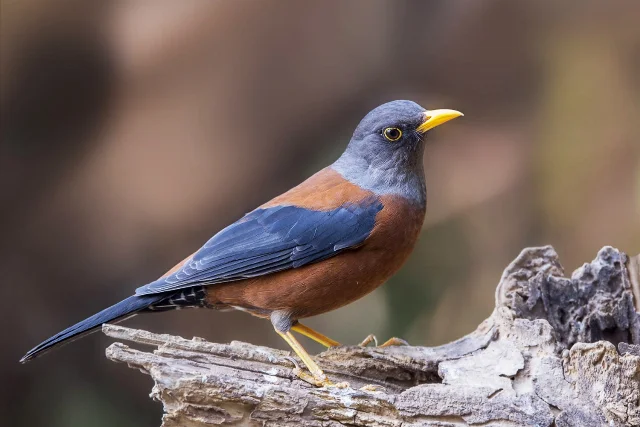
The Black-throated Thrush is a medium-sized songbird, measuring approximately 22 to 27 centimeters in length. Its plumage is characterized by a sophisticated palette of earthy tones, dominated by a rich brown hue on the back, wings, and tail. The most diagnostic feature of the adult male is its distinct black throat and upper breast, which contrast sharply with its pale greyish-white underparts. In contrast, females and first-year birds exhibit a more muted appearance, typically featuring a streaked throat rather than a solid black patch. The bird possesses a strong, slender bill adapted for foraging and sharp, dark eyes that give it an alert expression. Its wings are relatively long, supporting its long-distance migratory lifestyle, and its tail is often flicked or fanned during movement. The legs are sturdy, reflecting its life as a ground-forager that traverses forest floors and open fields. Overall, the structural elegance and subtle color transitions make it a visually appealing subject for bird enthusiasts.
Habitat
The Black-throated Thrush primarily inhabits the northern reaches of Asia, with a breeding range stretching across the vast Siberian taiga. They favor dense coniferous forests, particularly those interspersed with birch and willow, which provide both nesting materials and cover. During the non-breeding season, these birds exhibit a high degree of adaptability. They migrate south to warmer regions, including Central Asia, the Himalayas, and occasionally parts of Eastern Europe. During the winter, they are frequently found in open woodlands, forest edges, orchards, and even urban gardens or parks where berry-bearing trees are abundant. Their preference for areas with scattered trees and open ground allows them to forage efficiently while remaining close to protective cover.
Diet
As an omnivorous species, the Black-throated Thrush maintains a diverse diet that shifts according to the seasons. During the breeding season, their nutrition is heavily supplemented by animal protein, including earthworms, beetles, caterpillars, and various other insects, which are essential for the development of their chicks. As autumn approaches and temperatures drop, the birds transition to a diet dominated by fruit and berries. They are particularly fond of mountain ash (rowan), juniper, and hawthorn berries. This shift allows them to store the necessary fat reserves required for their long-distance migration. When foraging on the ground, they move with a distinctive hopping gait, pausing frequently to probe the soil or leaf litter for hidden invertebrates.
Breeding and Nesting
The breeding cycle of the Black-throated Thrush begins in late spring, as they return to their northern forest habitats. The birds are solitary nesters, preferring to build their nests in the forks of coniferous or deciduous trees, usually at a height of two to five meters above the ground. The nest itself is a sturdy cup constructed from a mixture of twigs, grass, and moss, often reinforced with mud for structural integrity. The female plays the primary role in nest construction and incubation. A typical clutch consists of four to six eggs, which are pale blue or greenish with reddish-brown speckles. Both parents participate in feeding the altricial chicks, ensuring they receive a steady supply of insects until they are ready to fledge, usually within two weeks of hatching.
Behavior
The Black-throated Thrush is generally a shy and elusive bird, especially in its breeding range. However, during the winter, they can become more social, occasionally forming loose flocks when resources are plentiful. They are known for their vigilant behavior, often taking flight at the first sign of danger and seeking refuge in the upper canopy. Their flight is direct and undulating, characteristic of many thrush species. Vocalizations are also an important part of their behavior, with males producing a melodic, thrush-like song during the breeding season to establish territory and attract mates. When foraging, they exhibit a cautious nature, frequently checking their surroundings before continuing their search for food.
Conservation Status - LC Least Concern
According to the IUCN Red List, the Black-throated Thrush is currently classified as a species of Least Concern. Its vast geographic range and large, stable population contribute to this status. However, like many migratory birds, it faces ongoing threats from habitat loss due to deforestation in its breeding grounds and the potential effects of climate change on its migration routes. While not currently endangered, monitoring their population trends remains crucial to ensure that their habitats are preserved and that they continue to thrive across their expansive Eurasian distribution.
Interesting Facts
- The Black-throated Thrush was once considered a subspecies of the Red-throated Thrush.
- They are highly migratory birds, traveling thousands of kilometers between Siberia and Southern Asia.
- The black plumage on the throat is significantly more pronounced in older adult males.
- They are known to be opportunistic foragers, often visiting bird feeders in urban areas during harsh winters.
- The scientific name Turdus atrogularis translates roughly to "black-throated thrush."
- They are capable of surviving in extreme cold, provided there is a reliable food source like berries.
Tips for Birdwatchers
For birdwatchers hoping to spot the Black-throated Thrush, patience and timing are key. During the winter months, focus your search on areas with abundant berry-bearing bushes, as these are primary hotspots for the species. Early morning is the best time to observe them, as they are most active when searching for food. Use high-quality binoculars to distinguish them from other thrush species, paying close attention to the throat pattern and the overall brown tones. If you are in a region where they are considered rare vagrants, keep an eye on local birding reports and social media groups, as sightings are often documented quickly by the birding community. Always maintain a respectful distance to avoid causing stress to the birds.
Pro-Tip: To spot this bird in dense forest canopy, a 8x42 binoculars or telescope is highly recommended.
- [Check out our top recommended gear here]
Conclusion
The Black-throated Thrush (Turdus atrogularis) is a remarkable testament to the endurance and adaptability of avian species. From its secretive life in the dense forests of the Siberian taiga to its seasonal appearances in urban landscapes across Eurasia, this bird provides a fascinating window into the natural world. Its transition from an insect-based diet to a fruit-heavy one showcases the survival strategies that allow it to navigate shifting seasons and environments. For birdwatchers and ornithologists alike, the Black-throated Thrush remains a highly sought-after species, representing the beauty of migration and the resilience of the thrush family. As we continue to study their habits and monitor their populations, we gain a deeper appreciation for the delicate balance of the ecosystems they inhabit. Protecting their habitats and understanding their migratory patterns is essential for the future of this species. Whether you are a casual observer or a dedicated researcher, encountering a Black-throated Thrush is always a rewarding experience that highlights the incredible diversity of our planet's bird life. By fostering a greater understanding of this perching bird, we can contribute to the broader efforts of global conservation and ensure that future generations can also enjoy the sight of this elegant thrush in the wild.
Tag:

200 Follower
is a writer who draws. He’s the Bestselling author of “Number of The Year”. Donec vitae tortor efficitur, convallis lelobortis elit.
Recent Posts




Subscribe For Daily Newsletter