Warning: Undefined variable $by_location in /home/odescxjtd641/public_html/beefound.in/bird-details.php on line 874
Mistle Thrush
Turdus viscivorus
Last update: 14 Jul 2026
Read in:
English
Español
Português
हिन्दी
বাংলা
தமிழ்
മലയാളം
मराठी
ગુજરાતી
తెలుగు
French
Deutsch
Русский
日本語
简体中文
Italiano
Tiếng Việt
العربية
ಕನ್ನಡ
ਪੰਜਾਬੀ
Mistle Thrush Basic Information
| Scientific Name | Turdus viscivorus |
|---|---|
| Status | LC Least Concern |
| Size | 26-29 cm (10-11 inch) |
| Colors |
Brown
White
|
| Type |
Perching Birds

|
| Family | Thrushes |
Introduction
The Mistle Thrush (Turdus viscivorus) is a prominent member of the thrush family, widely recognized for its bold personality and powerful, far-reaching song. As a large, robust perching bird, it commands attention in various landscapes, from ancient woodlands to modern suburban gardens. Known scientifically as Turdus viscivorus, its name derives from its fondness for mistletoe berries, a key food source during the colder months. Unlike its smaller cousin, the Song Thrush, the Mistle Thrush is often seen as more aggressive and territorial, particularly when defending its food supplies or nesting sites from intruders. Its presence is a seasonal marker for many, as its loud, rattling song can often be heard echoing through the countryside during the late winter months, earning it the nickname 'stormcock' due to its tendency to sing during stormy weather. This fascinating species serves as an excellent case study for ornithologists and casual birdwatchers alike, showcasing remarkable adaptability and complex social behaviors within its natural range.
Physical Appearance
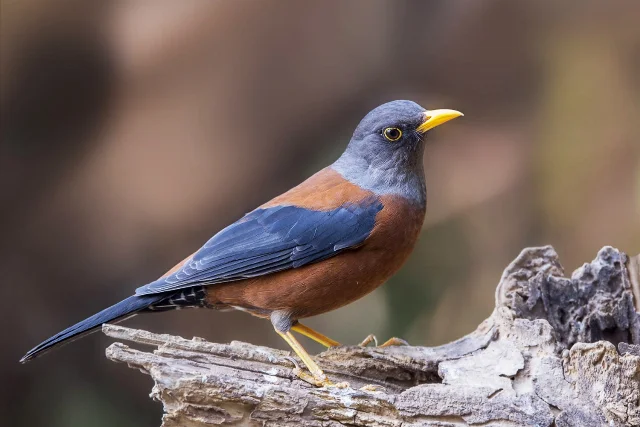
The Mistle Thrush is a striking bird characterized by its substantial size, typically measuring between 26 and 29 cm in length. Its plumage is predominantly a muted, earthy brown across the upper parts, which provides effective camouflage against tree bark and forest floors. The underparts are a creamy white, heavily streaked and spotted with dark brown, creating a distinct, speckled appearance that helps distinguish it from other thrush species. During flight, the Mistle Thrush reveals a striking white underwing, a key diagnostic feature that is highly visible even from a distance. Both sexes appear similar in coloration, though juveniles often exhibit more pronounced spotting on their backs, which fades as they mature. The bird possesses a strong, slightly curved bill suited for a varied diet and powerful legs that allow it to hop purposefully across lawns and woodland paths. Its upright, alert posture further adds to its commanding presence, making it one of the most recognizable birds in its native range.
Habitat
The Mistle Thrush is a highly adaptable species that thrives in a variety of environments. While it is traditionally associated with open woodlands, ancient orchards, and parklands, it has successfully integrated into suburban areas where large gardens and mature trees provide suitable nesting sites. They prefer landscapes that offer a mix of tall trees for shelter and open, grassy areas for foraging. Throughout its range, the Mistle Thrush maintains a strong preference for areas with scattered trees, which provide the vantage points necessary for its territorial displays. In colder regions, they may move to slightly more sheltered valleys, but generally, they are resilient birds capable of enduring harsh winter conditions provided there is an adequate supply of berries.
Diet
As an omnivorous perching bird, the Mistle Thrush boasts a varied and opportunistic diet. During the spring and summer months, it primarily hunts for invertebrates, including earthworms, slugs, snails, and various insects. They are frequently observed foraging on lawns and short-grass meadows, using their keen eyesight to detect movement in the soil. As autumn approaches and winter sets in, the species shifts its focus toward plant-based food sources. They have a particular affinity for berries, especially those of the mistletoe, holly, rowan, and yew. They are known to fiercely defend these 'larder' trees, often chasing away other birds to ensure they have exclusive access to the fruit during lean times.
Breeding and Nesting
The breeding season for the Mistle Thrush typically begins early, often as early as March. The female is primarily responsible for constructing the nest, which is a sturdy, cup-shaped structure built from twigs, grasses, and mud, usually positioned high in the fork of a tree. They are known for being bold and will often aggressively defend their nesting territory against predators like magpies or even cats. The female typically lays a clutch of three to five eggs, which are pale blue or greenish with dark red-brown spots. Incubation lasts approximately two weeks, and both parents participate in feeding the chicks. The young fledge after about two weeks, though they remain dependent on their parents for several days afterward. Mistle Thrushes are capable of raising two, sometimes three, broods in a single season if conditions are favorable.
Behavior
The Mistle Thrush is renowned for its assertive and territorial temperament. Unlike many other garden birds that flock together, this species is often solitary or found in pairs, except during the non-breeding season when small family groups may form. Its song is a defining behavior; it is loud, clear, and carries over great distances, often performed from the highest point of a tree. They are particularly active during inclement weather, earning their reputation as the 'stormcock.' When threatened, they exhibit a harsh, rattling alarm call that serves as a warning to other birds in the vicinity. This aggressive nature is not limited to their own kind; they will fearlessly dive-bomb potential threats, including much larger predators, to protect their nests.
Conservation Status - LC Least Concern
The Mistle Thrush is currently classified as a species of Least Concern by the IUCN. While their populations are generally stable, they have faced localized declines in some parts of Europe due to changes in agricultural practices and the loss of traditional hedgerows and orchards. They are sensitive to habitat fragmentation, which can limit their access to nesting sites and food sources. Ongoing conservation efforts focus on maintaining woodland diversity and encouraging the planting of berry-bearing trees in gardens and parks, which helps sustain the species throughout the challenging winter months.
Interesting Facts
- They are often called 'stormcocks' because they sing loudly even during stormy, wet weather.
- The scientific name viscivorus literally translates to 'mistletoe-eater.'
- They exhibit a distinct white underwing pattern that is clearly visible when they are in flight.
- Mistle Thrushes are known to be incredibly brave and will aggressively defend their nests from predators like crows and cats.
- Unlike many other birds, they often start their breeding season very early in the year, sometimes as early as February or March.
- They possess a unique, rattling alarm call that is distinct from the songs of other thrush species.
- They are highly territorial and will fiercely protect berry-laden trees from other birds during the winter.
Tips for Birdwatchers
To successfully spot a Mistle Thrush, look for tall, mature trees in your local park or garden, as these are their preferred vantage points. They are most active during the early morning hours when they forage on open lawns. Birdwatchers should listen for their characteristic loud, rattling alarm calls, which are often the first indicator of their presence. During winter, focus your attention on trees bearing berries, such as holly or rowan; if you find a bush that is being aggressively defended by a single bird, you have likely found a Mistle Thrush. Patience is key, as they are cautious birds, but their bold behavior during the nesting season makes them relatively easy to observe if you keep a respectful distance.
Conclusion
The Mistle Thrush is a remarkable species that exemplifies the resilience and complexity of the avian world. From its powerful, storm-defying song to its fierce dedication as a parent, this bird captures the imagination of birdwatchers and naturalists alike. As a vital part of our ecosystems, its role in seed dispersal—particularly regarding mistletoe—highlights the intricate relationships within nature. While it remains a common sight in many regions, the Mistle Thrush serves as a reminder of the importance of preserving varied habitats, from sprawling woodlands to the green spaces within our own communities. By understanding their needs and respecting their territorial behaviors, we can better appreciate the presence of this 'stormcock' in our landscape. Whether you are an experienced ornithologist or a beginner looking to improve your identification skills, the Mistle Thrush offers a rewarding subject for study. Protecting the natural environments they call home ensures that future generations will continue to hear their bold, rattling songs echoing through the trees long into the future, maintaining the vibrant biodiversity of our natural world.
Tag:

200 Follower
is a writer who draws. He’s the Bestselling author of “Number of The Year”. Donec vitae tortor efficitur, convallis lelobortis elit.
Recent Posts




Subscribe For Daily Newsletter