
Not available
Indian Blackbird
Turdus simillimus
Last update: 10 Mar 2026
Read in:
English
Español
Português
हिन्दी
বাংলা
தமிழ்
മലയാളം
मराठी
ગુજરાતી
తెలుగు
French
Deutsch
Русский
日本語
简体中文
Italiano
Tiếng Việt
العربية
ಕನ್ನಡ
ਪੰਜਾਬੀ
Indian Blackbird Basic Information
| Scientific Name | Turdus simillimus |
|---|---|
| Status | LC Least Concern |
| Size | 19-22 cm (7-9 inch) |
| Colors |
Black
Orange
|
| Type |
Perching Birds

|
| Family | Thrushes |
Indian Blackbird Names In Other Languages
| bengali | ভারতীয় কালোপাখি |
|---|---|
| french | Merle indien |
| gujarati | કાળો કસ્તૂરો |
| hindi | भारतीय कस्तूरी, भारतीय ब्लैकबर्ड |
| kannada | ಕಸ್ತೂರಿ ಕೋಗಿಲೆ |
| malayalam | കരിയിലക്കിളി, ഇന്ത്യൻ കരിയിലക്കിളി |
| marathi | भारतीय कस्तूरी, कस्तूरी |
| nepali | काले कस्तुरी, भारतीय कालो कस्तुरी |
| tamil | இந்தியக் கறுப்புச் சிட்டு |
Introduction
The Indian Blackbird (Turdus simillimus) is a fascinating member of the thrush family, widely recognized for its melodious songs and distinct plumage. Historically considered a subspecies of the Common Blackbird, it has since been classified as a distinct species, endemic to the Indian subcontinent. Found predominantly in the wooded regions of the Western Ghats and various hill stations across India, this perching bird is a joy to observe for both amateur and professional ornithologists. Its presence in high-altitude forests and well-vegetated gardens makes it a charismatic representative of avian diversity in the region. As a member of the Turdidae family, it exhibits the typical characteristics of thrushes, including a strong, alert stance and a cautious nature. Understanding the Indian Blackbird is essential for anyone interested in the biodiversity of the Indian subcontinent, as its ecological role as a seed disperser and insect controller is vital to the health of its native forest habitats. Whether you are an avid birdwatcher or a nature enthusiast, the Indian Blackbird offers a rewarding experience, especially when encountered in the serene, misty mornings of the Indian highlands.
Physical Appearance
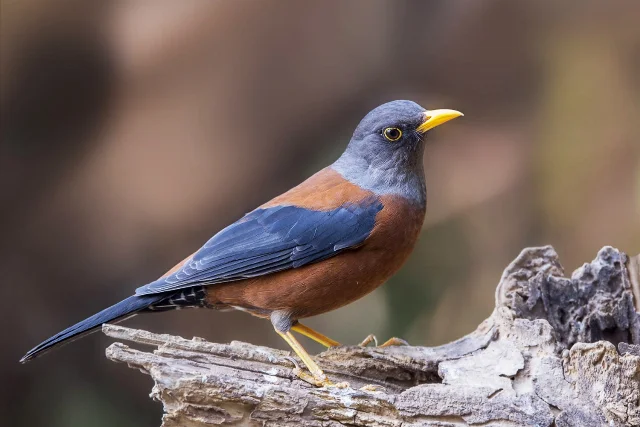
The Indian Blackbird is a medium-sized perching bird, typically measuring between 19 to 22 cm in length. The most striking feature of the male is its dark, almost entirely black plumage, which provides a dramatic contrast to its bright, orange-yellow eye-ring and bill. This coloration is a hallmark of the species, making it easily distinguishable from other local thrushes. In contrast, the females and juveniles display a more subdued, brownish-grey coloration, which serves as an effective camouflage within the dense foliage of their forest homes. Their underparts are often lighter, sometimes displaying subtle streaks that help break up their outline against the dappled light of the forest floor. The bird's wings are relatively broad, supporting agile flight, while its legs are strong and dark, adapted for hopping along branches and foraging on the ground. The tail is of moderate length and is often flicked or fanned when the bird is agitated or signaling to others. Overall, the physical design of the Indian Blackbird is perfectly adapted for a life spent navigating the complex structure of montane forests and dense shrubbery.
Habitat
The Indian Blackbird is primarily a bird of the highlands, favoring the cool, moist climates found in the Western Ghats, the Nilgiris, and other mountainous regions of India. They thrive in evergreen forests, shola grasslands, and dense woodland edges that provide ample cover. Unlike some of their lowland relatives, these birds prefer areas with high humidity and significant canopy cover, which protects them from the harsh midday sun. They are also frequently spotted in well-maintained tea plantations, orchards, and hill station gardens where they find a mix of natural cover and human-influenced food sources. Their habitat preference is dictated by the availability of dense undergrowth, which is essential for nesting and protection against predators. As human development encroaches on these highland forests, the Indian Blackbird's ability to adapt to semi-urban environments in hill stations has become a critical factor in their continued survival.
Diet
The diet of the Indian Blackbird is remarkably varied, reflecting its opportunistic nature as a forager. Primarily, these birds are omnivorous, consuming a wide array of insects, earthworms, larvae, and small invertebrates that they find by rummaging through leaf litter on the forest floor. This foraging behavior is essential for soil aeration and pest control within their ecosystem. In addition to animal matter, they are significant consumers of fruits and berries. They are particularly fond of wild figs, berries from shrubs, and various drupes found in the canopy. During the fruiting season, they can often be seen in fruit-bearing trees, playing a crucial role as seed dispersers. Their strong, pointed bills are perfectly shaped for both probing the soil for grubs and plucking fruits from branches, making them highly efficient at utilizing the diverse food resources available in their montane habitats.
Breeding and Nesting
Breeding for the Indian Blackbird typically occurs during the spring and summer months, coinciding with the abundance of food resources. The nesting process begins with the selection of a suitable site, which is usually a fork in a tree branch, a dense shrub, or sometimes even a sheltered ledge near human habitations. Both the male and female participate in the construction of the nest, which is a sturdy, cup-shaped structure meticulously woven from twigs, roots, grasses, and mud. The interior is often lined with softer materials like moss or fine grass to protect the eggs. A typical clutch consists of 3 to 4 pale blue or greenish eggs, heavily speckled with reddish-brown spots. The female takes the primary role in incubation, which lasts for about two weeks. Once the chicks hatch, both parents are tirelessly involved in feeding them a high-protein diet of insects and larvae, ensuring rapid growth before the fledglings eventually leave the nest.
Behavior
The Indian Blackbird is known for its cautious and somewhat shy behavior, often preferring to stay hidden within dense foliage. Despite this, they are highly territorial, especially during the breeding season, when males will vigorously defend their chosen area from rivals. Their song is one of their most delightful traits—a rich, fluting, and melodious whistle that is most frequently heard at dawn and dusk. They spend a significant amount of time on the ground, hopping with quick, jerky movements while keeping a watchful eye for predators. When startled, they often fly up to a nearby branch, emitting a sharp alarm call to warn others. Their social structure is generally solitary or found in pairs, though they may gather in small, loose groups near abundant food sources during the non-breeding season.
Conservation Status - LC Least Concern
Currently, the Indian Blackbird is not classified as a threatened species, and its population appears to be stable within its primary range. However, like many highland species, it faces ongoing threats from habitat fragmentation, deforestation, and the impacts of climate change on mountain ecosystems. The conversion of forest land into agricultural plantations and urban sprawl in hill stations poses a long-term challenge to the availability of pristine nesting and foraging grounds. Conservation efforts should focus on preserving the integrity of the Western Ghats and other critical mountain corridors. Protecting the remaining shola forests is essential for the long-term survival of this species and the many other birds that share their specialized environment.
Interesting Facts
- The Indian Blackbird was formerly considered a subspecies of the Common Blackbird (Turdus merula).
- They are renowned for their beautiful, flute-like dawn chorus that echoes through hill stations.
- They serve as important seed dispersers for many native forest tree species.
- Males and females have distinct plumage, with males being black and females being brownish-grey.
- They are highly adaptable and can often be found in colonial-era hill station gardens.
- The species is endemic to the Indian subcontinent, specifically found in the Western Ghats and Himalayas.
- They are often seen flicking their tails when they are nervous or about to take flight.
Tips for Birdwatchers
To successfully spot the Indian Blackbird, timing is everything. The best time to observe them is during the early morning hours, just after sunrise, when they are most active and their song is at its peak. Head to quiet, wooded areas in hill stations or the fringes of evergreen forests. Wear muted-colored clothing to blend into the environment and remain as still as possible, as they are naturally shy. Using a pair of high-quality binoculars will help you identify the subtle differences between males and females from a distance. If you are in a garden, look for them hopping on lawns or near the base of fruit-bearing trees. Patience is key; wait near a known feeding site, and eventually, the bird will likely emerge from the cover to forage. Always maintain a respectful distance to avoid disturbing their natural behavior.
Pro-Tip: To spot this bird in dense forest canopy, a 8x42 binoculars or telescope is highly recommended.
- [Check out our top recommended gear here]
Conclusion
In conclusion, the Indian Blackbird (Turdus simillimus) stands as a testament to the rich avian heritage of the Indian subcontinent. From its striking appearance and melodic song to its essential role in maintaining forest ecosystems, this thrush is a bird that deserves our admiration and protection. Whether you are trekking through the misty forests of the Western Ghats or enjoying a quiet morning in a high-altitude hill station, encountering an Indian Blackbird is a memorable experience that highlights the beauty of nature. By understanding their unique habitat requirements, behavioral patterns, and the threats they face, we can better appreciate the importance of conserving the natural landscapes they call home. As birdwatchers and nature enthusiasts, it is our responsibility to advocate for the preservation of these critical habitats, ensuring that future generations can also enjoy the sight and sound of the Indian Blackbird. Let this bird serve as a reminder of the intricate connections within our environment and the need for continued stewardship of our planet's diverse wildlife. With careful observation and a commitment to conservation, we can help ensure that the Indian Blackbird continues to thrive in the wild for years to come.
Tag:

200 Follower
is a writer who draws. He’s the Bestselling author of “Number of The Year”. Donec vitae tortor efficitur, convallis lelobortis elit.
Recent Posts


Subscribe For Daily Newsletter