Chiguanco Thrush Distribution Map & Range
The distribution map for this species will be available soon.
We are working with our official data partners to update this information.

Sign in with your Google account to access all features

| Scientific Name | Turdus chiguanco |
|---|---|
| Status | LC Least Concern |
| Size | 27-30 cm (11-12 inch) |
| Colors |
Black
Grey
|
| Type |
Perching Birds

|
| Family | Thrushes |
The Chiguanco Thrush (Turdus chiguanco) is a quintessential member of the Andean avian landscape. As a medium-sized perching bird belonging to the thrush family, it is a familiar sight to residents and birdwatchers across the high-altitude regions of South America. Known for its distinct, somewhat somber appearance and melodic song, the Chiguanco Thrush has successfully adapted to a wide range of environments, including urban areas, open woodlands, and shrubby hillsides. Its scientific name honors the genus Turdus, which includes many of the world's most recognizable thrushes. Despite its somewhat understated coloration compared to the more vibrant tropical species, the Chiguanco Thrush holds a significant ecological role as a seed disperser and insect controller. This comprehensive guide explores every facet of this fascinating bird, providing enthusiasts with a deeper understanding of its lifestyle, physical characteristics, and the importance of its presence in the diverse ecosystems of the Andes mountains.
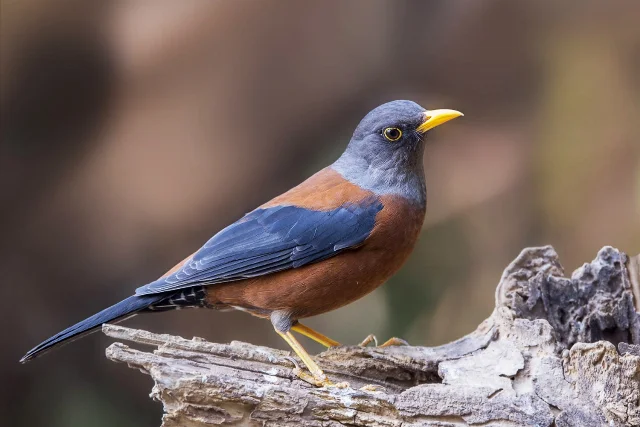
Measuring between 27 and 30 cm in length, the Chiguanco Thrush is a relatively large member of its genus. Its primary color is a deep, smoky black or dark charcoal, which covers most of the body, giving it an elegant, uniform appearance. This is complemented by a secondary color of slate grey, which is often visible on the wings and sometimes subtly blended into the underparts. A striking feature of this bird is its bright, contrasting yellow to orange eye-ring and bill, which stand out sharply against the darker plumage. The legs are also typically a pale yellow or orange, adding a further splash of color. The plumage is generally uniform, lacking the bold patterns found in other thrushes, which serves as effective camouflage in the varied light conditions of the Andean slopes. The bird's robust build and strong, perching feet are perfectly adapted for navigating both dense shrubbery and open ground, where it spends much of its time foraging for food.
The Chiguanco Thrush is highly adaptable, primarily inhabiting the Andean regions of South America. It is found in a variety of elevations, typically ranging from 2,000 to 4,000 meters above sea level, although it can be seen at lower altitudes in certain parts of its range. Its preferred habitats include open woodlands, scrubby hillsides, agricultural lands, and increasingly, human-altered environments like gardens and parks in high-altitude cities. Unlike some of its reclusive relatives, the Chiguanco Thrush is not afraid of human proximity, often becoming a common backyard visitor. It relies on a mix of open ground for foraging and scattered trees or bushes for cover and nesting, making it one of the most successful bird species in the populated valleys of the Andes.
The Chiguanco Thrush is an omnivorous forager, demonstrating a flexible diet that allows it to thrive in diverse environments. Its primary food sources consist of a wide variety of invertebrates, including earthworms, beetles, larvae, and other small insects found in the soil. During the foraging process, it can often be seen walking across lawns or open fields, occasionally hopping or pausing to scan the ground before probing the earth with its bill. In addition to animal protein, the Chiguanco Thrush consumes a significant amount of plant matter, particularly berries and small fruits. This habit makes it an important seed disperser for many native plant species. During the fruiting season, they are frequently seen feeding in small groups on shrubs or trees, showcasing their adaptability to seasonal food availability.
Breeding for the Chiguanco Thrush is closely linked to the seasonal availability of resources, often peaking during the rainy or warmer months. These birds are known for their diligent parenting and complex nesting behavior. They construct a sturdy, cup-shaped nest, typically composed of twigs, dried grass, roots, and mud, which acts as a binding agent to keep the structure secure. The nest is usually placed in a sheltered fork of a tree or a dense shrub, providing protection from both predators and the elements. The female typically lays a clutch of two to three pale blue or greenish eggs, which are marked with darker spots. Both parents are actively involved in the incubation process and the subsequent feeding of the chicks, demonstrating a high level of investment in the survival of their offspring until they are ready to fledge.
Behaviorally, the Chiguanco Thrush is characterized by its bold and somewhat assertive personality. It is a highly territorial species, especially during the breeding season, when males will vigorously defend their chosen area from intruders, including other thrushes. Despite this, they are often seen moving confidently in open areas, displaying a characteristic walk-and-pause motion. Their song is a notable aspect of their behavior, consisting of a series of melodic, flute-like whistles that are most frequently heard during the early morning hours. They are social birds, often seen in pairs or small family groups, and they show a remarkable lack of fear toward humans, which has allowed them to become a common sight in urban Andean settings.
The Chiguanco Thrush is currently classified as Least Concern by the IUCN Red List. This status is primarily due to its wide geographical distribution and its remarkable ability to adapt to human-modified landscapes. Unlike many other species that suffer from habitat loss, the Chiguanco Thrush has benefited from the expansion of agricultural lands and urban gardens, which provide ample foraging opportunities. While there are no immediate threats to the species, maintaining the health of the Andean ecosystems remains important to ensure the continued stability of their populations and to support the biodiversity of the region they inhabit.
For birdwatchers hoping to spot the Chiguanco Thrush, the best approach is to visit high-altitude parks, gardens, or rural agricultural areas in the Andes. They are not shy, so you do not need to hide; simply standing quietly in an open area with scattered trees will often be enough to attract their attention. Early morning is the best time for observation, as this is when their song is most active and they are busy foraging. Keep an eye on the ground, as they spend much of their time walking rather than perching high in the canopy. Bringing a pair of binoculars is helpful for observing the detail of their orange eye-rings and the subtle textures of their charcoal-colored feathers, especially when they are foraging in the grass.
In conclusion, the Chiguanco Thrush (Turdus chiguanco) serves as a remarkable example of avian adaptation and ecological resilience. From the rugged slopes of the Andes to the bustling gardens of South American cities, this bird has carved out a successful niche for itself. Its distinct appearance, characterized by its dark plumage and vibrant eye-rings, along with its melodic song, makes it a cherished species among both local residents and visiting birdwatchers. By understanding its dietary habits, nesting behaviors, and the role it plays in seed dispersal, we gain a greater appreciation for the complex interactions within Andean ecosystems. While it currently enjoys a stable conservation status, the Chiguanco Thrush reminds us of the importance of preserving the diverse habitats that allow such adaptable species to thrive. Whether you are an experienced ornithologist or a casual enthusiast, taking the time to observe this bird provides a rewarding window into the natural history of the Andes. Its presence is a testament to the enduring beauty and vitality of the high-altitude wilderness, making it a true icon of its mountainous home.
We are working with our official data partners to update this information.
Tag:




Birds have their own beautiful world, we should not interfere in it. We should enjoy this beauty. Its beauty should be captured in the camera but be careful not to disturb them.
Tap a language to switch instantly.
Tap a language to switch instantly.