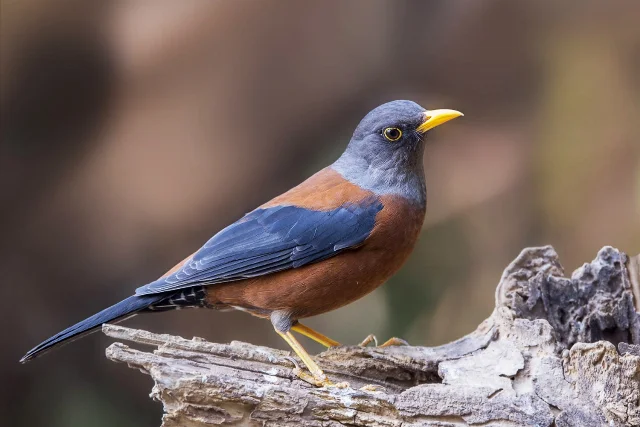
Yellow-legged Thrush Basic Information
| Scientific Name |
Turdus flavipes
|
| Status |
LC
Least Concern
|
| Size |
21-23 cm (8-9 inch)
|
| Colors |
|
| Type |
|
| Family |
Thrushes |
Introduction
The Yellow-legged Thrush (Turdus flavipes) is a captivating member of the Turdidae family, celebrated for its subtle elegance and melodic presence within the forests of South America. Often overlooked due to its shy nature, this perching bird serves as a quintessential example of the avian diversity found in montane and coastal forest ecosystems. Measuring between 21 and 23 centimeters, the bird displays a sophisticated color palette that distinguishes it from other common thrush species. Ornithologists and bird enthusiasts alike value the Yellow-legged Thrush for its role in seed dispersal, which is critical for maintaining the health of its native habitats. Understanding this species requires a deep dive into its unique behaviors, specific environmental needs, and the subtle beauty that defines its existence. As we explore the intricacies of this thrush, we uncover a bird that is not only a vital component of the neotropical ecosystem but also a fascinating subject for those dedicated to the study of perching birds.
Physical Appearance
The physical appearance of the Yellow-legged Thrush is defined by a striking yet understated elegance. As its common name suggests, the most prominent feature is its vibrant, bright yellow legs and feet, which provide a sharp, colorful contrast to its otherwise muted plumage. The primary color of the bird is a sophisticated, slate-gray or dark gray, which covers the majority of its body, giving it a sleek and streamlined silhouette. The plumage is dense and well-suited for the humid environments it inhabits. In addition to its gray base, the bird often exhibits subtle variations in tone, with males typically displaying a more intense, uniform charcoal color compared to the slightly lighter, brownish-gray hue of the females. The eyes are often surrounded by a distinct yellow orbital ring, mirroring the color of its legs and adding to its refined look. Its bill is also yellow or orange, completing the iconic color scheme that makes this species relatively easy to identify for experienced observers once they catch a glimpse of its distinctive features.
Habitat
The Yellow-legged Thrush is primarily found in the humid, dense forests of South America, with a distribution range that spans from Venezuela and Colombia down to parts of Brazil and Argentina. They show a strong preference for montane forests and secondary growth areas where the canopy provides sufficient cover. Unlike some species that thrive in open grasslands, these thrushes are deep-forest dwellers that require the protection of dense vegetation. They are frequently observed in the understory and mid-story layers of the forest, where they forage and seek shelter from predators. Protecting these specific forest corridors is essential for their survival, as fragmentation of their natural habitat poses a significant threat to their long-term population stability.
Diet
As an omnivorous species, the Yellow-legged Thrush maintains a diverse diet that shifts according to the availability of food sources throughout the seasons. Their primary food intake consists of small fruits and berries, which they forage from various trees and shrubs within the forest understory. This feeding behavior makes them essential seed dispersers for many plant species within their ecosystem. In addition to fruit, they are opportunistic feeders that consume a wide variety of insects, larvae, and small invertebrates. They are often seen hopping along the forest floor or perching on low branches, listening and watching for movement in the leaf litter, which they then probe with their bills to capture prey.
Breeding and Nesting
The breeding season of the Yellow-legged Thrush is a period of intense activity, typically timed to coincide with the availability of abundant food resources in their environment. These birds are known for constructing intricate, cup-shaped nests, which are meticulously crafted using a combination of twigs, moss, mud, and fine rootlets. The nests are usually situated in the fork of a tree or on a sturdy branch, well-hidden within the dense foliage to provide protection against potential predators. The female is primarily responsible for the construction of the nest and the incubation of the eggs, which usually number between two and three per clutch. Both parents share the responsibilities of feeding the chicks once they hatch, demonstrating a strong commitment to raising their offspring until they are ready to fledge and venture out on their own.
Behavior
Behaviorally, the Yellow-legged Thrush is characterized by its cautious and elusive nature. They are not typically aggressive birds and tend to avoid confrontations, preferring to retreat into the shadows of the forest canopy when disturbed. Despite their shyness, they are known for their beautiful, complex songs, which are most frequently heard during the early morning and late afternoon hours. During the breeding season, males may become more vocal as they establish and defend their territories. They are generally solitary or found in pairs, rarely forming large flocks, which adds to the challenge for birdwatchers hoping to catch a glimpse of this beautiful species in the wild.
Conservation Status
-
LC
Least Concern
Currently, the Yellow-legged Thrush is classified as a species of Least Concern by major conservation organizations. However, this status does not imply that they are immune to environmental pressures. The primary threat to their population remains habitat loss due to deforestation, agricultural expansion, and urban development in their native South American ranges. Maintaining large, contiguous tracts of forest is vital for their survival. Conservation efforts focusing on habitat preservation and the restoration of degraded forest ecosystems are crucial to ensure that this beautiful thrush continues to thrive in its natural environment for generations to come.
Interesting Facts
- The bright yellow legs and bill serve as a key diagnostic feature for field identification.
- They play a crucial role in forest regeneration by dispersing seeds through their droppings.
- Despite their quiet nature, their song is considered one of the most melodic in the thrush family.
- They are highly adaptable to secondary forests, provided there is sufficient fruit availability.
- The yellow orbital ring around their eyes becomes more vivid during the mating season.
- They are known to be particularly active during the dawn chorus, contributing to the symphony of the forest.
Tips for Birdwatchers
For birdwatchers eager to spot the Yellow-legged Thrush, patience is the most important tool. Because they are shy and prefer the dense understory, scanning the forest floor and lower branches with high-quality binoculars is essential. They are most active during the early morning, so timing your visit to the forest shortly after sunrise will increase your chances of hearing their melodic song. Moving slowly and remaining quiet will help you avoid startling them. Learning their specific call can be a game-changer, as it is often easier to hear them before you actually see them. Look for movement in the leaf litter, as this is a common sign that they are foraging, and always respect their space by maintaining a respectful distance.
Conclusion
The Yellow-legged Thrush is a remarkable bird that embodies the quiet beauty of South American forests. From its distinctive yellow legs and gray plumage to its vital role as a seed disperser, this species is a testament to the complexity and importance of avian life in our ecosystems. While they may be elusive and often hidden from view, the effort required to observe them is well worth the reward for any dedicated birdwatcher. By understanding their needs, respecting their habitat, and supporting conservation initiatives, we can help ensure the continued survival of the Yellow-legged Thrush. Their presence in the forest is a reminder of the delicate balance of nature and the importance of preserving the wild spaces that these magnificent creatures call home. Whether you are an experienced ornithologist or a casual nature lover, the Yellow-legged Thrush offers a unique and enriching experience that highlights the incredible diversity of the natural world. Let us continue to study, appreciate, and protect these wonderful perching birds so that future generations can also enjoy the sight and sound of them in the wild.
Yellow-legged Thrush Distribution Map & Range
The distribution map for this species will be available soon.
We are working with our official data partners to update this information.