Grey-cheeked Thrush Basic Information
| Scientific Name |
Catharus minimus
|
| Status |
LC
Least Concern
|
| Size |
16-19 cm (6-7 inch)
|
| Colors |
|
| Type |
|
| Family |
Thrushes |
Introduction
The Grey-cheeked Thrush (Catharus minimus) is a fascinating and often elusive member of the thrush family. Known for its incredible migratory journey, this species captures the interest of ornithologists and birdwatchers alike. As a small, woodland-dwelling perching bird, it navigates vast distances between its northern breeding grounds and southern wintering territories. Despite its unremarkable appearance, which often leads to confusion with other Catharus thrush species, the Grey-cheeked Thrush possesses a distinct personality and song that set it apart in the dense forests it calls home. Understanding this bird requires patience and a keen eye, as it prefers the shadows of the understory. In this comprehensive guide, we will explore every aspect of the Grey-cheeked Thrush, from its complex migration routes to its subtle physical traits, providing you with everything you need to know to appreciate this remarkable avian traveler in its natural environment.
Physical Appearance
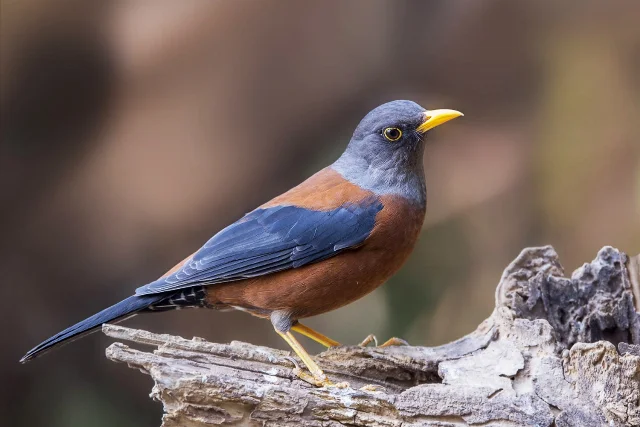
The Grey-cheeked Thrush is a relatively small perching bird, measuring approximately 16 to 19 centimeters in length. Its plumage is characterized by a muted, earthy palette that serves as perfect camouflage in its woodland habitat. The primary color is a soft, cool grey, particularly around the face and cheeks, which gives the species its common name. This greyish tone transitions into a subtle olive-brown or brownish-grey hue across the upperparts, including the back, wings, and tail. The breast is typically cream-colored or white, adorned with distinct, dark brownish-grey spots that form a necklace-like pattern extending down the flanks. One of the most important identifying features is the lack of a prominent eye ring, which helps distinguish it from the closely related Swainson’s Thrush. The beak is slender and dark, perfectly adapted for foraging on the forest floor, while its legs are pale, adding to its overall understated yet elegant appearance.
Habitat
The Grey-cheeked Thrush is primarily a bird of the boreal forests. During the breeding season, it favors dense, spruce-dominated coniferous forests and taiga landscapes across northern North America and eastern Siberia. These habitats are typically wet and mossy, providing the cover necessary for nesting. During migration, these birds are more versatile, appearing in a wider range of wooded habitats, including deciduous forests, parks, and suburban gardens where they can find sufficient insect prey. They tend to stick to the lower levels of vegetation, rarely venturing into the open canopy. Their wintering grounds in South America consist primarily of humid lowland forests and mountain slopes, where they continue to reside in thick, shaded underbrush.
Diet
The diet of the Grey-cheeked Thrush is opportunistic and varies significantly depending on the season. During the breeding and migration periods, their primary food source consists of insects and other invertebrates. They are adept at foraging on the ground, using their beaks to flick through leaf litter to uncover beetles, ants, spiders, and caterpillars. During the late summer and fall, as they prepare for their long-distance migration, their diet shifts to include a higher proportion of fruit and berries. They frequently consume wild berries like blueberries, serviceberries, and dogwood, which provide the essential energy reserves needed for their grueling flights. This dual-diet strategy is crucial for their survival across diverse climates.
Breeding and Nesting
Breeding for the Grey-cheeked Thrush occurs in the remote, rugged wilderness of the far north. The nest is a sturdy, cup-shaped structure meticulously built by the female, usually positioned on a horizontal branch of a spruce tree or tucked into a dense thicket near the ground. The nest is constructed from a combination of twigs, moss, grasses, and occasionally lined with mud to ensure structural integrity. A typical clutch consists of three to four eggs, which are pale blue-green with reddish-brown spots. The female performs most of the incubation duties, which last approximately two weeks. Both parents are actively involved in feeding the nestlings, providing them with a high-protein diet of insects to ensure rapid growth before the fledglings must face their first migration.
Behavior
The Grey-cheeked Thrush is notoriously shy and reclusive, often remaining hidden within the deep shade of foliage. They are solitary birds, except during the breeding season and migration, when they may join loose flocks. Their movement is characterized by quick, hopping motions on the ground as they search for food. While they are usually silent, their song is a complex, flute-like series of notes that echo through the boreal forests. They are particularly active during dawn and dusk. When threatened, they often freeze in place, relying on their excellent camouflage to blend seamlessly into the forest floor, making them a challenge to observe.
Conservation Status
-
LC
Least Concern
Currently, the Grey-cheeked Thrush is classified as a species of Least Concern by the IUCN, but populations are being monitored due to habitat loss and climate change. As a long-distance migrant, this bird faces significant threats, including the degradation of its boreal breeding grounds and the destruction of stopover habitats during migration. Additionally, collisions with man-made structures during nocturnal flights present a constant danger. Conservation efforts are focused on protecting large, contiguous tracts of boreal forest and ensuring that stopover sites remain rich in the food resources necessary for their survival.
Interesting Facts
- They are among the longest-distance migrants, traveling from the Arctic to the Amazon basin.
- Unlike the Swainson’s Thrush, the Grey-cheeked Thrush lacks a distinct buffy eye ring.
- They are primarily nocturnal migrants, which makes them susceptible to light pollution.
- Their song is often described as high-pitched and ventriloquial, making the bird hard to locate.
- They have been known to travel over 5,000 miles during a single migration cycle.
- The species was first described by ornithologist Thomas Nuttall in 1840.
- They rely heavily on the forest floor, making them sensitive to changes in leaf litter composition.
Tips for Birdwatchers
For birdwatchers hoping to add the Grey-cheeked Thrush to their life list, timing and patience are everything. These birds are most visible during their migratory windows in spring and fall. Focus your search in wooded areas, particularly near water sources or dense thickets where they forage. Use high-quality binoculars and look for a bird that keeps to the shadows, often flicking its wings or tail. Because they are so similar to other thrushes, focus on the lack of an eye ring and the cool, grey-toned cheeks. Early morning or late evening offers the best chance of spotting them as they become more active to feed before or after long flight sessions.
Conclusion
The Grey-cheeked Thrush is a testament to the resilience of nature. From its humble beginnings in the vast, quiet boreal forests of the north to its daunting journey across continents, this bird represents the incredible biological clockwork that drives migration. While it may not possess the vibrant colors of a warbler or the bold personality of a jay, its subtle beauty and elusive nature provide a rewarding experience for any dedicated observer. Protecting this species requires a global commitment to preserving the diverse habitats that span the Americas. By understanding the specific needs of the Grey-cheeked Thrush—from its dietary reliance on woodland insects to its need for undisturbed nesting sites—we can better appreciate the complex ecological threads that connect our world. Whether you are an expert ornithologist or a casual backyard birder, taking the time to learn about and observe this species enriches our understanding of the avian world and highlights the importance of environmental stewardship. The next time you walk through a dense, shaded wood during migration season, listen closely; you might just be in the presence of one of nature's most dedicated, long-distance travelers.
Grey-cheeked Thrush Distribution Map & Range
The distribution map for this species will be available soon.
We are working with our official data partners to update this information.