
Not available
Purple Cochoa
Cochoa purpurea
Last update: 10 Mar 2026
Read in:
English
Español
Português
हिन्दी
বাংলা
தமிழ்
മലയാളം
मराठी
ગુજરાતી
తెలుగు
French
Deutsch
Русский
日本語
简体中文
Italiano
Tiếng Việt
العربية
ಕನ್ನಡ
ਪੰਜਾਬੀ
Purple Cochoa Basic Information
| Scientific Name | Cochoa purpurea |
|---|---|
| Status | LC Least Concern |
| Size | 25-28 cm (10-11 inch) |
| Colors |
Purple
Black
|
| Type |
Perching Birds

|
| Family | Thrushes |
Introduction
The Purple Cochoa (Cochoa purpurea) is one of the most enigmatic and visually striking members of the thrush family. Often described as a jewel of the Himalayan forests, this perching bird captivates ornithologists and birdwatchers alike with its vibrant plumage and secretive nature. Belonging to the family Turdidae, the Purple Cochoa is not just another woodland bird; it is a specialized inhabitant of high-altitude broadleaf and mixed forests. Its presence in an ecosystem is often considered an indicator of environmental health, as it requires pristine, undisturbed habitats to thrive. Despite its breathtaking appearance, the species remains relatively understudied compared to more common passerines, largely due to its preference for dense canopy cover and its naturally shy disposition. Throughout this comprehensive guide, we will delve into the biological nuances, ecological requirements, and aesthetic splendor of this remarkable avian species, providing a complete overview for enthusiasts and researchers who aim to understand the complexities of the Purple Cochoa in its natural wild environment.
Physical Appearance
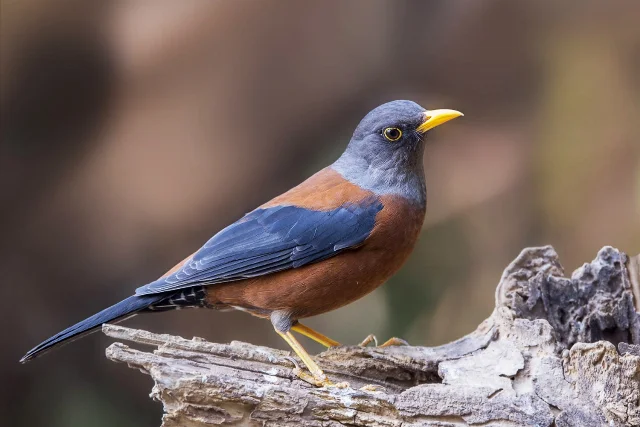
Measuring approximately 25 to 28 centimeters in length, the Purple Cochoa is a medium-sized perching bird characterized by a distinct and elegant silhouette. The most defining feature of this species is its namesake coloration; the adult male sports a rich, deep purple plumage that seems to shimmer with iridescent light when caught by the sun. This primary purple hue is beautifully contrasted by striking black accents, which typically manifest as a bold black mask around the eyes and black streaks on the wings and tail feathers. The wings themselves are often tipped with deep blue or violet, adding a layer of complexity to its appearance. The female of the species tends to be slightly more muted, featuring brownish or olive-toned plumage that provides essential camouflage during the nesting season. Both sexes possess a relatively short, sturdy bill and strong, dark-colored legs adapted for maneuvering through dense foliage. Their overall appearance is sleek and aerodynamic, perfectly suited for a life spent hopping between branches in the mid-to-upper canopy of ancient, moss-covered forests.
Habitat
The Purple Cochoa is primarily distributed across the temperate and subtropical forests of the Himalayas, ranging from Northern India and Nepal through Bhutan and parts of Myanmar and Southern China. These birds are strictly montane specialists, typically inhabiting elevations between 1,500 and 3,000 meters above sea level. They show a strong preference for dense, evergreen broadleaf forests and moist, moss-laden environments where humidity levels are high. They are rarely found in open areas, as they rely heavily on the cover provided by thick forest canopies to remain hidden from predators. The presence of large, ancient trees is critical for their survival, as these provide the necessary structure for their nesting sites and protection from the elements. As deforestation and climate change continue to impact Himalayan biodiversity, the specific habitat requirements of the Purple Cochoa make it particularly vulnerable to fragmentation and loss of their specialized ecological niche.
Diet
The diet of the Purple Cochoa is predominantly frugivorous, with a strong preference for a variety of wild forest fruits and berries. During the fruiting season, these birds can often be seen foraging in the canopy, skillfully plucking berries and small fruits from branches. However, they are also opportunistic feeders and will supplement their fruit-based diet with a variety of invertebrates. They are known to consume snails, small insects, and larvae, which provide essential proteins during the breeding season. Their foraging behavior is methodical; they often sit quietly on a branch for extended periods before making short, swift flights to snag a piece of fruit or a passing insect. This mix of plant and animal matter ensures they receive the necessary nutrients to maintain their high-energy lifestyle in the cooler, high-altitude climates they call home.
Breeding and Nesting
Breeding for the Purple Cochoa is a complex and highly seasonal affair, occurring primarily during the warmer months when food resources are most abundant. These birds are known for their meticulous nest-building skills. They construct sturdy, cup-shaped nests, usually placed in the fork of a tree or on a thick horizontal branch, often well-hidden by thick moss or lichen to blend seamlessly into the forest environment. Both the male and female participate in the construction process, utilizing fine twigs, rootlets, and moss. The clutch size is typically small, usually consisting of two to three eggs. Both parents are highly attentive, sharing the responsibilities of incubation and feeding the chicks once they hatch. Because of their secretive nature, their exact courtship displays are rarely documented in detail, but it is believed that vocalizations and subtle plumage displays play a significant role in pair-bonding during the early spring months.
Behavior
The Purple Cochoa is a notoriously shy and elusive bird, often staying deep within the shadows of the forest canopy. They are largely solitary or seen in pairs, rarely forming large flocks. Their movement through the trees is characterized by a mix of slow, deliberate hops and quick, agile flights. Unlike more social passerines, the Purple Cochoa is not known for frequent or loud vocalizations, which makes them incredibly difficult to locate in the field. They are masters of stillness, capable of remaining perfectly motionless for long periods, which serves as their primary defense mechanism against potential threats. This quiet, observant nature makes them a prized sighting for any serious birdwatcher, as catching a glimpse of this bird requires immense patience, sharp eyes, and a deep understanding of their preferred forest micro-habitats.
Conservation Status - LC Least Concern
The Purple Cochoa is currently classified as a species of Least Concern by the IUCN, but this status is somewhat deceptive. While they have a relatively wide geographic range across the Himalayas, their population density is low, and they are highly sensitive to habitat degradation. The primary threat to the species is the loss of mature, high-altitude forest cover due to logging, infrastructure development, and climate-driven ecosystem shifts. Protecting the integrity of old-growth forests is essential for their long-term survival, as they cannot easily adapt to secondary or degraded habitats.
Interesting Facts
- The Purple Cochoa belongs to the thrush family, but its behavior is often more reminiscent of a specialized forest raptor due to its quiet, predatory-like focus.
- Their iridescent purple feathers are not just pigment; they are structural colors that change based on the angle of light.
- They are considered one of the 'most wanted' birds for international birdwatchers visiting the Himalayas.
- The species is an altitudinal migrant, moving to lower elevations during the harshest winter months.
- They are known to be extremely sensitive to human presence and will immediately retreat deeper into the forest if disturbed.
- The scientific name Cochoa purpurea reflects both their genus and their distinct, vibrant coloration.
Tips for Birdwatchers
For birdwatchers hoping to spot a Purple Cochoa, patience is your greatest asset. Start your search in the early morning hours, as this is when they are most active. Focus your binoculars on the mid-canopy level in dense, mossy broadleaf forests at elevations between 2,000 and 2,500 meters. Because they are so quiet, you should rely more on visual scanning than on auditory cues. Look for movement in the branches and focus on the distinct purple and black silhouette. Using a high-quality spotting scope is highly recommended, as these birds rarely descend to the lower branches where they might be easily seen. Always maintain a respectful distance to avoid flushing them, as they are easily spooked. Engaging a local guide who is familiar with the specific forest patches where the species has been sighted recently will significantly increase your chances of success.
Pro-Tip: To spot this bird in dense forest canopy, a 8x42 binoculars or telescope is highly recommended.
- [Check out our top recommended gear here]
Conclusion
In summary, the Purple Cochoa is a testament to the hidden beauty of the Himalayan wilderness. Its striking purple and black plumage, combined with its elusive and quiet nature, makes it one of the most fascinating birds to study. As we have explored, the species relies heavily on the health of high-altitude, ancient forests, making it a critical species for conservation efforts in the region. Whether you are a dedicated ornithologist or an amateur birdwatcher, the quest to observe the Cochoa purpurea in its natural habitat is an experience that demands patience, respect for nature, and a deep appreciation for the biodiversity of our planet. By understanding their dietary needs, nesting habits, and the environmental pressures they face, we can better advocate for the preservation of the unique ecosystems they inhabit. As we move forward, ongoing research and habitat protection will remain vital to ensuring that this magnificent bird continues to grace the high forests of Asia for generations to come. Every encounter with this bird is a reminder of the intricate and fragile beauty that exists in the remote corners of our world, encouraging us to protect the wild spaces that remain.
Tag:

200 Follower
is a writer who draws. He’s the Bestselling author of “Number of The Year”. Donec vitae tortor efficitur, convallis lelobortis elit.
Recent Posts





Subscribe For Daily Newsletter