Mountain Thrush Basic Information
| Scientific Name |
Turdus plebejus
|
| Status |
LC
Least Concern
|
| Size |
23-25 cm (9-10 inch)
|
| Colors |
|
| Type |
|
| Family |
Thrushes |
Introduction
The Mountain Thrush (Turdus plebejus) is a fascinating member of the Turdidae family, commonly found in the highland regions of Central America. As a classic representative of perching birds, this species has adapted perfectly to the cool, mist-covered environments of cloud forests and mountain slopes. Ornithologists often study the Mountain Thrush for its role in local ecosystems, specifically as an effective seed disperser. While it may not possess the vibrant, flashy plumage of some tropical counterparts, its understated beauty and melodious song make it a favorite among dedicated birdwatchers. The Mountain Thrush is generally elusive, preferring the dense canopy where it can forage undisturbed. Understanding this species requires looking closely at its behavior within high-altitude habitats, where it plays a critical role in forest regeneration. Its presence is often a healthy indicator of the surrounding environment, making it a subject of interest for both casual nature enthusiasts and scientific researchers alike who monitor avian populations in rapidly changing montane landscapes.
Physical Appearance
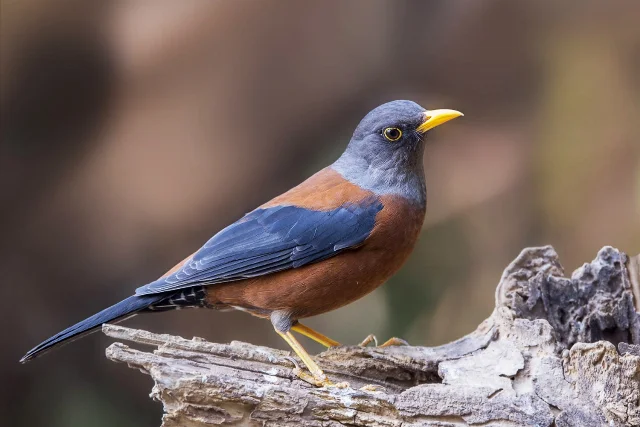
Measuring between 23 and 25 centimeters in length, the Mountain Thrush is a medium-sized bird characterized by its robust build and understated, elegant coloration. Its primary plumage is predominantly brown, often described as a dusky or olive-brown shade that provides excellent camouflage against the bark of trees and the shadows of the forest floor. The secondary color, white, is typically found in subtle markings, such as the eye-ring or the under-tail coverts, which create a soft contrast against its darker feathers. The bird features a strong, slightly curved bill suited for its omnivorous diet, and its legs are sturdy, reflecting its life as a perching bird. The overall silhouette is classic for a thrush, with a slightly rounded head and a moderately long tail. Juveniles may show some faint spotting on their underparts, which eventually fades into the solid, muted brown tones characteristic of the adult plumage as they mature. This uniform color scheme serves as an effective adaptation, allowing the bird to blend seamlessly into the misty, moss-laden branches of its high-elevation home.
Habitat
The Mountain Thrush is primarily restricted to the high-altitude regions of Central America, specifically ranging from southern Mexico through Costa Rica and western Panama. It thrives in humid montane forests, particularly in cloud forests where the moisture levels are high and vegetation is lush. These birds are typically found at elevations ranging from 1,500 to 3,000 meters above sea level. They favor areas with dense undergrowth, secondary growth, and mature forest edges where they can find a steady supply of fruits and insects. The constant mist and cool temperatures of their habitat are essential for their survival, and they are rarely seen in the hotter, lower-elevation tropical lowlands.
Diet
As an omnivorous species, the Mountain Thrush maintains a diverse diet that shifts based on seasonal availability. Its primary food source consists of small fruits and berries, which it harvests from the canopy and forest understory. By consuming these fruits, the thrush plays a vital role in the ecosystem by dispersing seeds throughout the highland forests. In addition to plant matter, the Mountain Thrush actively hunts for small invertebrates, including beetles, caterpillars, and earthworms, especially during the breeding season when high-protein food is essential for developing chicks. They are often seen foraging on the ground or within the lower branches, using their sharp senses to detect movement in the leaf litter.
Breeding and Nesting
The breeding cycle of the Mountain Thrush is closely tied to the seasonal abundance of food in the cloud forests. During the nesting phase, the birds become increasingly territorial, defending their chosen nesting sites from intruders. The nest itself is a sturdy, cup-shaped structure meticulously crafted from twigs, moss, lichen, and mud, usually placed in the fork of a tree or within dense shrubbery to provide protection from predators. The female typically lays a clutch of two to three eggs, which are often pale blue or greenish with brown speckles. Both parents share the responsibility of feeding the chicks, making frequent trips to provide a steady supply of insects. The incubation period lasts for approximately two weeks, and the young birds fledge the nest after about another two to three weeks of intensive care.
Behavior
The Mountain Thrush is known for its relatively quiet and shy demeanor, often staying hidden within the foliage of trees. Despite their elusive nature, they are highly active foragers, moving with agility through the branches. They are social birds, often seen in small groups, particularly when fruit is abundant on specific trees. Their vocalizations are a key part of their behavior, consisting of soft, melodic whistles and chattering calls that help them communicate with other members of their flock. While they are not migratory in the traditional sense, they may perform altitudinal movements, shifting slightly up or down the mountainside depending on the weather and food availability.
Conservation Status
-
LC
Least Concern
Currently, the Mountain Thrush is listed as a species of Least Concern by major conservation organizations. Its population remains relatively stable across its primary range in Central America. However, like many montane species, it faces potential threats from habitat loss due to deforestation, agricultural expansion, and the impacts of climate change on high-altitude ecosystems. Protecting the cloud forests where these birds reside is essential to ensuring their long-term survival. Continued monitoring and the preservation of protected forest corridors remain vital strategies for maintaining healthy populations of this unique, high-elevation thrush.
Interesting Facts
- The Mountain Thrush is an essential seed disperser for various high-altitude tree species.
- They are known to build nests using mud and moss to help insulate them against the cold mountain air.
- Their scientific name, Turdus plebejus, reflects their common and widespread nature in their specific range.
- Unlike some migratory thrushes, this species remains in its mountain habitat year-round.
- They are often found in the same cloud forest environments as the famous Resplendent Quetzal.
- The Mountain Thrush is a highly intelligent forager, capable of remembering the location of fruiting trees.
Tips for Birdwatchers
For birdwatchers hoping to spot the Mountain Thrush, patience is your greatest asset. Because they prefer the dense canopy and understory of cloud forests, it is best to visit known hotspots early in the morning when the birds are most active and vocal. Bring high-quality binoculars, as their brown plumage can be difficult to distinguish against the dark, mossy backgrounds of the forest. Listen for their characteristic soft whistles, which often give away their location before you see them. Patience at a fruiting tree is often the most successful strategy, as these birds will frequently return to reliable food sources. Always maintain a respectful distance to avoid disturbing their natural behavior during the breeding season.
Conclusion
In summary, the Mountain Thrush (Turdus plebejus) is a remarkable bird that embodies the resilience and beauty of the Central American cloud forests. From its muted, elegant brown plumage to its vital ecological role as a seed disperser, the species is a cornerstone of its high-altitude habitat. While it may not always command the attention of more colorful birds, its presence is a testament to the health and biodiversity of the mountain ecosystems it calls home. For those who take the time to observe them, the Mountain Thrush offers a rewarding experience, showcasing the complex behaviors of a bird perfectly adapted to a life in the clouds. Protecting these habitats is not only important for the Mountain Thrush but for the entire web of life that relies on these misty, high-altitude forests. As we continue to study and appreciate these birds, we gain a deeper understanding of the delicate balance that sustains life in our planet's most unique mountain environments. Whether you are a scientist, a birdwatcher, or simply a nature lover, the Mountain Thrush serves as a quiet reminder of the wonders found in the highlands.
Mountain Thrush Distribution Map & Range
The distribution map for this species will be available soon.
We are working with our official data partners to update this information.