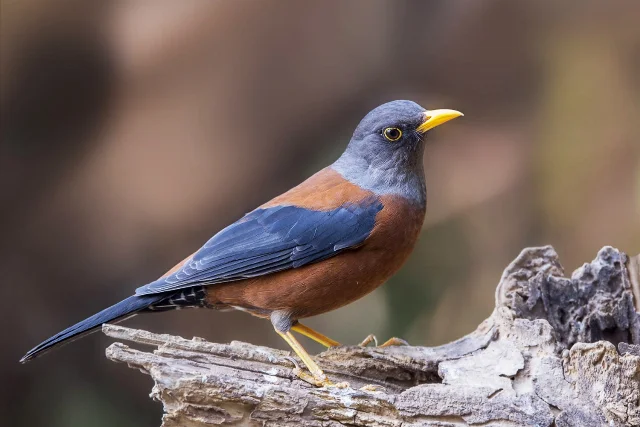
Perching Birds
avatar
Photo by Admin
Not available

Plumbeous-backed Thrush

Turdus reevei

Last update: 25 Jun 2026

Plumbeous-backed Thrush Basic Information

Scientific NameTurdus reevei
Status LC Least Concern
Size23-26 cm (9-10 inch)
Colors
Grey
White
Type
Perching Birds
type
FamilyThrushes

Introduction

The Plumbeous-backed Thrush, scientifically known as Turdus reevei, is a fascinating member of the diverse thrush family. Primarily found in specific regions of South America, this perching bird is celebrated for its understated beauty and distinct ecological role. As an avian species, it embodies the classic characteristics of the genus Turdus, yet possesses unique traits that set it apart from its more common relatives. Ornithologists and bird enthusiasts alike are drawn to this bird due to its elusive nature and the specific environmental requirements that dictate its distribution. Understanding the Plumbeous-backed Thrush requires a deep dive into its life history, from its evolutionary adaptations to its complex social behaviors. This guide aims to provide a comprehensive overview of the species, highlighting why it remains a subject of great interest in the field of ornithology. Whether you are a seasoned researcher or a casual birdwatcher, exploring the world of the Plumbeous-backed Thrush offers a unique window into the biodiversity of the neotropical landscape, revealing the delicate balance of life in its native habitats.

Physical Appearance

The Plumbeous-backed Thrush is a medium-sized perching bird, typically measuring between 23 and 26 centimeters in length. Its most defining physical characteristic is its coloration, which serves as a vital tool for camouflage within its natural environment. As its name implies, the bird features a primary plumage of soft, slate-grey or plumbeous tones across its back and wings, providing a sophisticated and muted aesthetic. In contrast, the underparts are predominantly white, often with subtle streaking or mottling that adds texture to its appearance. The transition between the grey upperparts and white underparts is usually clean, creating a sharp visual profile that is helpful for field identification. The bill is typically stout and dark, adapted for its diverse diet, while its eyes are often surrounded by a subtle ring, adding to its expressive face. Strong legs and feet, characteristic of its perching bird classification, allow it to maneuver effectively through dense foliage. Both males and females share similar patterns, though minor variations in hue can sometimes be observed depending on the age and specific population of the individual.

Habitat

The Plumbeous-backed Thrush exhibits a preference for specific ecological niches, primarily favoring scrubby woodlands, semi-arid regions, and the fringes of deciduous forests. Unlike some thrush species that thrive in dense, humid rainforests, this bird is highly adapted to areas with more moderate rainfall and varied vegetation. It is often found in the arid coastal plains and the lower slopes of mountain ranges where thicket and thorny scrub provide both shelter and nesting opportunities. Their habitat selection is largely driven by the availability of food sources and the presence of protective cover from predators. By occupying these transitional zones, the Plumbeous-backed Thrush plays an essential role in the local ecosystem, often acting as a bridge between different avian communities found in surrounding environments.

Diet

The diet of the Plumbeous-backed Thrush is characteristically opportunistic, reflecting its adaptability as a perching bird. Primarily insectivorous and frugivorous, this species spends a significant portion of its day foraging on the ground or within the lower canopy of shrubs. It consumes a wide variety of small invertebrates, including beetles, caterpillars, and earthworms, which provide essential proteins during the breeding season. Additionally, they are known to feed on a diverse array of wild berries and small fruits, which become a primary food source during leaner months. By consuming fruits, the Plumbeous-backed Thrush also serves as an important seed disperser within its habitat, contributing to the regeneration and maintenance of the local plant life. Their foraging behavior is methodical, often involving quick hops followed by brief periods of stillness to listen for movement in the leaf litter.

Breeding and Nesting

Breeding for the Plumbeous-backed Thrush is a seasonal event, closely tied to the availability of resources and favorable weather conditions. During this time, pairs engage in elaborate courtship displays, which may include vocalizations and ritualized movements to strengthen their pair bond. The nest is a well-constructed cup, typically fashioned from twigs, rootlets, and grasses, and often reinforced with mud for structural integrity. These nests are strategically placed in the forks of branches or well-hidden within dense, thorny foliage to protect the eggs and chicks from potential predators. The female is the primary builder, though the male often assists by gathering materials. Once the clutch of eggs is laid, both parents share the responsibilities of incubation and feeding the hatchlings. This collaborative effort is crucial for the survival of the chicks, as they require frequent feeding to grow rapidly before fledging and becoming independent in the competitive environment of the scrublands.

Behavior

The behavior of the Plumbeous-backed Thrush is defined by a blend of cautious observation and active foraging. While they can be somewhat elusive, they are not strictly solitary and are often seen in pairs or small family groups. They are known for their melodious songs, which are most frequent during the dawn and dusk hours, serving to establish territory and communicate with potential mates. When threatened, they are quick to seek cover, utilizing their cryptic coloration to blend into the shadows of the brush. Their movement is typically agile, hopping along branches or across the ground with precision. Socially, they interact with other bird species in their habitat, occasionally joining mixed-species foraging flocks, which provides an added layer of safety against predators through collective vigilance and shared warning signals.

Conservation Status - LC Least Concern

Currently, the Plumbeous-backed Thrush is considered a species of least concern, though it faces ongoing challenges related to habitat loss and fragmentation. As human development encroaches upon the scrubby woodland areas that the species calls home, their populations are becoming increasingly isolated. Protecting their habitat is essential to ensuring their long-term survival. Conservation efforts focus on preserving large tracts of native vegetation and promoting sustainable land-use practices. By maintaining the integrity of these ecological corridors, we can ensure that the Plumbeous-backed Thrush continues to thrive in its natural range without the threat of significant population decline.

Interesting Facts

  1. The name 'Plumbeous' refers to the lead-grey color of its back feathers.
  2. They are highly skilled at utilizing thorny bushes for protection from larger raptors.
  3. Their songs are often considered some of the most complex among regional thrushes.
  4. They play a critical ecological role in seed dispersal for native scrub plants.
  5. These birds are surprisingly hardy, capable of surviving in significantly arid environments.
  6. They often use mud to reinforce their nests, a trait shared with many other Turdus species.

Tips for Birdwatchers

For birdwatchers hoping to spot the Plumbeous-backed Thrush, patience and timing are key. The best time to observe them is during the early morning hours when their vocalizations are most prominent. Focus your efforts in areas with dense, low-lying scrub and transition zones between forest and open land. Because they are shy, using high-quality binoculars and maintaining a respectful distance is essential to avoid startling them. Learning their specific call can significantly increase your chances of locating them in thick foliage. Additionally, bringing a field guide that highlights the subtle differences between similar thrush species will help you confirm your sighting. Remember that they are ground-foragers, so keep an eye on the forest floor, where they are often found hopping among the leaf litter in search of insects.

Pro-Tip: To spot this bird in dense forest canopy, a 8x42 binoculars or telescope is highly recommended.
- [Check out our top recommended gear here]

Conclusion

The Plumbeous-backed Thrush (Turdus reevei) stands as a testament to the quiet, yet vital, beauty of South America's avian inhabitants. Through its specialized adaptation to semi-arid scrub and its balanced role as both an insectivore and a seed disperser, it plays a critical part in the health of its ecosystem. While it may not be as brightly colored as some tropical birds, its sophisticated grey and white plumage and its complex behavioral patterns make it a rewarding subject for any dedicated birdwatcher. As we continue to study the impacts of environmental change, the Plumbeous-backed Thrush serves as a reminder of the importance of protecting diverse, even if less recognized, habitats. By fostering a deeper understanding of this species, we not only gain knowledge about an individual bird but also contribute to the broader appreciation of the intricate web of life. Whether you are observing them in the wild or studying their fascinating biology from afar, the Plumbeous-backed Thrush remains a captivating species that deserves our admiration and protection. We hope this guide has provided you with the insights needed to appreciate this remarkable perching bird more fully in your future birding adventures.

Plumbeous-backed Thrush Distribution Map & Range

The distribution map for this species will be available soon.

We are working with our official data partners to update this information.

Tag:

Share:

Previous
Next

Explore More Species in the Thrushes Family

23-25 cm
Abyssinian Ground-thrush
Geokichla piaggiae
22-24 cm
Abyssinian Thrush
Turdus abyssinicus
22-24 cm
African Thrush
Turdus pelios
25-27 cm
Alpine Thrush
Zoothera mollissima
27-30 cm
Amami Thrush
Zoothera major
Amaui
15-18 cm
Amaui
Myadestes woahensis
23-28 cm
American Robin
Turdus migratorius
Andean Slaty Thrush
22-24 cm
Andean Slaty Thrush
Turdus nigriceps
20-23 cm
Andean Solitaire
Myadestes ralloides
Ashy Thrush
21-23 cm
Ashy Thrush
Geokichla cinerea
25-28 cm
Austral Thrush
Turdus falcklandii
22-24 cm
Aztec Thrush
Ridgwayia pinicola
23-25 cm
Bare-eyed Thrush
Turdus tephronotus
Bassian Thrush
27-30 cm
Bassian Thrush
Zoothera lunulata
16-18 cm
Bicknell's Thrush
Catharus bicknelli
19-21 cm
Black Solitaire
Entomodestes coracinus
23-25 cm
Black Thrush
Turdus infuscatus
15-16 cm
Black-billed Nightingale-thrush
Catharus gracilirostris
Black-billed Thrush
23-25 cm
Black-billed Thrush
Turdus ignobilis
22-24 cm
Black-breasted Thrush
Turdus dissimilis
Black-eared Ground-thrush
20-22 cm
Black-eared Ground-thrush
Geokichla camaronensis
18-20 cm
Black-faced Solitaire
Myadestes melanops
15-16 cm
Black-headed Nightingale-thrush
Catharus mexicanus
Black-hooded Thrush
23-25 cm
Black-hooded Thrush
Turdus olivater
22-27 cm
Black-throated Thrush
Turdus atrogularis
22-25 cm
Bonin Thrush
Zoothera terrestris
Bougainville Thrush
22-24 cm
Bougainville Thrush
Zoothera atrigena
19-21 cm
Brown-backed Solitaire
Myadestes occidentalis
23-25 cm
Brown-headed Thrush
Turdus chrysolaus
Buru Thrush
20-22 cm
Buru Thrush
Geokichla dumasi
22-24 cm
Campina Thrush
Turdus arthuri
Chestnut Thrush
22-25 cm
Chestnut Thrush
Turdus rubrocanus
Chestnut-backed Thrush
20-23 cm
Chestnut-backed Thrush
Geokichla dohertyi
22-24 cm
Chestnut-bellied Thrush
Turdus fulviventris
Chestnut-capped Thrush
20-22 cm
Chestnut-capped Thrush
Geokichla interpres
Chestnut-throated Solitaire
20-22 cm
Chestnut-throated Solitaire
Cichlopsis chubbi
27-30 cm
Chiguanco Thrush
Turdus chiguanco
23-28 cm
Chinese Blackbird
Turdus mandarinus
Chinese Thrush
24-27 cm
Chinese Thrush
Otocichla mupinensis
23-26 cm
Clay-colored Thrush
Turdus grayi
22-24 cm
Cocoa Thrush
Turdus fumigatus
23-25 cm
Comoro Thrush
Turdus bewsheri
22-25 cm
Creamy-bellied Thrush
Turdus amaurochalinus
Crossley's Ground-thrush
17-19 cm
Crossley's Ground-thrush
Geokichla crossleyi
Cuban Solitaire
20-22 cm
Cuban Solitaire
Myadestes elisabeth
24-25 cm
Dark-sided Thrush
Zoothera marginata
Dusky Thrush
23-25 cm
Dusky Thrush
Turdus eunomus
16-21 cm
Eastern Bluebird
Sialia sialis
Eastern Red-legged Thrush
24-27 cm
Eastern Red-legged Thrush
Turdus ardosiaceus
Eastern Slaty Thrush
21-23 cm
Eastern Slaty Thrush
Turdus subalaris
21-23 cm
Ecuadorian Thrush
Turdus maculirostris
Enggano Thrush
21-23 cm
Enggano Thrush
Geokichla leucolaema
Ethiopian Thrush
22-24 cm
Ethiopian Thrush
Psophocichla simensis
24-26 cm
Eurasian Blackbird
Turdus merula
Everett's Thrush
20-22 cm
Everett's Thrush
Zoothera everetti
21-23 cm
Eyebrowed Thrush
Turdus obscurus
Fawn-breasted Thrush
22-24 cm
Fawn-breasted Thrush
Zoothera machiki
22-27 cm
Fieldfare
Turdus pilaris
Finsch's Flycatcher-thrush
17-19 cm
Finsch's Flycatcher-thrush
Stizorhina finschi
Floodplain Thrush
20-22 cm
Floodplain Thrush
Turdus debilis
Forest Thrush
23-25 cm
Forest Thrush
Turdus lherminieri
Fruithunter
26-29 cm
Fruithunter
Chlamydochaera jefferyi
Geomalia
27-30 cm
Geomalia
Zoothera heinrichi
Glossy-black Thrush
24-27 cm
Glossy-black Thrush
Turdus serranus
15-16 cm
Gould's Nightingale-thrush
Catharus dryas
Grand Cayman Thrush
25-28 cm
Grand Cayman Thrush
Turdus ravidus
19-23 cm
Grandala
Grandala coelicolor
28-32 cm
Great Thrush
Turdus fuscater
25-28 cm
Green Cochoa
Cochoa viridis
Grey Ground-thrush
21-23 cm
Grey Ground-thrush
Geokichla princei
22-24 cm
Grey-backed Thrush
Turdus hortulorum
16-19 cm
Grey-cheeked Thrush
Catharus minimus
20-23 cm
Grey-sided Thrush
Turdus feae
Grey-winged Blackbird
27-29 cm
Grey-winged Blackbird
Turdus boulboul
Groundscraper Thrush
22-24 cm
Groundscraper Thrush
Psophocichla litsitsirupa
Guadalcanal Thrush
23-26 cm
Guadalcanal Thrush
Zoothera turipavae
Guianan Solitaire
18-20 cm
Guianan Solitaire
Cichlopsis gularis
20-22 cm
Hauxwell's Thrush
Turdus hauxwelli
15-18 cm
Hermit Thrush
Catharus guttatus
25-27 cm
Himalayan Forest Thrush
Zoothera salimalii
19-22 cm
Indian Blackbird
Turdus simillimus
Island Thrush
20-25 cm
Island Thrush
Turdus poliocephalus
22-24 cm
Izu Thrush
Turdus celaenops
22-24 cm
Japanese Thrush
Turdus cardis
Javan Cochoa
23-25 cm
Javan Cochoa
Cochoa azurea
Kamao
18-20 cm
Kamao
Myadestes myadestinus
22-25 cm
Karoo Thrush
Turdus smithi
20-23 cm
Kurrichane Thrush
Turdus libonyana
La Selle Thrush
23-25 cm
La Selle Thrush
Turdus swalesi
Lawrence's Thrush
19-21 cm
Lawrence's Thrush
Turdus lawrencii
26-30 cm
Long-billed Thrush
Zoothera monticola
25-27 cm
Long-tailed Thrush
Zoothera dixoni
Makira Thrush
25-28 cm
Makira Thrush
Zoothera margaretae
23-25 cm
Maranon Thrush
Turdus maranonicus
26-29 cm
Mistle Thrush
Turdus viscivorus
16-20 cm
Mountain Bluebird
Sialia currucoides
23-25 cm
Mountain Thrush
Turdus plebejus
23-25 cm
Naumann's Thrush
Turdus naumanni
New Britain Thrush
21-23 cm
New Britain Thrush
Zoothera talaseae
Northern Red-legged Thrush
24-27 cm
Northern Red-legged Thrush
Turdus plumbeus
Oberlander's Ground-thrush
19-22 cm
Oberlander's Ground-thrush
Geokichla oberlaenderi
24-26 cm
Olive Thrush
Turdus olivaceus
Olomao
18-20 cm
Olomao
Myadestes lanaiensis
Omao
17-19 cm
Omao
Myadestes obscurus
Orange Ground-thrush
21-24 cm
Orange Ground-thrush
Geokichla gurneyi
Orange-banded Thrush
20-22 cm
Orange-banded Thrush
Geokichla peronii
15-16 cm
Orange-billed Nightingale-thrush
Catharus aurantiirostris
20-23 cm
Orange-headed Thrush
Geokichla citrina
21-23 cm
Pale Thrush
Turdus pallidus
22-24 cm
Pale-breasted Thrush
Turdus leucomelas
22-24 cm
Pale-eyed Thrush
Turdus leucops
22-24 cm
Pale-vented Thrush
Turdus obsoletus
Peruvian Solitaire
19-21 cm
Peruvian Solitaire
Cichlopsis peruviana
22-23 cm
Pied Thrush
Geokichla wardii
24-26 cm
Principe Thrush
Turdus xanthorhynchus
Puaiohi
17-19 cm
Puaiohi
Myadestes palmeri
25-28 cm
Purple Cochoa
Cochoa purpurea
Red-and-black Thrush
22-25 cm
Red-and-black Thrush
Geokichla mendeni
Red-backed Thrush
23-26 cm
Red-backed Thrush
Geokichla erythronota
Red-tailed Ant-thrush
18-20 cm
Red-tailed Ant-thrush
Neocossyphus rufus
19-23 cm
Redwing
Turdus iliacus
23-25 cm
Ring Ouzel
Turdus torquatus
15-16 cm
Ruddy-capped Nightingale-thrush
Catharus frantzii
18-20 cm
Rufous Flycatcher-thrush
Stizorhina fraseri
Rufous-backed Thrush
22-25 cm
Rufous-backed Thrush
Turdus rufopalliatus
22-25 cm
Rufous-bellied Thrush
Turdus rufiventris
19-21 cm
Rufous-brown Solitaire
Cichlopsis leucogenys
22-24 cm
Rufous-collared Thrush
Turdus rufitorques
Rufous-throated Solitaire
20-22 cm
Rufous-throated Solitaire
Myadestes genibarbis
21-25 cm
Rufous-throated Thrush
Turdus ruficollis
15-17 cm
Russet Nightingale-thrush
Catharus occidentalis
16-18 cm
Russet-backed Thrush
Catharus ustulatus
Russet-tailed Thrush
27-30 cm
Russet-tailed Thrush
Zoothera heinei
San Lucas Robin
22-25 cm
San Lucas Robin
Turdus confinis
Sao Tome Thrush
23-25 cm
Sao Tome Thrush
Turdus olivaceofuscus
27-30 cm
Scaly Thrush
Zoothera dauma
15-16 cm
Sclater's Nightingale-thrush
Catharus maculatus
Seram Thrush
22-24 cm
Seram Thrush
Geokichla joiceyi
20-23 cm
Siberian Thrush
Geokichla sibirica
Sichuan Forest Thrush
25-28 cm
Sichuan Forest Thrush
Zoothera griseiceps
19-21 cm
Slate-colored Solitaire
Myadestes unicolor
15-17 cm
Slaty-backed Nightingale-thrush
Catharus fuscater
Slaty-backed Thrush
22-24 cm
Slaty-backed Thrush
Geokichla schistacea
Somali Thrush
22-24 cm
Somali Thrush
Turdus ludoviciae
Sombre Thrush
22-25 cm
Sombre Thrush
Turdus anthracinus
20-23 cm
Song Thrush
Turdus philomelos
24-26 cm
Sooty Thrush
Turdus nigrescens
23-25 cm
Spectacled Thrush
Turdus nudigenis
Spot-winged Thrush
24-26 cm
Spot-winged Thrush
Geokichla spiloptera
Spotted Ground-thrush
20-23 cm
Spotted Ground-thrush
Geokichla guttata
Sulawesi Thrush
23-25 cm
Sulawesi Thrush
Cataponera turdoides
Sumatran Cochoa
23-25 cm
Sumatran Cochoa
Cochoa beccarii
Sunda Thrush
27-30 cm
Sunda Thrush
Zoothera andromedae
Swainson's Thrush
16-18 cm
Swainson's Thrush
Catharus swainsoni
20-22 cm
Taita Thrush
Turdus helleri
Taiwan Thrush
25-28 cm
Taiwan Thrush
Turdus niveiceps
25-29 cm
Tibetan Blackbird
Turdus maximus
20-22 cm
Tickells Thrush
Turdus unicolor
20-23 cm
Townsend's Solitaire
Myadestes townsendi
Tristan Thrush
22-24 cm
Tristan Thrush
Turdus eremita
22-24 cm
Unicolored Thrush
Turdus haplochrous
20-22 cm
Usambara Thrush
Turdus roehli
20-22 cm
Varied Solitaire
Myadestes coloratus
20-26 cm
Varied Thrush
Ixoreus naevius
Varzea Thrush
20-22 cm
Varzea Thrush
Turdus sanchezorum
16-18 cm
Veery
Catharus fuscescens
15-18 cm
Western Bluebird
Sialia mexicana
Western Red-legged Thrush
24-27 cm
Western Red-legged Thrush
Turdus rubripes
White-backed Thrush
23-25 cm
White-backed Thrush
Turdus kessleri
White-chinned Thrush
23-25 cm
White-chinned Thrush
Turdus aurantius
25-28 cm
White-collared Blackbird
Turdus albocinctus
White-eared Solitaire
19-21 cm
White-eared Solitaire
Entomodestes leucotis
White-eyed Thrush
22-24 cm
White-eyed Thrush
Turdus jamaicensis
23-25 cm
White-necked Thrush
Turdus albicollis
18-20 cm
White-tailed Ant-thrush
Neocossyphus poensis
22-24 cm
White-throated Thrush
Turdus assimilis
27-30 cm
Whites Thrush
Zoothera aurea
19-21 cm
Wood Thrush
Hylocichla mustelina
21-23 cm
Yellow-legged Thrush
Turdus flavipes
Yemen Thrush
23-25 cm
Yemen Thrush
Turdus menachensis